

On the way to Chongqing, I was fairly confident that we would have a pretty seamless journey. After all, I had just visited Beijing in December of 2024. We even checked with our friends and colleagues for advice about what to take note before the trip. But, we still faced some payment issues while we were there, landing in a mildly stressful situation (read: distressing). And that, as we discovered, is where I learnt not to underestimate the surprises that travel can bring.
However, dear reader, may you benefit from our experience and avoid this specific situation. Let’s get into what went wrong with my Alipay in Chongqing and my advice to avoid similar problems.
Also read: How to Use AI for Travel Planning to Avoid Costly Mistakes
How We Prepared For The Trip
 Image credit: Business Times
Before the trip, we followed the standard advice: link our credit/debit cards to Alipay and WeChat Pay’s international version. We set up the apps more than 3 days before our flight, and added multiple cards to the app without much trouble. I had Trust, Revolut and YouTrip cards linked to my account, with Revolut and YouTrip cards linked from my previous visit in 2024. Meanwhile, my colleague had his GXS and DBS Live Fresh card linked.
The setup process was relatively straightforward with my passport on hand, and the first two transactions went through cleanly. I made a purchase at the airport duty free and airport convenience store with my Trust card without any issues, and felt reasonably confident that we had payment down pat.
Card Frozen In An Awkward situation
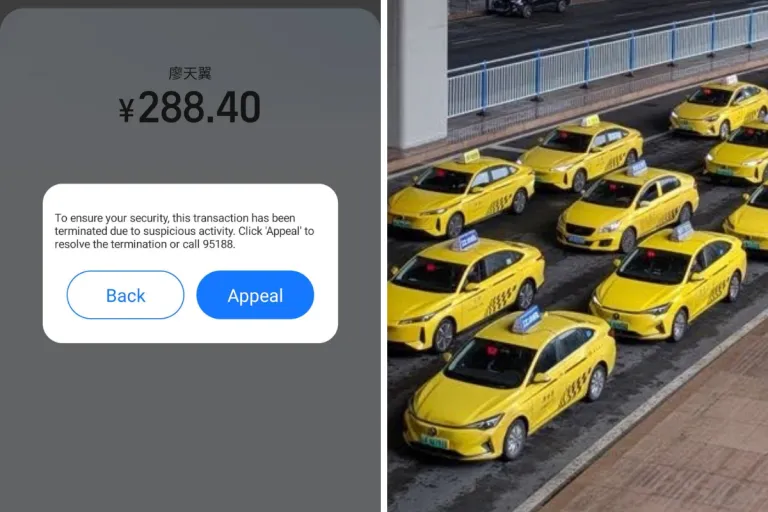 Image credit: Reddit (left), Dex Quek (right)
Little did I expect to face issues even before reaching our hotel. On our third transaction, a transfer to our taxi driver, my transaction failed to go through. My Trust card had been frozen by Alipay and WeChat Pay’s fraud detection system. This is, as it turns out, a known issue with virtual bank cards used on foreign accounts. Alipay’s system flags multiple transactions within a short window as potentially suspicious, particularly when they originate from cards without a long transaction history tied to the account. The freeze was sudden, silent, and deeply inconvenient in a cab idling in a no-parking zone. Our cabby was just as stressed as we were, and we only resolved the situation after handing over cash that I nearly left at home.
Unfreezing My Account
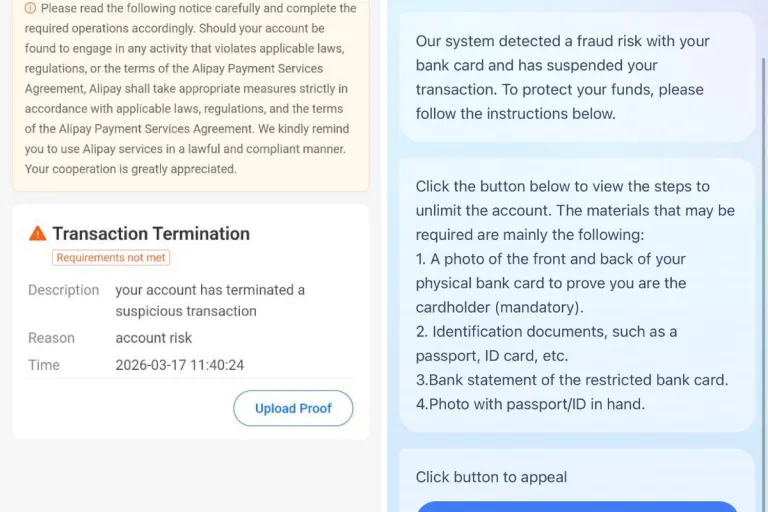 Image credit: Dex Quek (left), Reddit (right)
Resolving the freeze required us to contact Alipay’s customer support through the app, verify our identity with images of passport and physical card, and wait for the account to be manually reviewed. The process took the better part of an afternoon between submission and approval. I ran into issues with Trust as my physical card did not have the card number on it.
In the meantime, we did not have to rely on cash through cards added on previous trips. Once the freeze lifted, both cards functioned normally again. Nevertheless, we noticed that spacing out transactions and avoiding rapid successive payments seemed to reduce the risk of triggering the system a second time.
Transaction Issues Related To Foreign Accounts
We also faced payment issues several times as our account was linked to foreign bank cards. Thankfully, we managed to pay the shop owner directly through their personal QR code and paid our driver in cash.
Advice
If you are planning a trip to China and intend to link virtual bank cards to Alipay, here is what we recommend based on our experience.
-
Top up your Alipay wallet balance directly if you have access to a Chinese bank account, as a funded wallet balance bypasses many of the card-linked fraud triggers entirely.
-
Have your physical card on you for identity verification and any connection issues.
-
Add multiple cards as backup. YouTrip and Revolut are proven options with physical bank card, as having more than one linked card gives you a fallback if one gets frozen mid-trip.
-
Set up both Alipay and WeChat Pay on your phone at least 3 days before departure; WeChat Pay requires a 2-3 day identity verification process before it allows payments, so leaving this to the last minute will leave you stranded without payment options. Have your passport handy when you do as they will need pictures of it and for you to take a picture with your identity document.
-
Space out your transactions per card in the early days of your trip to avoid triggering Alipay’s fraud detection, especially if you are using virtual bank cards.
-
Carry backup cash at all times (even if you don’t foresee any use for it). Even in a cashless city, having a few hundred yuan on hand can save you from a genuinely stressful situation when your digital payments freeze mid-trip.
-
Download both apps while you are still in Singapore and complete all identity verification steps before you board, when customer support is still easy to reach.
Why China’s Payment System Can Be Tricky For Foreigners
Today, an estimated 95% of merchants only accept QR code payments, which means Alipay and WeChat Pay are essentially compulsory. However, both platforms were built around the Chinese banking ecosystem, making it difficult for foreigners. Full functionality on either app has traditionally required a Chinese bank account, and without one, overseas users are limited to linking foreign debit or credit cards instead.
That workaround comes with its own set of complications. Cross-border card transactions are subject to stricter fraud monitoring, lower trust ratings in the system, and in some cases, transaction limits. Both platforms have made efforts in recent years to improve the experience for international visitors, but the gap between what a Chinese national can do and what a foreign tourist can do remains significant. For Singaporeans travelling with virtual bank cards like Trust or GXS, that gap becomes especially apparent within the first few hours of arrival.
Also read: Vietjet Floods Market with 130,000 Extra Seats, & 20% Off Business Class!
The cashless trap
Alipay and WeChat Pay dominate virtually every transaction, from hawker stalls to museum entry fees. The problem is that this system was built primarily for Chinese nationals. Foreign visitors often find ourselves on the wrong side of a very efficient wall.
Chongqing rewards curious, well-prepared travellers enormously. Its layered history, dramatic geography, and singular food culture make it one of the most distinctive destinations in China. However, the city’s digital payment ecosystem demands a little more getting used to. Go in with a contingency, and you will find that the rest of the trip takes care of itself.