
As the world’s leading trading power, China’s vast export engine fuelled a $1.2 trillion current account surplus in 2025. At the same time, it is the largest importer of crude oil globally, with around 40 percent sourced from the Middle East.
This exposure gives Beijing a clear stake in Gulf stability – prioritising secure maritime transit through energy chokepoints and uninterrupted access to the GCC’s trillion-dollar development pipeline.
Iran has therefore infringed core Chinese interests in the Gulf by weaponising tanker transit through the Strait of Hormuz and targeting the UAE and Saudi Arabia, Beijing’s two principal economic partners in the region.
In short, the Iran War and Hormuz blockade are an economic nightmare for China on multiple fronts.
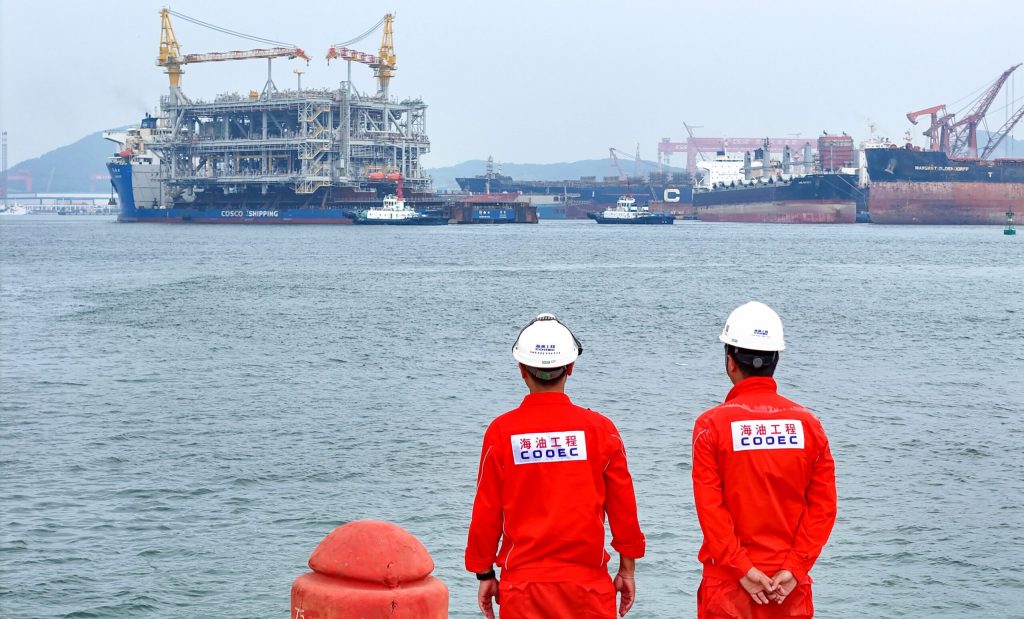
China has invested more than $100 billion in GCC construction and development projects, where its state-owned companies have earned hundreds of billions of dollars in profits over the past decade.
In contrast, Chinese investments in Iran have been minuscule ever since US President Trump repudiated Obama’s Joint Comprehensive Plan of Action (JCPOA) nuclear deal in 2018 and imposed maximum pressure sanctions on the Islamic Republic.
It is no coincidence that China’s President Xi signed a pledge to invest $400 billion in Iran during the immediate post-JCPOA euphoria, when the world expected Iran to reopen to global business. Yet only $2 billion out of the $400 billion promised by Beijing to Tehran has materialised.
China is Iran’s largest trading partner, but Iran does not even rank in China’s top 50 trading counterparties
China’s reluctance to invest in Iran over the past decade is entirely rational.
Following the reimposition of Iranian sanctions, Beijing had little incentive to risk access to far larger and more lucrative export markets in the US and the GCC.
That caution was reinforced in 2019, when attacks on Saudi Aramco’s Abqaiq facility temporarily knocked out roughly half of the kingdom’s oil output – about 5 percent of global supply – exposing the vulnerability of regional energy infrastructure and, by extension, China’s own energy security.
Iran’s Houthi militia allies in Yemen also attacked Chinese shipping in the Red Sea enroute to the Suez Canal, representing a de facto assault on its Belt & Road investment zones in the Sinai.
China is Iran’s largest trading partner, but Iran does not even rank in China’s top 50 trading counterparties. The Middle Kingdom was virtually the only buyer of discounted Iranian crude from Kharg Island for its limited Shandong teapot refineries. Still, it can easily replace the 1.5 million barrels a day of Iranian imports lost to Russia, Brazil, or even Angola.
State sovereignty and non-intervention in the internal affairs of other countries are cardinal principles of Chinese foreign policy. Iran violated this principle with its proxy militias in Lebanon, Iraq, Syria and Yemen and its multiple acts of subversion against the GCC states.
There is simply no strategic interest between China and Iran, especially on the eve of a crucial summit in Beijing between Trump and Xi scheduled for mid-May.
Further reading:
Further reading:
Apart from energy, Chinese construction companies, banks, contractors and capital goods exporters have carved out strategic niches in the GCC’s myriad economic diversification ambitions.
Saudi Arabia and the UAE are the twin economic hubs for China Inc’s corporate champions in the Gulf, not Iran.
The UAE’s decision to leave Opec underscores a broader shift towards strategic autonomy in energy policy – one that aligns with China’s preference for stable, market-driven supply relationships and reinforces the Gulf’s centrality to Beijing’s economic interests.
An estimated 400,000 Chinese nationals are resident in the UAE, a huge proportion in a nation with a population of only 11 million. Dragon Mart in Dubai is the largest Chinese-owned wholesale trade emporium outside mainland China.
Saudi Arabia is China’s largest source of crude oil imports after Russia. The kingdom, as the only Arab world economy with a trillion-dollar GDP, is a natural magnet for China’s state-owned corporate colossi in the Gulf.
China has no interest in assuming a more prominent role in the Gulf’s military or security architecture, a role it has long ceded to Washington. Its interests are exclusively economic: energy, trade, FDI and project finance.
Beijing should rethink its relationship with Tehran.
Matein Khalid is an investor in global financial markets and board adviser to leading family offices in the UAE and Saudi Arabia