
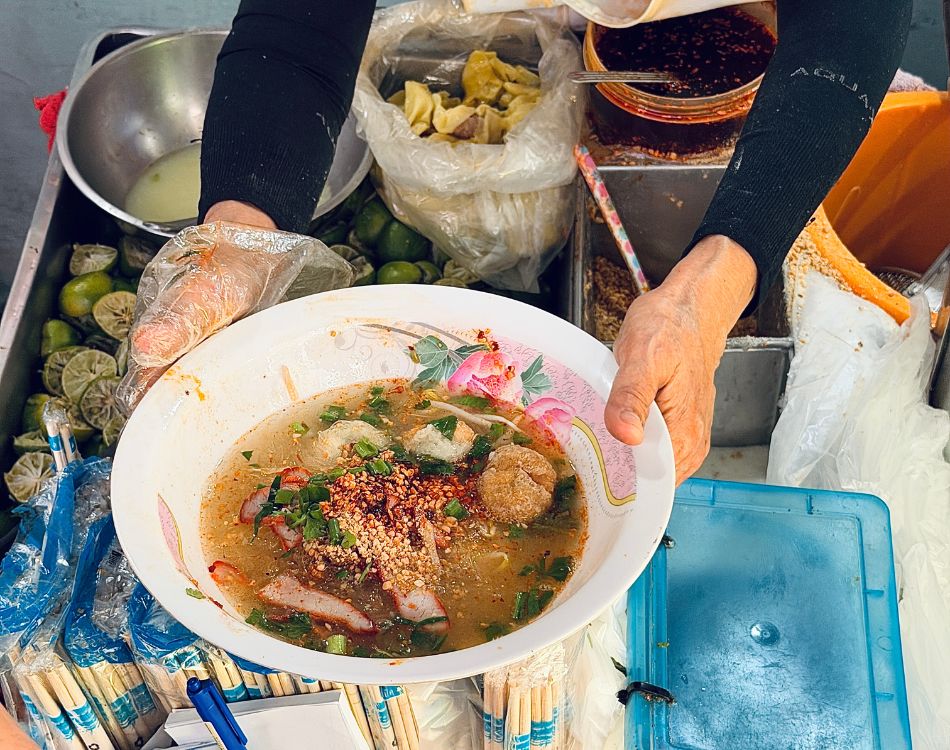
I’ve just spent seven weeks in Thailand, including three in Bangkok, and I’ve been saying for the past five years that the city has one of the most (if not the most) exciting food scenes in the world. After eight visits, I’ve seen it shift dramatically. Post-Covid, there’s been a real change in the midrange of Bangkok dining, as chefs from some of the city’s best fine dining restaurants began launching pop-ups, supper clubs and more casual concepts. That premium-casual space, places offering a full 360-degree experience across branding, interiors, food and hospitality, barely existed before, especially in the Thai food arena. Bangkok has always had incredible street food and no shortage of cheap and cheerful spots, and it has long had serious fine dining too. But for a long time, the options in between were few and far between.
That’s changed massively over the past couple of years. The city has seen an explosion of chef-led openings, both from independent names setting up their own places and from fine dining chefs branching out into more relaxed spin-off concepts. Chef Ton of Le Du now has 13 venues. Chef Pam of Potong recently opened Khao San Sek. Chalee Kader has 100 Mahaseth, Wana Yook, Soma, a sato project in the works with Gaggan, and has just opened a banh mi spot. Charmgang has grown into three sites, adding Charmkrung and, most recently, Charmkok to its lineup. And those are only a handful of examples.
Food halls inside shopping malls have also taken off, offering a more sanitised version of street food: pricier than what you’ll find on the pavement, but increasingly home to second and third branches of Michelin-recognised street food names. Beyond Thai food, international cuisines are becoming more prominent too, with Spanish, Italian and Japanese spots opening across the city, several of them with multiple locations.

Japan’s influence on Bangkok remains particularly strong. The city is packed with sushi restaurants, sake is hugely popular, and even umeshu bars are becoming more common. But alongside that, sato is having a real moment. The Thai rice-based alcoholic drink, once mainly associated with home brewing in the north, is now being reimagined by a new generation of artisanal producers and showing up on drinks lists and in dishes at some of the city’s coolest and most ambitious restaurants. Given the restrictions around craft beer production in Thailand, where bottling is still largely dominated by the big players, it’s no surprise that so much creative energy is being channelled into other kinds of drinks.
That same spirit is showing up across a wider range of Thai artisanal products. Thai cheese is increasingly visible, with places like Vivin working with local makers, alongside a growing number of producers across the country. The same goes for charcuterie and even wine. Yes, Thai wine. There are a few vineyards producing it, but GranMonte stands out as the most serious, growing its own grapes and making bottles that are genuinely worth drinking, including a natural cuvée made in qvevri.
And it’s not just food and drink. Thailand’s beauty industry is booming too, following Korea’s lead, with salons across Bangkok offering ever more advanced treatments and a new crop of homegrown brands gaining traction with visitors.
That visitor profile is changing as well. Historically, Thailand has often attracted budget-conscious tourists, but between the tourism board’s push around restaurants, bars and wellness, the ripple effect of The White Lotus, and the country’s broader luxury positioning, it is increasingly drawing a wealthier crowd. At the same time, there is still a clear need for more visitors overall. Chinese tourism remains down, affected by recent scandals amplified on social media, while locals are dealing with a cost-of-living squeeze, and now there’s the knock-on effect of the new war in the Middle East. That imbalance between supply and demand was obvious on our trip. We visited some truly excellent places and found them, even on prime nights, almost empty. It may explain why even very good venues open and close so quickly in Bangkok. Consumers here, particularly wealthier Asian diners, are often looking for the next new thing, and the city keeps giving it to them.
That constant churn may also be why people are getting increasingly inventive with restaurant spaces. Haawm is run out of the chef Dylan Eitharong’s living room. Other places are operating from domestic spaces too, including Baan Lamyai, which is set in the chef Chalita Uttasart’s former house, albeit one transformed into a full restaurant. There’s a DIY streak running through the city’s hospitality scene, and it extends to how many of these places operate. Plenty still prefer bookings via Instagram DMs and cash payments over investing in tech.


Ingredient-wise, crab is everywhere, and so are omelettes. They appear on almost every kind of menu, from humble street-side spots to more polished restaurants serving deep-fried versions or luxury takes that can hit £40. Samlor’s Thai omelette, for example, is expensive, but arguably worth the splurge. And yet it’s far from the priciest thing in town. The Thai baht is so strong right now that many of these newer restaurants are charging prices similar to London once the conversion rate hits. Still, those higher prices often reflect better sourcing. These kitchens are using high-quality produce, organic meat and vegetables, which are not always easy to come by in Thailand, and turning out dishes that move well beyond the familiar traffic-light curries. At Charmgang, for example, you’ll find white curries and spicy fruit salads, but no Pad Thai.
Isaan and northern Thai is hotting up (in more ways than one). Zao Isaan is pouring excellent wine alongside its food, while E-San, the collaboration from Gaggan and Chalee, is set to return this spring. Redberry rice is also appearing more often on menus, a small but telling sign of broader interest in regional ingredients and more thoughtful sourcing.
Sustainability, while still uneven, is becoming more visible too. Electric Sheep is working with a zero-waste approach. In Chiang Mai, Maadae Slow Fish Kitchen uses only local, day-boat, sustainably caught fish, while Wasteland cocktail bar builds drinks from ingredients that would otherwise be thrown away. Bangkok also has no shortage of brilliant cocktail bars, though again, some of the best can feel surprisingly quiet. Tropic City, one of the city’s established names, has announced its closure as it struggles to compete in an increasingly crowded market. On a less serious note, if the city wants to be more sustainable in energy terms, a few places could start by easing up on the air conditioning. It can be absolutely freezing.
Traffic, meanwhile, is worse than ever. Public transport is fast, cheap and often far more practical, while motorbikes remain the quickest option if you’re willing to take the risk. It definitely affects how people move around the city. In rush hour, a journey that should take 20 minutes can easily take more than an hour, and finding a taxi can be a challenge too.


Natural wine is becoming more and more popular with wine bars and “cool” restaurants serving some of the best labels from across the globe. Gaggan’s team has secured direct partnerships with wine makers in Europe and has some rarer bins than you’ll find in those countries.
One thing that surprised me is how early Bangkok now feels. In general, it’s a city that seems to shut down earlier than I remembered. Some of the best street food is only available in the daytime, and plenty of restaurants close well before midnight.
And finally, Burmese food is becoming more visible too, as the uncertainty in Myanmar causes more people to relocate to Thailand and open restaurants of their own – such as Rangoon Tea House and Namsu.
Even with all this change, Bangkok hasn’t lost the energy that made it exciting in the first place. If anything, it feels even more dynamic now; a city where old favourites, new ideas and serious talent are all colliding at once.
APPENDIX
Mackerel is having a real moment.
Omelettes are a sure-fire money-maker.
If you’re not putting crab on the menu, what are you even doing?
Meat still dominates, and even plenty of the vegetable dishes come with fish or meat folded in.
Scrappy start-ups are proving a smart way to test a concept before scaling.
Riceberry is super popular in more modern restaurants (and yes, I bulk-bought some to bring home). It’s a cross between khao jow hom nin and hom mali rice, with a deep-purple colour, a nutty flavour and a slightly chewy bite. Delish.
There’s no booze advertising, but keep an eye out for billboards featuring people on the beach toasting with what is very obviously Chang-labelled “water”.
Thailand’s big beer companies still dominate bottling, so most bottled craft beer is brewed and bottled elsewhere, then shipped back in. Kegs are a different story – those are allowed.
There’s a real pride in Thai heritage and homegrown products, and you can expect to see more of both, with sato (Thai rice wine) likely to show up on menus far beyond Thailand.
Pop-ups and collabs are popping off.
Nothing brings the mansplainers out on social media quite like Thailand – including the white dudes who’ve spent time there and now fancy themselves authorities on the food.

Want In On This?
Upgrade your account to gain access