

Krishnan Rajam and Amar-Singh HSS
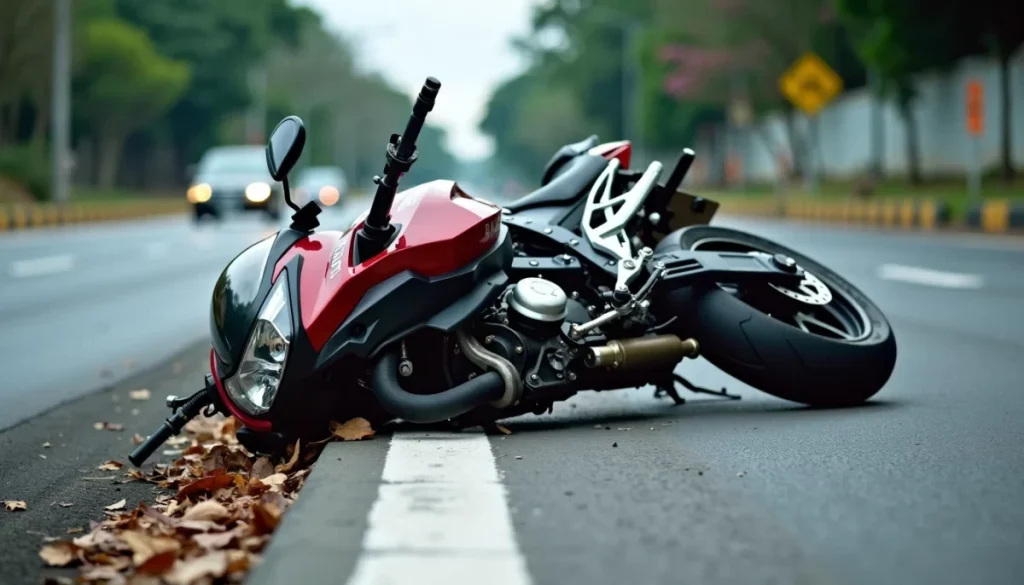
The burden of traffic injuries in Malaysia remains a critical public health and economic crisis. It exacts a devastating toll on individuals and families nationwide.
Road traffic crashes are a leading cause of premature mortality and long-term disability, particularly among young, economically productive. Motorcyclists and pillion riders bearing the brunt of the casualties.
Beyond the profound emotional trauma experienced by affected families, these injuries place an immense, continuous strain on the national healthcare system. They consume significant emergency medical services, surgical resources and long-term rehabilitation care.
There is an urgent need to substantially improve road safety management across Malaysia through a robust, multi-sectoral approach.
Current strategies must evolve beyond fragmented interventions toward a highly coordinated framework. This means integrating stringent traffic law enforcement, data-driven infrastructure upgrades, and comprehensive public education campaigns.
Prioritising evidence-based policies is essential. These include optimising urban speed limits, improving dedicated motorcycle lanes, and modernising post-crash care systems. The goal is to shift from merely reacting to traffic accidents to proactively managing and preventing road injuries.
We offer five recommendations for improving road safety management in Malaysia.
An ineffective council
The Road Safety Council of Malaysia was formed to foster informed discussion on road safety issues among representatives of relevant government and non-governmental agencies.
The council has never been effective because its member representatives, who change every year, are not held accountable to the council.
Member organisations need to nominate long-term representatives to the council. They must also carry out designated activities related to their agency function – covering compliance to relevant rules and regulations, educational or enforcement activities, member training, research or public education.
Members should submit annual reports and performance indicators to the council.
Recommendation 1 – Enhance accountability: Change the council’s structure so that member organisations must appoint representatives for a minimum three-to-five-year tenure to ensure continuity. Additionally, tie the submission of their annual reports to agency funding or key performance indicators (KPIs).
The data gap
Currently, data on the burden of road traffic deaths and injuries is not readily accessible.
To increase awareness of the problem of road traffic deaths and injuries among the public, journalists and professionals alike, detailed road safety data (such as trends in annual road traffic deaths and compliance with helmet, seat belt, child restraint use rules by state) should be available online.
The Malaysian Institute of Road Safety Research (Miros) and the traffic police need to collaborate to make this possible.
Enforcement is the missing link in road safety in Malaysia. It is most effective, second only to effective land use policies to minimise community transport needs and public transport systems.
Compliance with laws is grossly inadequate.
The “low-hanging fruit” in road safety are compliance with and enforcement of laws related to use of helmets, seat belts and child restraints, as well as speeding, driving distractions, drink-drinking and visibility.
Data on compliance with these laws needs to be analysed state by state. This would provide justification for enhanced enforcement without a public backlash.
The ultimate objective of enforcement agencies is to increase the public’s perception of being caught. One effective way is to publicise ongoing enforcement carried out throughout the state, day and night.
Joint research on enforcement issues should be carried out by Miros and relevant agencies.
Recommendations 2 and 3 – Establish an online road safety dashboard: Miros and the traffic police should collaborate to launch a national road safety open-data dashboard accessible to the public.
The platform should include a public portal showing monthly, state-by-state visual trends on helmet, seat belt and child restraint compliance. It should also publicise day-and-night enforcement heatmaps on daily speeding fines, helmet compliance rates, and drink-driving checkpoints by state.
At the same time, a professional portal should give journalists, policymakers and university researchers secure access to granular databases to drive independent research.
Educational strategies
Malaysia has learnt the hard, long and expensive way that media campaigns and educational activities by a designated department (the Road Safety Department) do not work.
We seem to prefer learning from our own mistakes rather than from the evidence and experience of other countries. Policymakers often take the convenient route by blaming public attitude towards road safety for the road injury burden – contrary to scientific evidence.
Education should serve as an adjunct to enforcement. It has specific roles: to train learner drivers, professionals such as engineers, public health workers, police, researchers, journalists and, policymakers; to inform the public of new road safety policies and interventions; to publicise compliance indicators; and to raise the perception of being caught though those same indicators.
Recommendation 4 – Reposition education to complement enforcement: We must move away from expensive, standalone media and departmental educational campaigns. These have historically proven ineffective and, when used simply to blame public attitudes, scientifically counterproductive.
Educational resources should be focused on targeted professional training, informing the public of new, specific interventions such as child restraints or bicycle helmets, and actively publicising state-by-state compliance data and ongoing enforcement operations.
Using communication strategically to raise the public’s perception of getting caught, rather than relying on abstract behavioural persuasion, transforms education from a failed standalone solution to an effective catalyst for law enforcement compliance.
Fixing the research bottleneck
Currently, road safety research expertise in Malaysia is limited to Miros staff. Most universities lack such expertise because government funding for road safety research is channelled to Miros.
Courses on road safety in universities are run by Miros staff themselves. In the long term, capacity building in road safety training and research has been a losing battle.
The creation of Miros has led to an overall decrease in road safety human capital rather than an increase. Research at Miros is skewed towards engineering and is capital-intensive. Such work would could instead be commissioned to universities, which need to rebuild their expertise.
Miros has over-relied on statistical modelling in developing national road safety plans and targets, and some strategies are impracticable. In the first national road safety plan, Miros overestimated the projected number of road fatalities by year 2000. It then attributed the actual lower number of road fatalities to the “success” of road safety interventions.
The 2022-30 road safety master plan underestimated the fatality reduction targets by 2030. We are in mid-2026, and the current trend suggests Malaysia will not reach the 2030 targets.
The motorcycle safety section of the 2022-30 plan does not address improving helmet use despite the World Health Organization (WHO) recognising proper helmet use as a key intervention.
Low-cost roadside surveys with enforcement agencies pertaining to the indicators mentioned above are not a current priority. Existing databases of the enforcement agencies are not being used for research.
An example of a “click of a button” research using enforcement agency data bases is analysing the rate of bus and lorry fleet in road crashes. This would provide useful feedback to individual fleet owners.
Senior university professors should be appointed to the Miros board to supervise and collaborate with Miros researchers. Miros should organise annual research conferences for students and offer prizes to develop expertise. The pilot Kitara project run by Miros in universities has not yielded any tangible results.
The Miros research agenda should be reviewed so that all outputs help relevant road safety agencies do their tasks better. Its applied research agenda should facilitate its transformation into a national transportation safety board and research institute that would lead to the visionary and safe transport system of a developed nation.
Recommendation 5 – Bridge the gap: Mandate research collaboration and sharing of existing databases between Miros and enforcement agencies. Bridge the gap between Miros and universities.
Propose a mandatory co-investment or grant-sharing model. For example, mandate that a fixed percentage (say, 30%) of Miros’ capital-intensive research budget should be subcontracted to local universities to rebuild their human capital and research capabilities.
Transform Miros into a national transportation safety board and research institute model: an independent investigative body covering air, rail and sea crashes, not just road safety.
Ultimately, transforming Malaysia’s road safety landscape requires moving away from viewing traffic crashes as unpredictable ‘accidents’. Instead, they should be managed as highly predictable, preventable injuries.
By prioritising data-driven interventions, Malaysia can build a safer, more equitable transport ecosystem that preserves human life and relieves an immense burden on the national healthcare system.
Dr Krishnan Rajam is a former technical officer for injury prevention at WHO’s Western Pacific regional office. Dato Dr Amar Singh is an honorary senior fellow at the Galen Centre for Health and Social Policy and a member of the All-Party Parliamentary Group Malaysia on Children’s Rights.
The views expressed in Aliran’s media statements and the NGO statements we have endorsed reflect Aliran’s official stand. Views and opinions expressed in other pieces published here do not necessarily reflect Aliran’s official position.
- Tegakkan maruah serta kualiti kehidupan rakyat
- Galakkan pembangunan saksama, lestari serta tangani krisis alam sekitar
- Raikan kerencaman dan keterangkuman
- Selamatkan demokrasi dan angkatkan keluhuran undang-undang
- Lawan rasuah dan kronisme
