
Published on
April 9, 2026

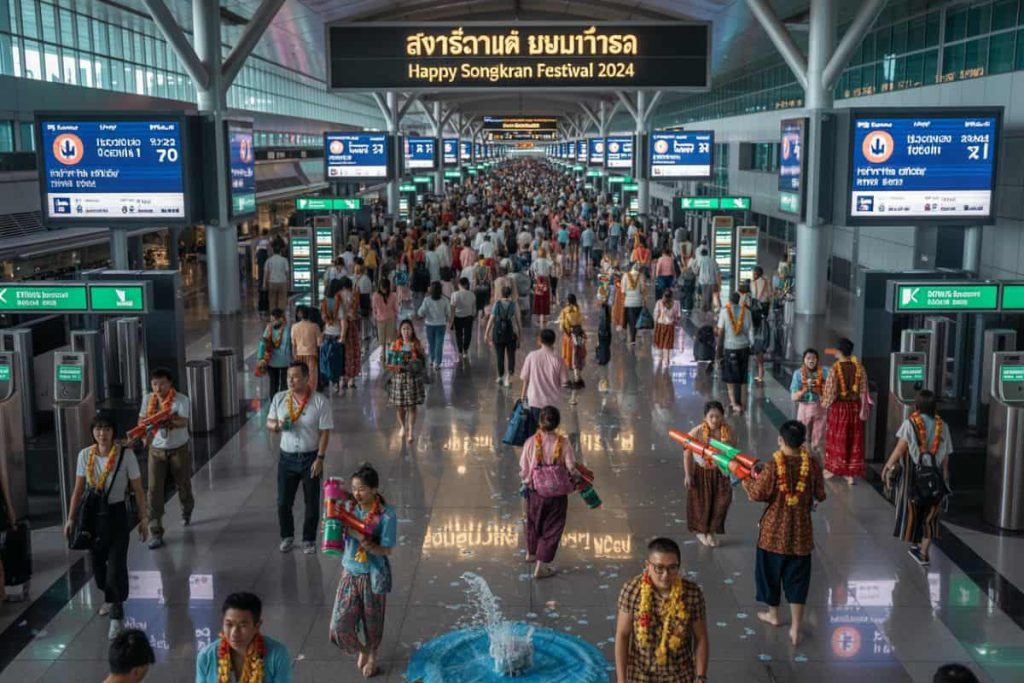
Image generated with Ai
China, Japan, Malaysia, India, South Korea, Singapore, and neighboring ASEAN countries are driving Thailand Songkran Travel to exceed 1.06 million passengers and more than 6,500 flights at Don Mueang International Airport between April 10 and 19, 2026. This increase reflects a measurable rise in Asia-Pacific travel demand during seasonal holidays, supported by expanded airline capacity, regional connectivity, and aligned public holiday calendars across key source markets. Data from Airports of Thailand and the Tourism Authority of Thailand shows that China leads inbound arrivals, followed by Malaysia and India, with additional volume from South Korea, Japan, and Singapore, while peak passenger flow is expected on April 11 during 05:00–07:00, 09:00–11:00, and 15:00–18:00, supported by automated check-in, biometric verification, and digital travel systems to maintain processing efficiency.
Thailand Songkran Travel Set for Record Passenger Surge with Over One Million Travelers Expected
Thailand is forecasting approximately 1.06 million passengers and over 6,500 flights at Don Mueang Airport between April 10 and 19, 2026, marking one of the busiest Songkran travel periods in recent years.
According to verified operational projections from Airports of Thailand (AOT), the surge reflects both domestic holiday movement and a strong rebound in inbound tourism. Songkran remains Thailand’s most significant travel period, consistently driving aviation demand across both full-service and low-cost carriers.
The busiest day is projected to be April 11, with passenger traffic peaking during early morning, mid-morning, and late afternoon windows. Authorities have issued advisories urging passengers to arrive at least two to three hours before departure to ensure sufficient time for check-in, baggage processing, and security clearance.
Advertisement
Advertisement
Passenger Traffic Forecast (AOT Verified)
| Metric | Data |
|---|---|
| Total Passengers | 1.06 million |
| Total Flights | 6,500+ |
| Peak Day | April 11, 2026 |
| Peak Hours | 05:00–07:00, 09:00–11:00, 15:00–18:00 |
DMK Deploys Integrated Fast and Hassle-Free Airport Systems to Manage High Traffic Volume
Don Mueang Airport (DMK) is implementing a fully integrated “Fast and Hassle-free Airport” system, using automation and biometric technologies to accelerate passenger processing and minimize congestion during peak travel periods.
AOT confirms that the airport has expanded self-service infrastructure, including automated check-in kiosks and baggage drop facilities. Facial recognition systems are being used to streamline identity verification, while automated e-passport gates are improving immigration throughput.
Advertisement
Advertisement
These measures align with Thailand’s national aviation modernization strategy, which prioritizes efficiency, digital transformation, and passenger convenience. The integration of biometric systems is expected to significantly reduce queue times, particularly during high-density travel windows such as Songkran.
Smart Technology Deployment at DMK
| System | Operational Benefit |
|---|---|
| Self Check-in | Reduced counter congestion |
| Auto Bag Drop | Faster baggage handling |
| Facial Recognition | Seamless passenger verification |
| E-passport Gates | Accelerated immigration clearance |
Free Parking and Shuttle Connectivity Introduced to Improve Passenger Access
Don Mueang Airport (DMK) is offering free parking at Cargo Building 4 from April 11 to 15, alongside continuous shuttle bus services to the main terminal, ensuring smoother passenger movement during the festival rush.
AOT has confirmed that this measure is designed to ease congestion at primary parking zones and improve accessibility for travellers arriving by private vehicles. Shuttle services will operate at high frequency, ensuring minimal waiting time and efficient transfers.
In addition, airport authorities have deployed staff on a 24-hour basis to assist passengers with navigation, check-in processes, and real-time travel updates. These operational enhancements are aimed at maintaining service quality during one of the year’s busiest travel periods.
Transport Support Measures
| Facility | Details |
|---|---|
| Free Parking | Cargo Building 4 (April 11–15) |
| Shuttle Service | Continuous terminal transfers |
| Passenger Assistance | 24/7 staff availability |
SAWASDEE by AOT App Provides Real-Time Travel Updates and Passenger Guidance
The SAWASDEE by AOT application enables travelers to access real-time flight updates, airport navigation, and transport information, enhancing journey planning and reducing uncertainty during peak travel periods.
Developed by Airports of Thailand, the application integrates multiple passenger services into a single digital platform. Travellers can monitor flight status, check terminal layouts, and receive notifications regarding delays or congestion.
This digital tool is part of Thailand’s broader smart tourism initiative, which aims to improve traveller experience through technology-driven solutions. By providing accurate and timely information, the app helps passengers make informed decisions and avoid unnecessary delays.
SAWASDEE App Features
| Feature | Function |
|---|---|
| Flight Tracking | Real-time updates |
| Navigation | Terminal guidance |
| Alerts | Instant notifications |
| Transport Info | Connectivity planning |
Strong Inbound Tourism from Asia-Pacific Countries Drives Songkran Travel Demand
Inbound tourism during Songkran 2026 is being led by travelers from China, Malaysia, India, South Korea, Japan, Singapore, and neighboring ASEAN countries, reflecting Thailand’s strong regional connectivity and cultural appeal.
Data from the Tourism Authority of Thailand (TAT) indicates that these markets consistently rank among Thailand’s top visitor sources. Proximity, visa facilitation policies, and frequent flight connectivity contribute to sustained travel demand.
China remains the largest source market, followed by Malaysia and India, which have shown strong growth in recent years. South Korea and Japan continue to contribute high-value travellers, while Singapore and ASEAN neighbours drive short-haul leisure travel.
Key Source Markets for Songkran Tourism
| Country | Market Characteristics |
|---|---|
| China | Largest inbound volume |
| Malaysia | Cross-border travel hub |
| India | Rapid growth segment |
| South Korea | Youth and leisure travel |
| Japan | Premium travellers |
| Singapore | Short-haul travel |
| ASEAN | Cultural travel alignment |
Peak Travel Hours Identified as Authorities Urge Early Passenger Arrival
Authorities have identified three primary peak travel windows during Songkran and are advising passengers to plan journeys accordingly to avoid congestion and delays.
The highest traffic levels are expected between 05:00–07:00, 09:00–11:00, and 15:00–18:00, corresponding with flight departure clusters. These peak periods place significant pressure on check-in counters, security checkpoints, and boarding gates.
Passengers are strongly encouraged to complete online check-in, use automated systems, and arrive well in advance of departure times. These recommendations are critical for maintaining operational efficiency and ensuring smooth passenger flow.
Peak Travel Time Distribution
| Time Slot | Expected Traffic |
|---|---|
| 05:00–07:00 | Very High |
| 09:00–11:00 | Very High |
| 15:00–18:00 | Very High |
Songkran-Themed Installations Enhance Cultural Experience at Don Mueang Airport
Don Mueang Airport (DMK) has introduced Songkran-themed decorations and interactive photo areas to create a festive environment and enhance passenger experience during the holiday period.
These installations reflect Thailand’s cultural heritage and serve as engagement points for both domestic and international travelers. Passengers can participate in themed experiences that celebrate the traditional water festival, reinforcing Thailand’s identity as a cultural tourism destination.
Such initiatives align with TAT’s strategy of integrating cultural promotion into transport hubs, transforming airports into immersive gateways that reflect the country’s traditions and hospitality.
Cultural Experience Enhancements
| Feature | Purpose |
|---|---|
| Photo Zones | Passenger engagement |
| Festival Decor | Cultural immersion |
| Interactive Displays | Enhanced experience |
Thailand’s Aviation Infrastructure Supports Tourism Growth and Seasonal Demand
Thailand’s aviation network, led by Don Mueang Airport (DMK) and Suvarnabhumi Airport, plays a critical role in managing increasing tourist arrivals during peak periods such as Songkran.
Government-backed infrastructure investments and digital upgrades have strengthened capacity and operational resilience. DMK primarily handles low-cost and regional traffic, while Suvarnabhumi serves as the main international gateway.
These complementary roles ensure that Thailand can efficiently accommodate both short-haul and long-haul travelers. The integration of smart systems and capacity planning reinforces the country’s position as a leading global tourism hub.
Airport Infrastructure Overview
| Airport | Role |
|---|---|
| Don Mueang | Regional and low-cost hub |
| Suvarnabhumi | International gateway |
Thailand Songkran Travel will exceed one million passengers due to strong Asia demand and DMK’s smart systems ensuring fast processing.
Conclusion: Thailand Songkran Travel Surge Driven by Regional Demand and Smart Airport Systems
Thailand will exceed one million travelers during Songkran 2026 primarily due to strong regional demand from China, Japan, Malaysia, India, South Korea, and Singapore, combined with increased flight capacity and coordinated airport operations at Don Mueang International Airport. The projected 1.06 million passengers and 6,500+ flights reflect a clear concentration of short-haul, high-frequency travel aligned with regional holiday calendars and improved connectivity.
Operational readiness by Airports of Thailand, including biometric processing, automated systems, and passenger flow management, is a key factor enabling this scale without major disruption. The integration of digital tools and infrastructure upgrades ensures efficiency during peak congestion periods, particularly on April 11.
From an analytical standpoint, Thailand Songkran Travel is no longer a seasonal spike but a structured demand cycle driven by regional mobility, policy support, and aviation capacity expansion. This positions Thailand to sustain high-volume tourism flows while maintaining operational stability and traveller throughput efficiency.
Advertisement
Advertisement
