
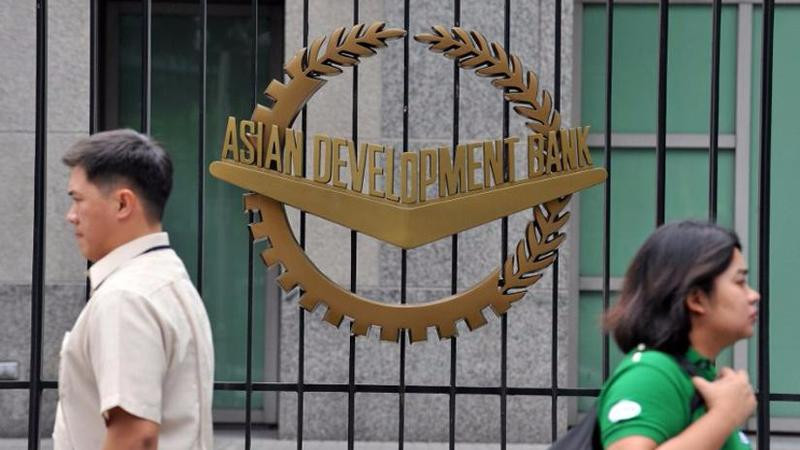
MALAYSIA’S economy is projected to grow by 4.6 per cent in 2026 before edging up to 4.7 per cent in 2027, according to the latest Asian Development Bank (ADB) forecast, which also revised its outlook upwards from its previous estimate of 4.3 per cent.
In its Asian Development Outlook report released on Friday, the ADB said near-term growth would be moderated by policy changes and global headwinds, but supported by strong investment activity and medium-term structural plans.
“The delayed effects of tax reforms and restrictive trade measures introduced in 2025 will likely weigh on the economy in the near term. By 2027, although external challenges may persist, planned initiatives under the 13th Malaysia Plan should support growth,” the bank said.
The projection broadly aligns with other major institutions, including the World Bank, Bank Negara Malaysia (BNM), and the Ministry of Finance. BNM expects growth between 4 per cent and 5 per cent, while the Finance Ministry has forecast 4.0 per cent to 4.5 per cent.
The World Bank recently revised its estimate upward to 4.4 per cent from 4.1 per cent.
Malaysia’s economy expanded by 5.2 per cent in 2025, surpassing earlier official estimates of between 4 per cent and 4.8 per cent.
The ADB said growth would continue to be anchored by strong investment flows totalling RM611 billion, although it warned that prolonged geopolitical instability, particularly in the Middle East, remains a key downside risk.
Inflation is expected to remain contained, with fiscal reforms passing through gradually into prices.
However, the bank noted that tariff adjustments and the delayed effects of the expanded sales and services tax could add mild upward pressure.
It also cautioned that rising global oil prices could increase production costs and feed through into consumer prices. Inflation is projected at 1.8 per cent in 2026 and 1.9 per cent in 2027.
The ringgit is expected to strengthen, averaging slightly above 4.00 against the US dollar, supported by improved investor confidence and a stable domestic outlook.
A stronger currency could help reduce import costs for domestic-focused sectors but may weigh on export competitiveness, particularly industries earning revenue in US dollars.
External risks remain the primary concern, with the ADB warning that geopolitical tensions and shifting global trade policies could disrupt supply chains and weaken demand.
“Growth prospects may suffer if major trading partners experience slower-than-expected growth.”
The report added that developments in the Middle East could produce mixed effects for Malaysia, with higher oil prices potentially benefiting commodity exports but also raising production costs and dampening consumption.
On trade, exports are expected to face headwinds from global uncertainty, although the technology sector is projected to benefit from a recovery in artificial intelligence, automotive, industrial and consumer electronics demand.
Global semiconductor sales are forecast to rise by 26 per cent in 2026.
However, growth in electrical and electronics exports may be constrained by a 25 per cent United States tariff on AI chips introduced in January.
The Edge reported today that the Business Tendency Survey cited that, despite external risks, the business environment remains cautiously optimistic, with firms reporting stabilising conditions and improved production momentum in early 2026,
The government has introduced additional support measures, including RM2.5 billion for the central bank’s SME fund and a planned transition towards RM10 billion in guaranteed financing.
Domestic demand is expected to remain resilient, supported by employment growth, wage adjustments in the civil service, and targeted social assistance of between RM50 and RM200 for eligible groups.
However, higher prices resulting from the expanded sales and services tax, alongside changes to fuel subsidy allocations that reduced the monthly subsidised fuel quota from 300 to 200 litres per citizen, may weigh on discretionary spending.
Tourism is expected to provide further support to the services sector, with the Visit Malaysia 2026 campaign targeting 47 million arrivals and domestic travel encouraged through tax relief of up to RM1,000.
Construction and investment activity are also projected to strengthen, driven by rising demand for data centres—expected to double capacity by end-2026—and major infrastructure projects including the Pan Borneo Highway, the Johor-Singapore Economic Zone, and developments in Sarawak and Sabah, each allocated at least RM6 billion under the 2026 budget. – April 10, 2026