
Indonesian ocean conservation NGO Kebersamaan Untuk Lautan (KUL), together with researchers from Bangor University, IPB University, and the University of Oxford, recently launched a pilot program on the Indonesian island of Lombok that has resulted in what is believed to be the nation’s first vessel buyout scheme.
The program centered around Tanjung Luar, which is on the east coast of Lombok and is home to around 61 licensed shark longline vessels. According to KUL Co-Founder and Director Hollie Booth – who is also a research fellow at both Bangor University and the University of Oxford – over a two-year reporting period those vessels caught more than 13,000 sharks and rays with more than 90 percent of that catch now listed under the Convention on International Trade in Endangered Species (CITES).
“As international trade regulations on sharks continue to tighten, the long-term viability of targeted shark fishing is increasingly uncertain,” she said in a recent University of Oxford Department of Biology article. “As such, the Tanjung Luar shark fishery represents a risk for threatened species, CITES compliance, and the 150 fisher households who depend directly on this fishery for their livelihoods.”
To help protect shark populations off the Lombok coast, while also prioritizing the livelihoods of local fishers, KUL decided to ask fishermen whether they would voluntarily exit the fishery for a price they set themselves, rather than lobbying for the fisheries to be restricted or fully shut down.
“Relying on rules and enforcement alone – by simply restricting trade and banning these fisheries – is overly simplistic and likely to fail,” Booth said in a LinkedIn post. “Such approaches ignore the opportunity costs borne by coastal communities and the importance of legitimacy, risk driving trade underground, and can lead to perverse outcomes.”
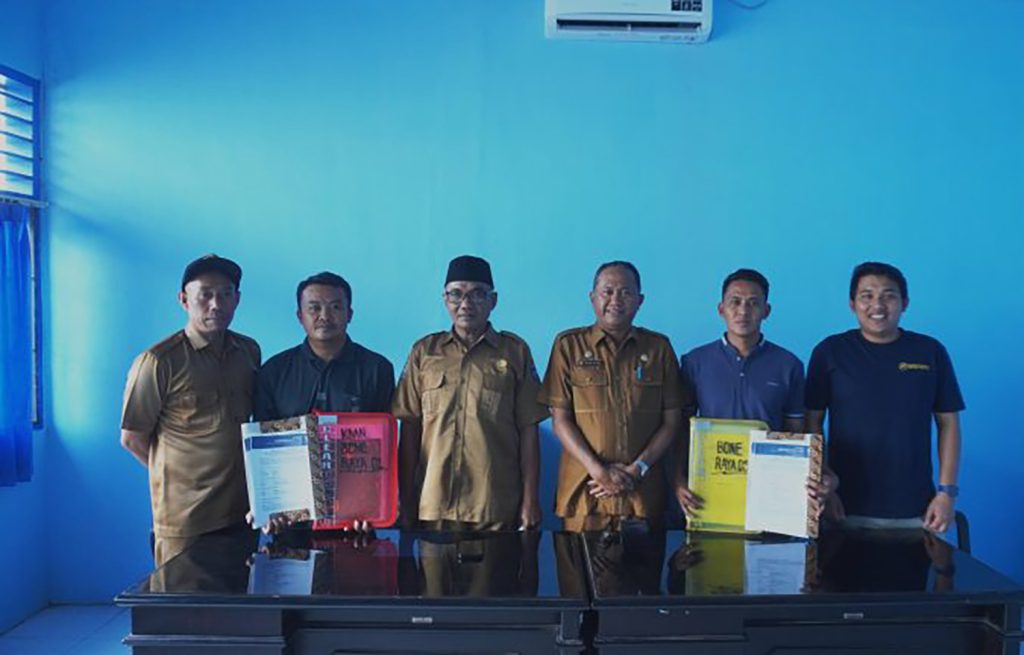
Using a reverse auction, four fishers submitted confidential bids to the NGO, two of which were selected and bought out. Once compensated IDR 300 million (USD 17,550, EUR 15,000) each, the two owners’ licenses were canceled and vessels decommissioned in partnership with the relevant provincial fisheries authority: the Department of Marine Affairs and Fisheries of West Nusa Tenggara (DKP NTB).
“Over a 10-year horizon, the removal of these two vessels alone is projected to prevent more than 4,000 threatened and CITES-listed sharks and rays from being killed – at a cost of less than USD 9.00 [EUR 7.68] per animal,” Booth said. “No bans. No coercion. Just a fair, transparent mechanism that puts the choice in fishers’ hands, which provides a proof of concept for fishery transition plans to phase out targeted shark fishing, should governments decide to pursue such policies to implement.”
Booth said that in the future, vessel buyout schemes can serve as one effective approach in a wide range of conservation efforts as Indonesia works to implement CITES obligations.
KUL was recently appointed as the coordinator for shark and ray fisheries management in the Indonesian province of West Nusa Tenggara, which includes Lombok, and has worked closely with DKP NTB on conservation structures and mandates in the province.