
3
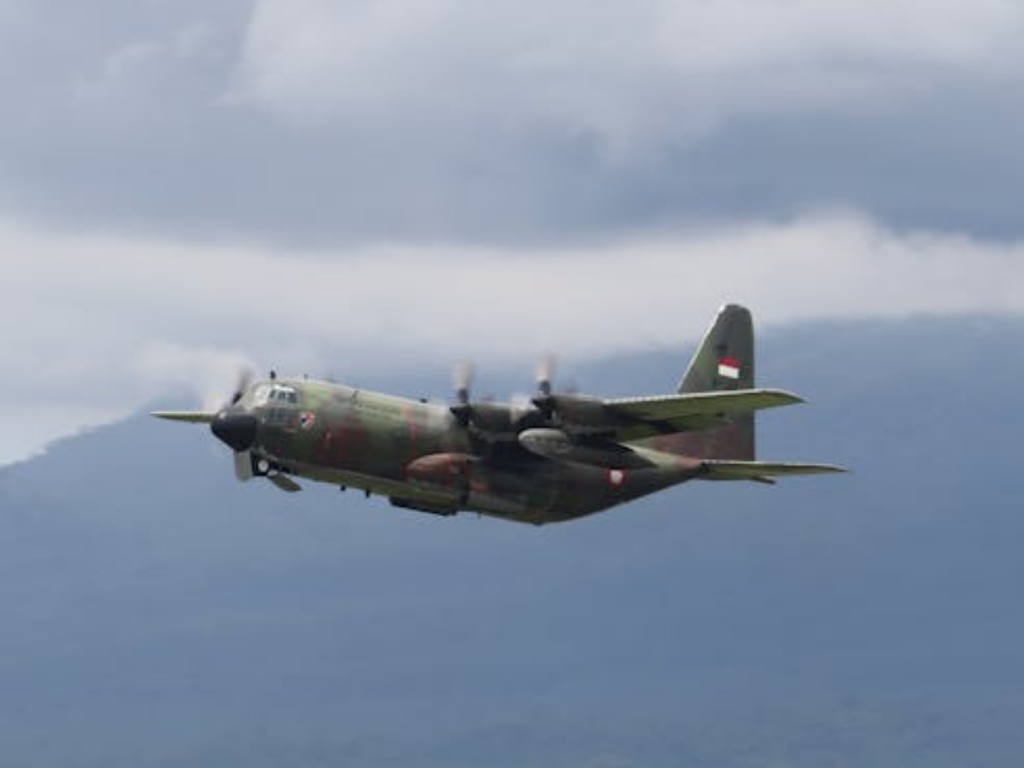
A classified United States defence document lays out a plan to secure blanket overflight access for American military aircraft through Indonesian airspace, following a February meeting between Indonesian President Prabowo Subianto and Donald Trump in Washington, marking a significant step in expanding U.S. operational reach across the Indo-Pacific.
Prabowo visited Washington D.C. from 18 to 20 February 2026 to attend the Board of Peace summit. During this visit, he approved a proposal to authorise blanket overflight clearance for U.S. aircraft through Indonesian airspace in a bilateral meeting with Trump, according to details contained in a classified U.S. document.
To operationalise this commitment, the U.S. Department of War transmitted a document titled “Operationalizing U.S. Overflight” to Indonesia’s Ministry of Defence on 26 February . The document proposes a formal understanding under which Indonesia would permit U.S. military aircraft to transit its airspace for contingency operations, crisis response missions and mutually agreed military exercises.
The text states that the purpose of the arrangement is for “the Government of Indonesia to authorise blanket overflight for U.S. aircraft clearance through Indonesian airspace for contingency operations, crisis response purposes, and mutually agreed exercise-related activities.” It further specifies that “U.S. aircraft may transit directly upon notification until subsequent notification of deactivation by the United States,” effectively allowing continuous access once the mechanism is activated.
The proposal establishes a notification-based system rather than case-by-case clearance, significantly reducing procedural constraints on U.S. military mobility. It also outlines coordination mechanisms, including a direct hotline between U.S. Pacific Air Forces and Indonesian air operations centres, alongside parallel diplomatic and military communication channels.
According to the document, Indonesia has already reached consensus with the United States on the text of the arrangement. Indonesian Defence Minister Sjafrie Sjamsoeddin is scheduled to visit Washington on 13 April, where he is expected to sign the agreement with U.S. Secretary of Defense Pete Hegseth, formalising the mechanism.
The Sunday Guardian reached out to the US state department, Department of War and Indonesian foreign ministry and other relevant offices for a response on these developments. A response was yet to be received when the story went to print.
The development signals a clear military intent on the part of the United States to secure reliable transit corridors across Southeast Asia. Indonesia’s geographic position, spanning critical sea lanes and air routes between the Pacific and Indian Oceans, makes its airspace strategically vital for rapid deployment and force projection.
In the Indo-Pacific region, the United States already has established base access and overflight arrangements with key allies including Australia, the Philippines and Japan. The addition of Indonesia to this network would significantly expand operational continuity across the region.
The proposed arrangement is likely to have wider geopolitical implications. By enabling standing access through Indonesian airspace, it alters the balance of military mobility in Southeast Asia and may contribute to increased strategic tensions, particularly amid ongoing competition among major powers in the Indo-Pacific.
There has been no public confirmation from either Washington or Jakarta regarding the document. However, the sequence of events outlined in the text, including high-level political approval, intergovernmental consensus and an imminent signing schedule, indicates that the agreement is approaching finalisation.