
There are moments in foreign policy when a single sentence reveals more than a thousand strategy papers. President Prabowo Subianto’s April remark telling dissatisfied Indonesians to “just run away to Yemen” was one of those moments. It was intended as a domestic flourish, a show of nationalist bravado against the “Indonesia Gelap” narrative, but it landed far beyond the crowd gathered at a nickel-processing groundbreaking in Cilacap. It travelled across the Indian Ocean, across memory, and across dignity.
For many, it sounded like a throwaway line. For millions of Indonesians with Hadhrami roots, for scholars of Islamic diplomacy, and for governments across the Muslim world, it sounded like something darker: the casual reduction of an ancient civilisational partner into a metaphor for misery. It was not simply clumsy. It carried the unmistakable scent of hierarchy—the old colonial instinct of measuring some nations as worthy and others as warnings.
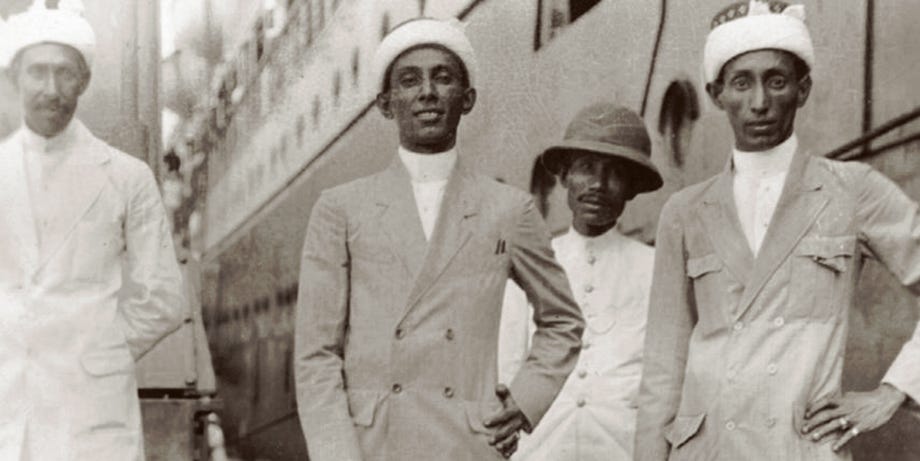
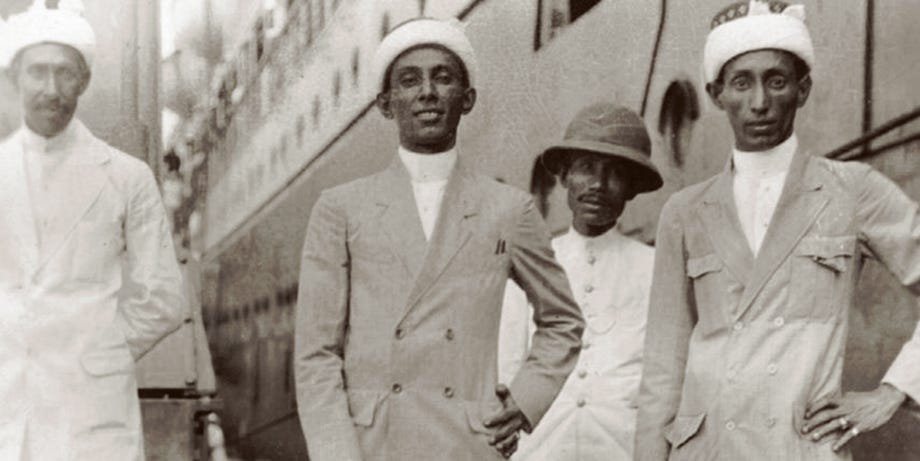
That is dangerous language for any leader. It is especially dangerous for Indonesia. Yemen is not a rhetorical landfill for political frustration. Yemen is woven into the Indonesian story itself. Long before the modern republic existed, merchants and scholars from Hadhramaut helped shape the archipelago’s religious and intellectual foundations.
From as early as the eleventh century, Yemeni traders and ulama carried Islam into Nusantara (Indonesia archipelago), not through conquest but through commerce, marriage, trust, and scholarship. They founded educational institutions, built pesantren traditions, and established enduring social authority through families whose descendants still shape Indonesian religious life.
Even today, as many as five million Indonesians are estimated to trace ancestry to Hadhrami migrants from Yemen. This is not a footnote in Indonesian history. It is part of the bloodstream.
Yemen was also among the first Arab states to recognise Indonesian independence, doing so on 3 May 1948. That recognition mattered in a world where the young republic was still fighting for legitimacy. Diplomacy is often described in the language of interests, but nations also remember respect. Yemen remembered Indonesia early. Indonesia should remember Yemen now.
Instead, the presidential remark inverted that history. It transformed Yemen from a civilisational partner into a cautionary tale. It implied that dissatisfaction with Jakarta should be punished with exile to Sana’a, as though Yemen exists only as shorthand for collapse.
That is not realism. It is prejudice disguised as humour. The cruelty is sharpened by context. Yemen is enduring one of the world’s most devastating humanitarian catastrophes. According to the United Nations, more than 21 million Yemenis continue to require humanitarian assistance, with millions displaced by years of war, famine, and institutional collapse. To use that suffering as a political punchline is not a strength. It is moral laziness.
ASEAN leaders and Indonesia’s strategic partners across the Global South should recognise the deeper lesson in this episode. The Indo-Pacific is too often reduced to shipping lanes, defence pacts, rare earths, and naval balance sheets, as though foreign policy were built only on steel and transactions. Yet the region still runs on something older and far more fragile: dignity. Respect is the invisible architecture holding together alliances from Jakarta to Pretoria. Its absence travels faster than trade agreements and lingers longer than summit communiqués.
A careless insult aimed at one nation rarely stops at one border; it echoes across communities, diasporas, and diplomatic memory. In a fractured international order where trust is scarce, and pride is deeply political, humiliation itself becomes strategic—sometimes more powerful than sanctions, and far more difficult to repair.
This is where Prabowo’s comment becomes more than an Indonesian controversy. It touches the architecture of trust across the Global South.
The irony was impossible to ignore: the same leader who once sought refuge in Jordan after his 1998 military dismissal—amid allegations of activist kidnappings, internal military rivalry, and the collapse of Suharto’s regime—now tells critics to “run away to Yemen” as though exile were a mark of weakness rather than a chapter of his own political survival.
History remembers that Prabowo’s own departure was not framed as cowardice but as a strategic retreat, sheltered by royal ties in Amman and protected from Jakarta’s post-Reformasi storm; to invoke exile now as an insult exposes not strength, but a selective amnesia that diminishes both democratic memory and diplomatic dignity.
Indonesia has long cultivated an image of itself as a bridge: between Asia and the Middle East, between democracy and Islam, between nationalism and pluralism. Jakarta has sought influence through moderation rather than domination. Its diplomatic doctrine has echoed the old phrase: a thousand friends are too few, one enemy too many.
That moral capital matters. It helps Indonesia mediate in OIC forums, speak credibly on Palestine, and position itself as a leader of South-South solidarity. It gives Jakarta soft power beyond GDP.
But soft power is fragile because it depends on coherence. A country cannot claim to defend Muslim dignity in Gaza while publicly diminishing Yemen. It cannot preach pluralism abroad while using another Muslim nation as a domestic theatre at home.
The contradiction is not lost on Middle Eastern observers. The educational bond between Indonesia and Yemen remains remarkably deep, with more than 2,000 Indonesians pursuing Islamic studies in Yemen today, compared to only a few hundred just a decade ago. These young scholars are far more than students; they are quiet diplomats of civilisation, returning home with Arabic fluency, religious scholarship, intellectual networks, and emotional loyalties that continue to shape the soul of Indonesian Islam itself.
This is diplomacy in its oldest form—not embassies, but memory. Islamic diplomacy has always understood this better than modern strategic theory sometimes does. In classical Islamic political thought, adab—ethical conduct, refined respect, the discipline of honourable speech—was not decorative morality. It was statecraft. A ruler’s words reflected the legitimacy of the rule itself.
The Prophet Muhammad’s diplomatic letters to neighbouring powers were remembered not only for their political intent but for the ethics embedded in language. Respect was not weakness; it was authority.
The Ottoman, Mughal, and early Southeast Asian Islamic courts understood this instinctively. Foreign policy was not simply transactional. It was civilisational. To insult a partner was to damage oneself.
This wisdom feels strangely absent in contemporary populist politics, where leaders increasingly confuse aggression with authenticity. Strongman rhetoric often performs strength by humiliating someone else: migrants, neighbours, dissenters, the poor. But humiliation is not a strategy. It is a theatre.
Prabowo’s challenge is not merely to retract a phrase. It is to decide what kind of leadership Indonesia wants to project. Does leadership mean disciplining critics by telling them to leave? Or does it mean confronting dissent with argument and confidence? As critics noted, strong leadership does not exile disagreement; it engages it.
This matters domestically as much as internationally. Indonesia’s Pancasila philosophy speaks of just and civilised humanity. That phrase is not ceremonial. It is supposed to be constitutional behaviour. When language abandons civility, democratic legitimacy thins.
There is still room for repair. Foreign ministries are often built for exactly this purpose: to translate ego into apology before damage hardens into memory. Jakarta can reaffirm Yemen’s historic place in Indonesian civilisation, expand educational and humanitarian cooperation, and visibly honour Hadhrami contributions to the republic. Symbolism matters because symbolism was the injury.
Yet repair requires more than diplomatic choreography. It requires humility—the rarest currency in modern politics. Because the real scandal here is not simply that Yemen was insulted. It is that Indonesia momentarily forgot who it is.
Nations are not made only by presidents or military parades or industrial projects. They are made by inheritance: by teachers, pilgrims, merchants, and quiet debts across centuries. Yemen is one of those debts.
To forget that is not nationalism. It is amnesia. And amnesia, in foreign policy, is often the first step toward decline.