
Published on
June 27, 2026

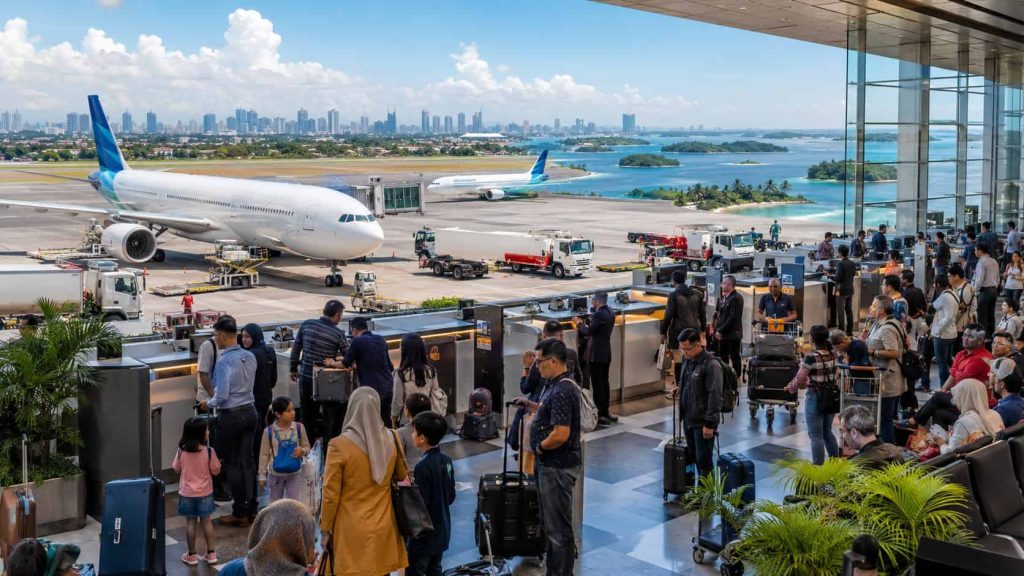
Image generated with Ai
Indonesia is preparing to introduce its long-awaited Indonesia airfare cap revision, a policy expected to reshape the country’s domestic aviation market once global aviation fuel prices and geopolitical conditions become more stable. The government has confirmed that a new upper and lower airfare limit formula has already been completed, although implementation will only proceed after international energy markets become less volatile. The move is expected to have significant implications for millions of domestic travellers, airlines, tourism operators and regional economies that depend heavily on affordable air connectivity across the world’s largest archipelago.
For Indonesia’s travel industry, the announcement signals a potential turning point. Domestic aviation remains the backbone of tourism connectivity, linking more than 17,000 islands and supporting leisure, business and government travel throughout the country. The forthcoming fare revision is designed to better reflect today’s airline operating costs, many of which have changed considerably since the current pricing framework was introduced in 2019. At the same time, authorities aim to ensure ticket prices remain accessible while allowing airlines to maintain sustainable operations in an increasingly challenging global aviation environment.
Indonesia’s Domestic Aviation Market Faces a New Pricing Era
Indonesia’s aviation sector has experienced dramatic changes since the current airfare cap regulations were introduced in 2019. The COVID-19 pandemic, global supply chain disruptions, inflation, rising maintenance expenses and fluctuating fuel prices have fundamentally altered airline economics.
Recognising these structural shifts, the Indonesian government has completed a revised pricing formula covering both maximum and minimum economy-class domestic airfares. The revised calculation reportedly considers updated operational costs rather than relying on assumptions established several years ago.
Officials have indicated that implementation remains dependent upon greater stability in international aviation fuel markets. Since jet fuel typically represents between 25% and 35% of an airline’s operating costs, sudden price fluctuations can significantly affect airline profitability.
Rather than introducing the revised limits immediately, policymakers are choosing a cautious approach that prioritises market stability before adjusting regulated fares.
Advertisement
Advertisement
Why Aviation Fuel Prices Matter So Much
Fuel continues to be the single largest variable cost for airlines worldwide. Although international oil prices have eased in recent months compared with earlier peaks, volatility remains due to ongoing geopolitical uncertainty affecting global energy markets.
Indonesia’s authorities believe implementing a new fare cap while fuel markets remain unstable could create unnecessary pressure for airlines or consumers.
Advertisement
Advertisement
The strategy therefore seeks to introduce revised pricing only after market conditions demonstrate sustained stability.
| Key Cost Component | Importance for Airlines |
|---|---|
| Aviation fuel | Largest variable operating expense |
| Aircraft leasing | Major fixed operational cost |
| Aircraft maintenance | Increased following global supply chain disruptions |
| Airport charges | Essential infrastructure cost |
| Navigation services | Required for domestic operations |
| Labour expenses | Pilots, cabin crew, engineers and ground staff |
| Insurance | Higher following global aviation market changes |
Domestic Air Travel Remains Essential for Indonesia
Indonesia’s geography makes aviation indispensable.
Stretching across thousands of islands, the country depends on domestic air services to connect major cities, tourism destinations and remote regions that cannot easily be reached by road or rail.
Popular tourism destinations including Bali, Labuan Bajo, Lombok, Yogyakarta, Medan, Makassar and Raja Ampat rely heavily on scheduled domestic flights to attract both domestic and international visitors.
Advertisement
Advertisement
Affordable airfares therefore play an important role in supporting:
| Tourism Segment | Importance of Affordable Flights |
| Domestic holidays | Encourages inter-island leisure travel |
| International tourism | Supports onward domestic connections |
| Business travel | Maintains economic activity |
| Government travel | Enables administrative connectivity |
| Regional development | Improves accessibility for remote provinces |
| SME tourism businesses | Supports hotels, restaurants and attractions |
Reviewing a Framework That Dates Back to 2019
Indonesia’s existing airfare ceiling continues to operate under regulations introduced in 2019.
Since then, airlines have experienced unprecedented operational challenges.
Among the most significant changes include:
| Industry Change Since 2019 | Impact on Airlines |
| COVID-19 pandemic | Historic passenger collapse |
| Inflation | Higher operating expenses |
| Aircraft maintenance inflation | Increased engineering costs |
| Spare parts shortages | Longer maintenance cycles |
| Currency fluctuations | Higher leasing costs |
| Labour market changes | Increased staffing expenses |
| Fuel volatility | Unpredictable operating costs |
Because these costs have evolved considerably, government officials concluded that the previous fare formula no longer accurately reflects today’s aviation environment.
Tourism Industry Could Benefit from Greater Pricing Certainty
For Indonesia’s tourism economy, predictable airfare policies remain almost as important as affordable ticket prices.
Advertisement
Advertisement
Hotels, tour operators, travel agencies and destination marketing organisations often plan promotional campaigns months in advance. Stable airfare regulations help businesses estimate visitor demand with greater confidence.
Domestic tourism has become increasingly important for Indonesia since the pandemic, with millions of Indonesians choosing to explore destinations within the country.
Improved fare certainty could encourage stronger forward bookings during holiday seasons, school vacations and national festivals.
Indonesia’s Aviation Industry by the Numbers
Indonesia remains one of Southeast Asia’s largest aviation markets.
| Aviation Indicator | Latest Available Data* |
| Population | Approximately 285 million |
| Islands | More than 17,000 |
| Commercial airports | More than 300 |
| International airports | Around 30 |
| Domestic aviation role | Primary inter-island transport |
*Figures compiled from Indonesian government aviation and statistical publications.
The country’s geography means air transport often represents the fastest—or only practical—means of travelling between provinces.
Advertisement
Advertisement
Balancing Consumer Protection with Airline Sustainability
The revised airfare framework aims to achieve two objectives simultaneously.
First, passengers should continue enjoying reasonable ticket prices that encourage mobility and tourism.
Secondly, airlines require sufficient revenue to invest in fleet renewal, safety, maintenance and service improvements.
Finding this balance has become increasingly important as airlines continue rebuilding financial resilience following several years of market disruption.
A pricing framework that reflects genuine operating costs can help reduce financial pressure while maintaining competition across domestic routes.
Global Energy Markets Continue to Influence Aviation
Indonesia’s cautious approach also reflects the international nature of aviation economics.
Advertisement
Advertisement
Jet fuel prices respond to:
| External Factor | Potential Influence |
| Crude oil prices | Direct effect on aviation fuel |
| Geopolitical tensions | Market volatility |
| Currency exchange rates | Fuel purchasing costs |
| Global supply chains | Aircraft maintenance expenses |
| Regional demand | Airline operating margins |
As long as these variables remain unstable, regulators believe delaying implementation remains the more prudent policy choice.
What Travellers Should Expect Next
Travellers should not expect immediate changes to domestic airfare ceilings.
Current pricing regulations remain fully in force until authorities formally announce implementation of the revised framework.
Should fuel prices continue moderating and geopolitical conditions improve, Indonesia may introduce the revised fare limits later this year or whenever market conditions meet government expectations.
Passengers are therefore likely to continue booking flights under existing regulated fare structures for the immediate future.
Advertisement
Advertisement
A Policy Designed for Long-Term Market Stability
The Indonesia airfare cap revision represents more than a routine regulatory update. It reflects an effort to modernise aviation pricing after years of extraordinary global disruption.
Rather than responding only to short-term market pressures, policymakers are attempting to create a framework capable of supporting both affordable domestic travel and financially sustainable airlines.
For Indonesia’s tourism economy, which depends heavily on reliable domestic air connectivity across one of the world’s most geographically complex nations, achieving that balance could prove essential for long-term growth. As fuel markets gradually stabilise, the Indonesia airfare cap revision is expected to become one of the country’s most significant aviation policy developments in recent years.
Analysis: What This Means for the Travel Industry
The government’s decision to delay implementation until fuel markets stabilise demonstrates a risk-management approach rather than a political one. For airlines, introducing revised fare caps during volatile fuel conditions could quickly render the new formula outdated. For travellers, waiting may reduce the likelihood of repeated fare adjustments. From a tourism perspective, predictable pricing is often more valuable than temporary discounts because it enables destinations, airlines and travel businesses to plan capacity, promotions and investment with greater confidence.
Advertisement
Advertisement
