
Published on
June 13, 2026

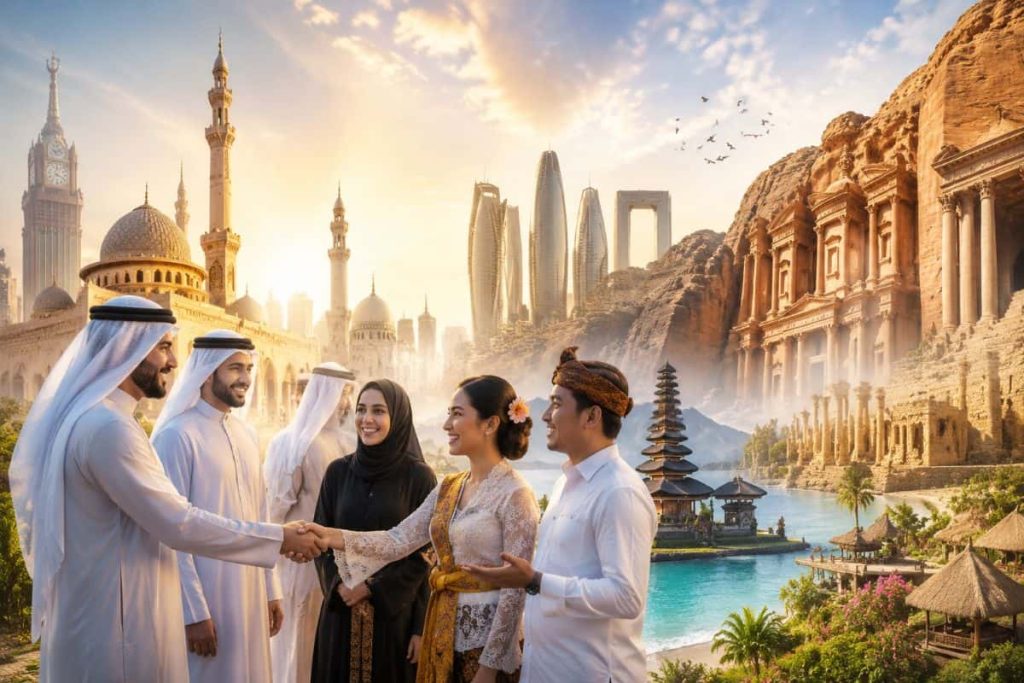
Image generated with Ai
Indonesia and Saudi Arabia are entering a new phase of tourism collaboration that could reshape travel flows between Southeast Asia and the Middle East. During high-level discussions held alongside the 126th UN Tourism Executive Council Session in Toledo, Spain, both countries agreed to expand cooperation across multiple tourism segments, creating fresh opportunities for visitor growth, cultural exchange, hospitality development, and destination diversification. The agreement arrives at a time when Middle East outbound tourism, religious travel demand, cross-border visitor exchanges, and tourism workforce development are becoming increasingly important pillars of global tourism recovery and expansion.
The strengthened partnership is expected to generate long-term benefits for both destinations by encouraging greater movement of travelers while broadening tourism offerings beyond traditional pilgrimage routes. A major focus of the discussions centered on integrating leisure tourism, heritage tourism, cultural exploration, and destination diversification into established religious travel itineraries. Simultaneously, Indonesia is positioning itself to attract more affluent Gulf travelers through specialized hospitality training and enhanced Arabic-language services. The initiative demonstrates how both nations are leveraging deep historical, cultural, and spiritual ties to create a more comprehensive tourism ecosystem capable of supporting sustainable international visitor growth.
Indonesia and Saudi Arabia Elevate Tourism Relations Beyond Traditional Travel Segments
Tourism cooperation between Indonesia and Saudi Arabia has historically been dominated by religious travel, particularly through Hajj and Umrah journeys undertaken by millions of Indonesian pilgrims. However, the latest bilateral discussions signal a broader vision that seeks to transform the relationship into a comprehensive tourism partnership encompassing leisure, culture, hospitality, education, and economic development.
Officials from both countries reviewed progress achieved under existing tourism cooperation frameworks while identifying new opportunities to increase visitor flows in both directions. The dialogue highlighted a shared commitment to creating a stronger tourism bridge between Southeast Asia and the Gulf region.
Advertisement
Advertisement
For Indonesia, Saudi Arabia remains one of the most influential tourism and economic partners in the Middle East. The Kingdom’s rapidly expanding tourism sector, supported by large-scale destination development projects and tourism diversification efforts, presents significant opportunities for Indonesian travelers seeking new experiences beyond traditional religious visits.
Likewise, Indonesia offers Saudi visitors access to world-renowned beaches, island destinations, cultural attractions, eco-tourism experiences, luxury resorts, and Islamic heritage sites that appeal to a broad range of traveler interests.
Advertisement
Advertisement
The enhanced partnership demonstrates how tourism diplomacy increasingly serves as a catalyst for broader economic cooperation, cultural understanding, and long-term people-to-people connections.
Religious Tourism Evolution Creates New Opportunities for Extended Visitor Experiences
One of the most significant outcomes of the discussions involved efforts to enrich the travel experiences of Indonesian pilgrims visiting Saudi Arabia. Traditionally, many Hajj and Umrah travelers focus exclusively on religious obligations in Mecca and Medina. The new tourism framework seeks to encourage visitors to explore additional destinations throughout the Kingdom.
Under the proposed approach, pilgrimage itineraries could incorporate cultural landmarks, historical attractions, heritage destinations, and emerging tourism developments located across various regions of Saudi Arabia. Such diversification would enable travelers to gain a more comprehensive understanding of the country’s history, culture, landscapes, and modern tourism offerings.
This strategy aligns with broader international tourism trends where religious travel increasingly intersects with leisure tourism, heritage exploration, and experiential travel. By extending visitor stays and encouraging exploration beyond primary pilgrimage sites, tourism authorities can create stronger economic benefits for local communities and regional destinations.
For Indonesian travelers, expanded tourism options could provide access to archaeological sites, cultural districts, museums, traditional marketplaces, natural landscapes, and emerging tourism attractions that are becoming central components of Saudi Arabia’s tourism transformation.
The initiative also reflects growing recognition that modern travelers often seek multidimensional experiences that combine spiritual fulfillment with cultural enrichment and destination discovery.
Advertisement
Advertisement
Saudi Arabia and Indonesia Strengthen Visitor Exchange Networks Across Key Tourism Markets
The tourism agreement extends beyond pilgrimage travel and reflects a broader ambition to increase visitor exchanges between both nations. Tourism officials emphasized the importance of developing stronger tourism connectivity, enhancing destination awareness, and creating more seamless travel experiences.
Saudi Arabia’s expanding tourism market presents a valuable opportunity for Indonesian tourism stakeholders. As Gulf travelers increasingly seek new international destinations, Indonesia’s diverse tourism portfolio positions the country as an attractive choice for family vacations, luxury escapes, wellness tourism, island experiences, and cultural exploration.
Destinations such as Bali, Lombok, Jakarta, Yogyakarta, Labuan Bajo, and various emerging tourism hubs have the potential to attract growing numbers of visitors from Saudi Arabia and neighboring Gulf countries.
At the same time, Indonesian outbound travelers represent an important market for Saudi Arabia’s broader tourism ambitions. Beyond pilgrimage-related travel, Saudi tourism authorities are working to showcase the Kingdom’s evolving tourism landscape, including heritage destinations, entertainment districts, cultural attractions, and major tourism development projects.
By strengthening tourism exchanges, both countries aim to support economic growth, tourism investment opportunities, hospitality sector development, and stronger bilateral relationships.
The strategy also complements wider efforts across the Middle East and Southeast Asia to encourage regional connectivity and international tourism cooperation.
Advertisement
Advertisement
Lombok Hospitality Initiative Targets Rising Demand from Middle Eastern Travelers
A major component of Indonesia’s tourism strategy involves preparing its hospitality sector to better serve visitors from the Middle East. To support this objective, Indonesia proposed establishing a specialized Arabic Language and Hospitality Center at the Lombok Tourism Polytechnic in West Nusa Tenggara.
The initiative represents a targeted effort to improve language capabilities, cultural understanding, and service standards among tourism professionals. By equipping frontline hospitality workers with Arabic communication skills and deeper knowledge of Middle Eastern cultural expectations, Indonesia aims to deliver more personalized and satisfying visitor experiences.
The proposal reflects growing awareness that destination competitiveness increasingly depends on service quality and cultural responsiveness. Travelers often evaluate destinations not only based on attractions but also on how effectively local service providers understand and accommodate their needs.
Training programs could include Arabic language instruction, guest relations management, cultural awareness education, tourism service excellence, hospitality operations, and customized visitor engagement practices.
Lombok’s selection for the initiative is particularly significant because the island has emerged as one of Indonesia’s priority tourism destinations. With its beaches, luxury resorts, cultural heritage, and strong Islamic identity, Lombok is well positioned to appeal to travelers from Saudi Arabia and other Gulf nations.
The project could ultimately serve as a model for hospitality education and tourism workforce development across Indonesia.
Advertisement
Advertisement
Tourism Workforce Development Emerges as a Strategic Driver of Future Growth
Beyond destination marketing and visitor promotion, the Indonesia-Saudi Arabia partnership highlights the increasingly important role of human capital development within the global tourism industry.
As international tourism becomes more competitive, destinations are investing heavily in workforce training, specialized skills development, and service excellence programs designed to enhance visitor satisfaction. Indonesia’s proposed hospitality center demonstrates how education and tourism policy can work together to strengthen national tourism competitiveness.
Industry experts frequently identify workforce preparedness as one of the most critical factors influencing visitor perceptions, repeat visitation, and destination reputation. By proactively developing tourism professionals who can communicate effectively with Middle Eastern travelers and understand their cultural preferences, Indonesia is positioning itself to capture a larger share of a rapidly growing visitor segment.
The initiative also supports broader objectives related to sustainable tourism growth. Well-trained hospitality professionals contribute to higher service quality, stronger destination branding, improved traveler experiences, and increased economic returns for tourism-dependent communities.
As both countries continue implementing the outcomes of their tourism discussions, workforce development is likely to remain a central pillar of future cooperation.
A New Chapter in Southeast Asia and Middle East Tourism Cooperation
The strengthened tourism alliance between Indonesia and Saudi Arabia reflects a growing trend toward deeper collaboration between Southeast Asian and Middle Eastern destinations. By combining visitor exchange initiatives, tourism workforce development, destination diversification, and enhanced hospitality standards, both countries are laying the groundwork for sustained tourism growth.
Advertisement
Advertisement
The agreement demonstrates how tourism partnerships can evolve beyond traditional travel patterns to create broader economic opportunities and richer visitor experiences. Whether through expanded pilgrimage itineraries, increased leisure travel, specialized hospitality education, or enhanced cultural exchanges, the collaboration positions both nations to benefit from shifting global tourism dynamics.
As international travel demand continues to rise, the Indonesia-Saudi Arabia partnership may serve as a blueprint for future tourism cooperation between emerging tourism markets seeking to strengthen connectivity, improve visitor experiences, and unlock new avenues of sustainable growth.
FAQs
Why are Indonesia and Saudi Arabia expanding tourism cooperation?
The two countries aim to increase visitor exchanges, diversify travel experiences, strengthen hospitality capabilities, and create broader economic opportunities through tourism.
What was the main outcome of the tourism discussions?
Officials agreed to deepen bilateral tourism cooperation, expand travel opportunities, and explore ways to integrate leisure tourism into traditional pilgrimage journeys.
How could Indonesian pilgrims benefit from the agreement?
Pilgrims may gain opportunities to visit additional cultural, heritage, and tourism destinations throughout Saudi Arabia beyond Mecca and Medina.
What is the proposed Arabic Language and Hospitality Center?
Indonesia has proposed establishing a specialized training center at Lombok Tourism Polytechnic to improve Arabic language skills and hospitality services for Middle Eastern visitors.
Advertisement
Advertisement
Why is Lombok important to this tourism strategy?
Lombok is one of Indonesia’s priority tourism destinations and offers attractions, cultural experiences, and hospitality infrastructure that appeal to Middle Eastern travelers.
How does this partnership support tourism growth?
The collaboration encourages visitor exchanges, enhances tourism workforce skills, improves service quality, and creates new opportunities for tourism businesses and destinations in both countries.
What role does workforce development play in the agreement?
Training hospitality professionals in language skills, cultural understanding, and service excellence is expected to improve visitor satisfaction and strengthen Indonesia’s competitiveness in international tourism markets.
Could this partnership influence tourism across the wider region?
Yes. The initiative reflects broader efforts to strengthen tourism connectivity between Southeast Asia and the Middle East and may encourage similar collaborations among other destinations.

Advertisement
Advertisement
