
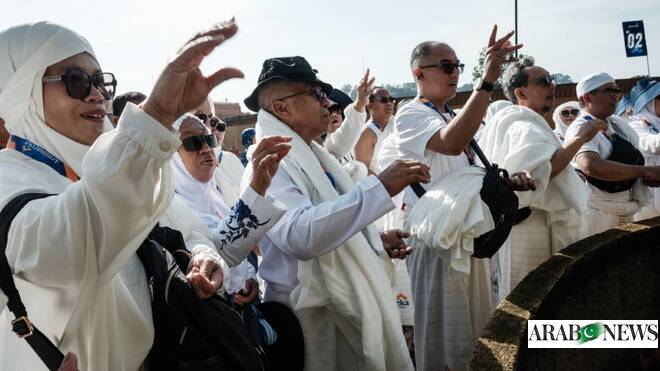
JAKARTA: Indonesia will set up a special task force to prevent pilgrimage-related scams and unauthorized departures, the Ministry of Hajj and Umrah said on Thursday, as it prepares for the first pilgrims to travel to Saudi Arabia this month.
Every year, the world’s biggest Muslim-majority nation sends the largest Hajj contingent of pilgrims to perform the spiritual journey that is one of the five pillars of Islam. In 2026, Saudi Arabia has granted Indonesia a quota of 221,000 pilgrims.
Concerns have been mounting after more than 1,200 Indonesians fell victim to Hajj-related scams in 2025, prompting authorities to step up preventative measures ahead of the first special pilgrimage flights scheduled to depart on April 22.
“We are committed to prevent (scam) practices from happening, especially through strict surveillance at departure points,” Dahnil Anzar Simanjuntak, deputy minister of Hajj and Umrah, told reporters on Thursday.
The task force, which comprise ministry officials and police officers, will work in close coordination with Saudi authorities.
Indonesia has around 5.7 million registered Hajj applicants from across the country. For Indonesians, the waiting period to perform the pilgrimage can be up to 26 years.
Many Indonesians have been lured in by scammers promising fast-track visa applications, officials said, leading to their arrest and subsequent deportation by Saudi authorities for attempting to perform the Hajj with the incorrect visa type.
Losses due to pilgrimage-related scams in Indonesia have amounted to about 92 billion rupiah ($5.4 million) to date, said Deputy Chief of the National Police Dedi Prasetyo.
“The main focus is to prevent unauthorized Hajj departures through control and surveillance at airports, and firmly act against scams by travel agents,” he said.
“Preventive measures will be carried out at all airports through strict document verification and firm legal action, including criminal prosecution, against any violations.”
The task force will also enforce other measures, including raising public awareness and establishing a public hotline to streamline scam reports.
“This policy is in line with the president’s instructions to provide the utmost protection for pilgrims and to ensure that the public are not further burdened by hefty fees,” Prasetyo said.