
Close Menu
Simply Invest Asia
  • Home
  • About us
  • Explore industries/sectors
    • Automobile
    • Aviation
    • Banking
    • Biotechnology
    • Chemical & Fertilizer
    • Entertainment and Media
    • Food Processing
    • Healthcare
    • Iron and Steel
    • Leather
    • Mining
    • Oil and Gas
    • Pharmaceutical
  • Explore by countries
    • China
    • Dubai / UAE
    • Hong Kong
    • India
    • Indonesia
    • Japan
    • Malaysia
  • Explore cities
    • Bangkok
    • Beijing
    • Chongqing
    • Delhi
    • Dubai
    • Guangzhou
    • Jakarta
    • Kuala Lumpur
  • Why Asia
Facebook X (Twitter) Instagram Threads
Trending:
  • WHISKAS installs giant ‘Lucky Cat’ statue to spotlight feline nutrition in Thailand
  • Preview: Chennai v Delhi (Hindi) | IPL 2026 – Cricbuzz
  • Moderate Magnitude 4.5 Earthquake 48 km South of Manokwari, Indonesia
  • What China is learning from the Iran war – POLITICO
  • Remembering a Steadfast Hong Kong Democracy Activist
  • Families call on UK regulator to ‘find the truth’ of Air India crash amid ‘serious concerns ‘about probe
  • Katie Price’s husband Lee Andrews shares plans to get her back on the road by getting her a licence in Dubai – despite her seventh driving ban
  • Daily Memo: When Will Widebody Production Recover To Pre-Pandemic Peaks?
  • Beijing trying to “confuse international opinion” through dialogue with a Taiwanese opposition party
  • NCLAT upholds fund distribution to dissenting creditors in OCL Iron and Steel case
  • Hong Kong Grants First Stablecoin Licenses To HSBC And Standard Chartered — TradingView News
  • Armor buried under Japanese temple linked to ancient Korean kingdom
  • St Mary’s Catholic Church, Dubai reopens with strict mass attendance rules
  • India’s Artisans Are Driving a New Global Design Residency Ahead of Milan Design Week 2026
  • Portugal surpasses Italy in automobile production
  • Vessel buyout scheme launched in Indonesia to help conserve CITES-protected shark, ray populations
  • Malaysia tech sector outlook positive, but risks cloud 2026 growth
  • Chongqing Changan Automobile Company Limited Reports Earnings Results for the Full Year Ended December 31, 2025
Friday, April 10
Facebook X (Twitter) Instagram
Simply Invest Asia
  • Home
  • About us
  • Explore industries/sectors
    • Automobile
    • Aviation
    • Banking
    • Biotechnology
    • Chemical & Fertilizer
    • Entertainment and Media
    • Food Processing
    • Healthcare
    • Iron and Steel
    • Leather
    • Mining
    • Oil and Gas
    • Pharmaceutical
  • Explore by countries
    • China
    • Dubai / UAE
    • Hong Kong
    • India
    • Indonesia
    • Japan
    • Malaysia
  • Explore cities
    • Bangkok
    • Beijing
    • Chongqing
    • Delhi
    • Dubai
    • Guangzhou
    • Jakarta
    • Kuala Lumpur
  • Why Asia
Simply Invest Asia
Home»Explore by countries»India»India and the Iran Conflict  – The Diplomat
India

India and the Iran Conflict  – The Diplomat

By IslaApril 10, 20265 Mins Read
Share
Facebook Twitter Pinterest Threads Bluesky Copy Link


In discourse surrounding India’s response to major geopolitical events, the term “strategic autonomy” features perennially. Such has been the case following U.S. Operation Epic Fury and the subsequent escalation of hostilities, as India navigates its relationships with the U.S., Israel, Iran, and other West Asian states. 

Through its Cold War policy of non-alignment to today’s “multi-alignment,” the foundation of India’s foreign policy has been its pursuit of strategic autonomy. In principle, this is about preserving the ability to exercise independent foreign policy, unrestrained by external pressure. However, in practice, it can manifest as strategic ambiguity, where the absence of clear signalling creates uncertainty about a state’s position. Strategic autonomy has allowed India flexibility in maintaining ties across rival camps. However, it is in times of conflict that the limits of such flexibility are tested. 

In the context of the Iran war, India’s strategic autonomy is becoming costly, with potential consequences for its credibility, regional leadership, and the future of its relationships.

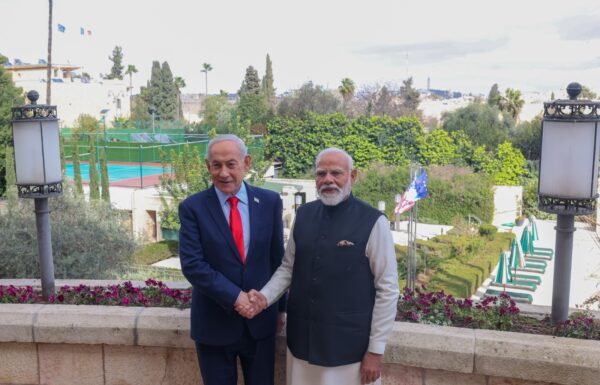
India’s balancing act maximizes its options during peacetime, and India has leveraged those options by cultivating ties with both Israel and Iran. With Israel, it has grown closer in defense and technological cooperation, elevating the relationship to a Special Strategic Partnership during Prime Minister Narendra Modi’s state visit to Israel in February. Iran also remains a critical partner for India’s energy security and regional connectivity ambitions, particularly through projects like Chabahar Port.

On the hostilities between Iran and the U.S. and Israel, however, India has avoided taking a clear position. Its generalized calls for de-escalation and diplomacy, while preserving bilateral ties in the short term, create the impression of selective engagement. Iran’s recent reassurance that its “Indian friends” are in “safe hands” and need not worry about the situation in the Hormuz Strait – as evidenced by its facilitation of safe passage for Indian tankers – further reinforces a narrative of civilizational ties and mutual trust. 

Yet India’s failure to condemn the airstrikes on Iran and the decapitation of its supreme leader has been read as a clear alignment towards the U.S.-Israel alliance. As it continues to reap the benefits of “friendship” with Iran, such a posture appears to sidestep Iran’s core security concerns. It raises questions about India’s loyalty and reliability. What is viewed as Realpolitik by New Delhi risks being interpreted elsewhere as opportunism.

Perceptions matter, especially in South Asia, where India’s response to the war in West Asia is closely observed by its smaller neighbors through the lens of reliability and leadership. Although the general trend in South Asia is a neutral stance or cautious hedging in the war, India, by virtue of its size, strength, and influence, faces constant scrutiny of its foreign policy choices. 

For countries like Bangladesh, Bhutan, Nepal, and Sri Lanka, India’s response to the war feeds into existing assessments of its foreign policy behavior. Deductions of whether India is predictable, principled, dependable, or primarily driven by self-interests in the region will follow from India’s engagement with West Asia. 

Moreover, India’s aspirations of being the leader of the Global South come with normative expectations. If the rhetoric of defending sovereignty, opposing external aggression, and upholding international law and the rules-based order rings hollow, India’s normative credibility in the Global South is considerably compromised. 

India’s weakened normative appeal opens up a window of opportunity for China to step in and take the reins, especially in South Asia. Already, the enticement of infrastructure projects under the Belt and Road Initiative has drawn Bangladesh, the Maldives, Nepal, and Sri Lanka towards Beijing. 

Even symbolic moves, such as the China-Pakistan initiative to broker peace between Iran and the U.S., puts India in an awkward position. While the recently announced ceasefire is tenuous, talks are expected in Islamabad between the U.S. and Iran this weekend. Even if Pakistani efforts amount to nothing concrete, they signal two things to India: first, that China is prepared to increase its diplomatic footprint in West Asia; and second, that India can be sidelined in its own extended neighborhood. 

There is another longer-term issue of reciprocity. India has, in the past, expected diplomatic support from the international community on issues such as cross-border terrorism from Pakistan and China’s territorial claims. The dispatch of parliamentarians across the world for diplomatic outreach following 2025’s Operation Sindoor against Pakistan is one such example. If India is perceived as hedging during other countries’ crises, it may find itself facing a similar situation in potential future tensions with Pakistan or China. In this sense, strategic autonomy risks eroding the relationships it might need in a future contingency.

The possible trajectories of the Iran conflict further expose these limits. In the event of further escalation, India would face massive socio-economic repercussions, particularly through disruptions in energy supplies and risks to its diaspora in the Gulf. Strategic autonomy offers little insulation against such systemic shocks. If de-escalation is successfully brokered by China-Pakistan, India could find its leadership aspirations in the region undercut by its rivals. Alternatively, in the event of a protracted conflict, continued use of the Strait of Hormuz by Indian vessels may invite pressure or sanctions from U.S. President Donald Trump. In each scenario, the costs of flexibility may outweigh those of alignment.

However, notwithstanding its shortcomings, strategic autonomy is not an inherently flawed doctrine. In times of relative stability, it has worked largely in India’s favor. But in a world where conflicts are increasingly interconnected, and expectations of alignment are growing, the space for sustained ambiguity is shrinking. If India seeks to position itself as a credible leader, either in South Asia or more broadly in the Global South, it might have to find a way of reconciling flexibility with responsibility. As for which side India should align with, and what responsibility it must take on, the debates will continue. 


Source link

Related Posts

Families call on UK regulator to ‘find the truth’ of Air India crash amid ‘serious concerns ‘about probe

April 10, 2026

India’s Artisans Are Driving a New Global Design Residency Ahead of Milan Design Week 2026

April 10, 2026

What to know about U.S.-India ties in a changing global order

April 10, 2026
Add A Comment
Leave A Reply Cancel Reply

Top Posts

US trade chief says tech restrictions to block Chinese autos

April 10, 2026

Japan to release extra 20 days’ oil reserves from May

April 10, 2026

India's ModiFi Aviations secures NSOP with Falcon 2000 – ch-aviation

April 10, 2026
Don't Miss

WHISKAS installs giant ‘Lucky Cat’ statue to spotlight feline nutrition in Thailand

By IslaApril 10, 2026

Bangkok, Thailand – In Bangkok’s Siam Square, a 10-metre purple “Lucky Cat” is drawing crowds—and…

Preview: Chennai v Delhi (Hindi) | IPL 2026 – Cricbuzz

April 10, 2026

Moderate Magnitude 4.5 Earthquake 48 km South of Manokwari, Indonesia

April 10, 2026

What China is learning from the Iran war – POLITICO

April 10, 2026
SUBSCRIBE TO OUR NEWSLETTER

Get our latest downloads and information first. Complete the form below to subscribe to our weekly newsletter.


I consent to being contacted via telephone and/or email and I consent to my data being stored in accordance with European GDPR regulations and agree to the terms of use and privacy policy.

Stay In Touch
  • Facebook
  • YouTube
  • TikTok
  • WhatsApp
  • Twitter
  • Instagram
Top Trending

St Mary’s Catholic Church, Dubai reopens with strict mass attendance rules

By IslaApril 10, 2026

India’s Artisans Are Driving a New Global Design Residency Ahead of Milan Design Week 2026

By IslaApril 10, 2026

Portugal surpasses Italy in automobile production

By IslaApril 10, 2026
Most Popular

Mandarin Oriental refreshes The Landmark, Hong Kong

April 9, 2026

The Decade Comedy in China Grew Up, Seen From a Stage in Kunming

April 10, 2026

Pacific Property Insurance Chongqing Branch and its sub-branches fined 21 million yuan for multiple financial violations

April 10, 2026
Our Picks

UAE confirms no Iranian air strikes on Thursday

April 9, 2026

Flights Cancelled Across Asia As China, Indonesia, Japan, South Korea, UAE and More Cancel 573 and Delay 6,324 Flights, Disrupting Korean Air, ANA Wings, IndiGo, Saudia and Others in Beijing, Jakarta, Jeju City, Taipei, Dubai and Beyond

April 10, 2026

53 China-Japan air routes saw all March flights canceled: industry data

April 10, 2026
SUBSCRIBE TO OUR NEWSLETTER

Get our latest downloads and information first. Complete the form below to subscribe to our weekly newsletter.


I consent to being contacted via telephone and/or email and I consent to my data being stored in accordance with European GDPR regulations and agree to the terms of use and privacy policy.

© 2026 Simply Invest Asia.
  • Get In Touch
  • Cookie Policy
  • Privacy policy
  • Terms & Conditions

Type above and press Enter to search. Press Esc to cancel.

SUBSCRIBE TO OUR NEWSLETTER

Get our latest downloads and information first.

Complete the form below to subscribe to our weekly newsletter.


I consent to being contacted via telephone and/or email and I consent to my data being stored in accordance with European GDPR regulations and agree to the terms of use and privacy policy.