
Published on
June 29, 2026

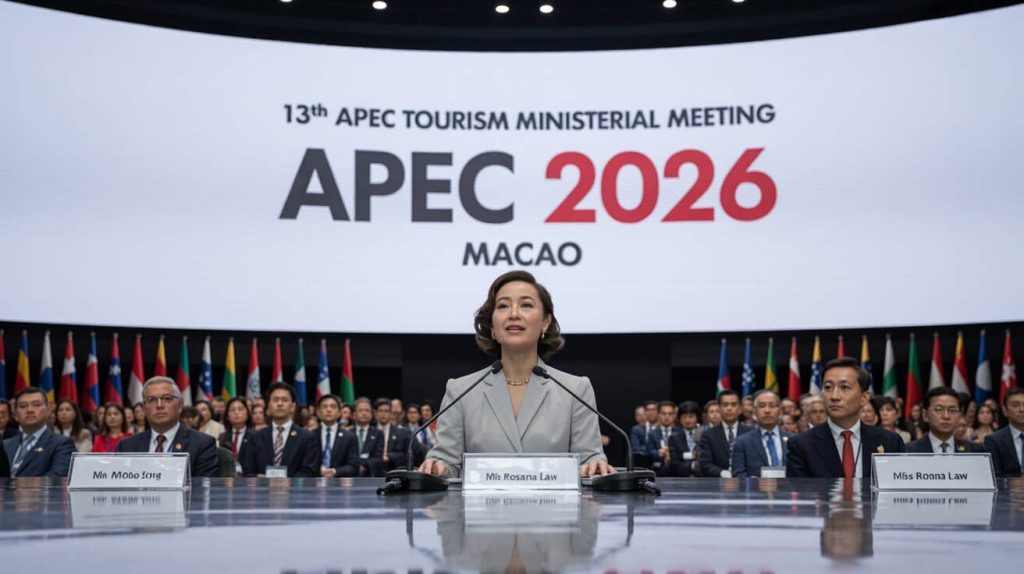
Image generated with Ai
Miss Rosanna Law, Hong Kong’s Secretary for Culture, Sports and Tourism, recently attended the 13th Asia-Pacific Economic Cooperation (APEC) Tourism Ministerial Meeting in Macao to showcase the city’s revolutionary smart tourism blueprint. Addressing international delegates under the global theme of “Digital Innovation, Collaborative Empowerment,” she highlighted Hong Kong’s incredible post-pandemic recovery, which drew nearly 50 million global visitors in 2025. To manage this massive influx sustainably, Hong Kong has deployed a advanced three-pronged digital strategy. This includes AI-driven real-time itinerary planners, immersive arts-technology integrations, and official cross-industry tech partnerships with Cyberport to fully digitise the travel landscape.
Why is Hong Kong shifting entirely towards a tech-driven smart tourism strategy?
Hong Kong is actively transforming its urban travel ecosystem to handle massive global crowds without compromising the visitor experience. Traditional tourism infrastructure faces immense structural pressure when handling tens of millions of international travellers simultaneously. Therefore, the local government has aggressively turned to artificial intelligence and big data analytics to create an intelligent, self-regulating leisure environment. Secretary Rosanna Law proudly announced this decisive structural evolution during high-level ministerial discussions in Macao. The city is determined to secure its status as an elite global technology hub while revitalising its massive post-pandemic travel trade.
By utilizing advanced digital tools, urban planners can effortlessly redistribute visitor flows away from overcrowded city hotspots during peak holiday periods. While basic infrastructure developments are incredibly expensive and take years to construct, deploying scalable software solutions offers an instantaneous, highly cost-effective alternative. This proactive technological shift represents a major milestone for regional tourism integration. Ultimately, the city aims to set a brand-new international benchmark for global digital travel management frameworks worldwide.
How did the “+ Tourism” framework deliver 50 million visitors in 2025?
The city’s spectacular economic recovery is the direct result of a highly innovative policy known as the “+ Tourism” masterplan. This ambitious cross-sector framework seamlessly weaves together local heritage, contemporary arts, professional sports, and massive international entertainment events to construct multi-dimensional travel experiences. The strategy has achieved remarkable empirical validation, successfully drawing nearly 50 million visitors to the city throughout 2025. This impressive milestone represents a stunning 12 per cent year-on-year increase compared to previous calendar metrics. Furthermore, the city proudly hosted over 240 major mega events that injected billions into local businesses.
Many of these highly publicised gatherings occurred at the newly inaugurated, state-of-the-art Kai Tak Sports Park facility. This architectural marvel has quickly become a critical cornerstone for both regional athletic tournaments and massive global music concerts. By transforming passive sightseeing into deeply active lifestyle participation, the local government has successfully unlocked entirely new revenue streams. These diverse offerings ensure that international arrivals stay longer and explore much more deeply than ever before, establishing a resilient cultural event tourism model.
What are the specific components of the city’s three-pronged digital blueprint?
The core of Hong Kong’s presentation at the APEC summit focused on a highly structured, three-pronged technological framework. The first crucial pillar relies on disseminating smart information through the highly popular Discover Hong Kong digital application. This platform utilizes real-time big data to provide live crowd updates and accurate waiting times for major attractions. Additionally, developers are currently constructing an AI-powered itinerary-planning tool that builds customized schedules in just a few clicks. The government is also collaborating directly with map service providers to create a dedicated digital travel map.
Advertisement
Advertisement
The second pillar focuses on nurturing unique tourism products embedded with cutting-edge arts-technology elements.For example, the new East Kowloon Cultural Centre actively incubates advanced multimedia performances that blend real actors with virtual environments. Meanwhile, events like Art Basel Hong Kong are utilizing interactive AI-generated avatars to deepen consumer engagement. Finally, the third pillar empowers local businesses by connecting them with digital infrastructure providers to boost global competitiveness.
Can artificial intelligence genuinely preserve the authentic soul of local travel?
Promoting high-tech travel tools frequently sparks intense international debate regarding the potential loss of genuine cultural authenticity. Critics worry that over-automation might turn vibrant historic neighborhoods into sterile, algorithmically driven theme parks devoid of human warmth. However, during her official address to the 21 APEC member economies, Secretary Law strongly refuted these technocratic anxieties. She firmly argued that sophisticated digital applications are designed to enrich, rather than replace, the delicate human element of travel. Technology serves as a powerful backstage facilitator that handles tedious logistics like booking lines and navigation maps.
Advertisement
Advertisement
This operational efficiency gives international travellers far more free time to interact genuinely with local residents and neighborhood shopkeepers. AI-driven language translation tools also break down long-standing communication barriers between diverse global visitors and traditional artisans. Therefore, advanced software acts as a supportive bridge that amplifies, rather than diminishes, unique historical narratives. By freeing tourists from logistical stress, Hong Kong ensures that everyone enjoys deeply meaningful, highly memorable authentic cultural exchanges.
How is the Cyberport technology hub empowering small tourism businesses?
Small and medium-sized travel operators frequently struggle to survive in an increasingly competitive, data-driven international marketplace. These family-run businesses rarely possess the vast financial capital or specialized technical expertise required to build custom digital solutions. To address this widening digital divide, the Hong Kong government has established a formal strategic partnership with Cyberport. Cyberport serves as the city’s premier public technology incubator, housing hundreds of cutting-edge software startups and digital experts. This collaborative program directly connects innovative tech developers with traditional travel agencies, boutique hotels, and local transport operators.
Together, they create affordable, custom-made digital solutions that immediately streamline daily operations and significantly reduce overhead costs. This systematic digital transformation allows independent operators to market their highly specialized services directly to global consumers online. By democratising access to advanced enterprise software, the state successfully protects thousands of traditional hospitality livelihoods. This inclusive approach guarantees that the financial rewards of the smart tourism boom are distributed equitably across the entire regional hospitality industry.
Advertisement
Advertisement
