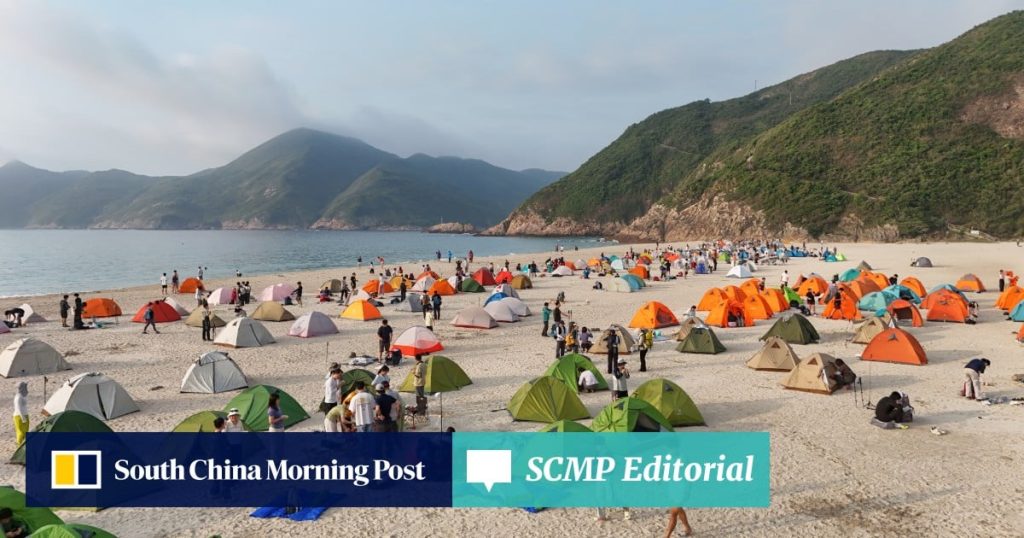
Ecotourism is a natural fit for Hong Kong, where the natural beauty of rural areas has rightfully earned a global reputation. The challenge has been ensuring the wear and tear caused by visitors does not destroy these precious assets. As such, it was encouraging to see authorities move ahead with plans for a pilot
real-name booking scheme for the popular Po Pin Chau trail in Sai Kung East Country Park, part of a globally recognised geopark.
The proposals were drawn up after visitor numbers in the area hit carrying capacity at peak periods during mainland China’s recent Labour Day “golden week” holiday. Some trail sections have been damaged since the viewpoint opened in 2024. Bookings could ultimately help head off the sort of chaos seen in other rural sites like
Ham Tin Wan, with a holiday influx turning the remote beach into a congested, unregulated tent city. A proactive approach seems better than reacting with clean-up and repair teams. Officials were also studying a ballot mechanism to prevent scalping and no-shows. Coupled with a refundable deposit, it would counter the touts who have long abused booking systems for Hong Kong public facilities.
A planned marine park in waters off Sharp Island in Sai Kung is another sign that the government is taking ecotourism seriously. The Agriculture, Fisheries and Conservation Department revealed on June 10 that the park will cover most coral spots identified in a survey last year, allaying environmentalists’ concerns.
The 63-hectare (155-acre) marine park was proposed after holiday crowds flooded the island during recent holidays. Some behaviour threatened coral communities. Fishing and other potentially harmful activities will be banned, but recreational activities will be allowed. Patrols will enforce laws and redirect visitors to less crowded areas.
There are understandable concerns about an enforcement vacuum before related statutory procedures are completed by mid-2027. Hong Kong must strike a balance so that welcoming nature-loving visitors makes economic sense and is socially beneficial. Setting limits and installing proper management is a good way to ensure the city remains a vibrant destination for residents and visitors alike.
Source link