
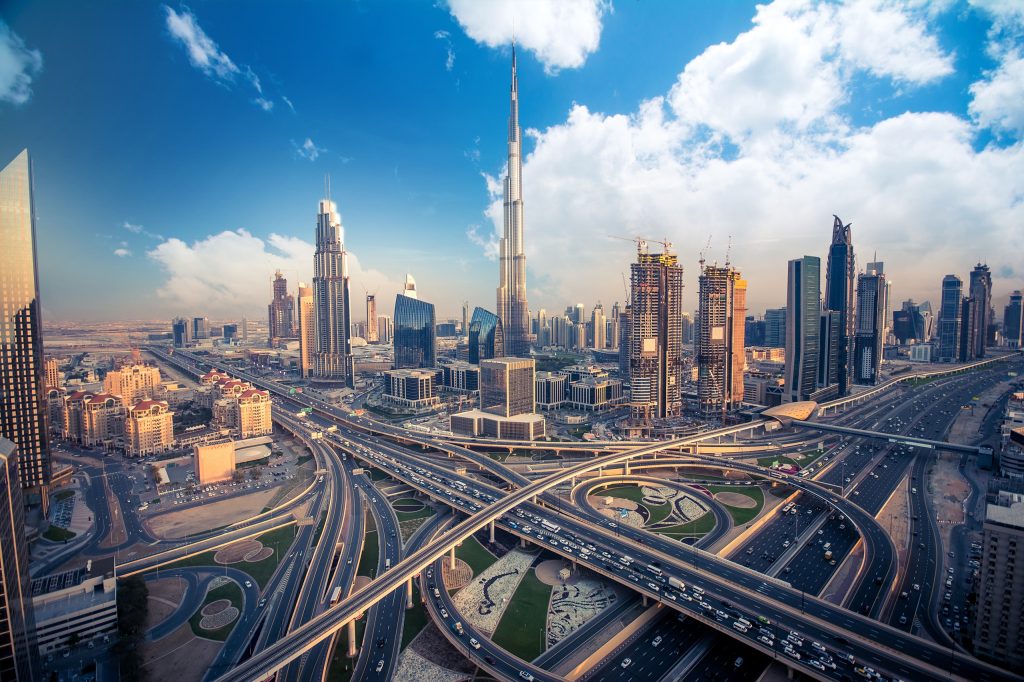
Western commentary has often mistaken disruption for collapse, while the UAE has continued to operate, recover, and adapt under pressure
Dubai is not collapsing. But you would not know that from much of the recent Western commentary.
As the US-Israel war with Iran spilled into the Gulf, a parallel battle took shape not on the ground, but in the realm of perception. Although a ceasefire has since reduced the intensity of direct hostilities and diplomatic discussions between Washington and Tehran have resumed, the struggle over narratives continues. In many respects, the post-conflict debate has become a test of whether earlier predictions about the UAE’s decline were grounded in evidence or driven by expectation.
The United Arab Emirates has been cast not as a state under pressure, but as a model supposedly unraveling in real time. Missile and drone attacks, despite being largely intercepted, introduced a degree of risk unfamiliar to residents. Yet the informational response often went far beyond the empirical reality on the ground.
What we are witnessing is not simply reporting on the crisis, but the construction of a storyline that stretches moments of disruption into claims of systemic collapse.
A striking pattern has emerged. Localized disruptions are quickly reframed as evidence of an existential crisis. Headlines warn that Dubai faces a “fatal” turning point, while some declare the city “finished.” Reports of “tens of thousands” leaving are presented as proof of mass exodus. Images of abandoned pets, quieter restaurants, or reduced tourism flows are elevated into symbols of a society coming undone. In this process, individual testimonies and emotionally charged anecdotes are often amplified into sweeping conclusions about the viability of the UAE model.
There have been disruptions. Some residents have left, temporarily or otherwise. Travel advisories have been issued, and businesses have adjusted. But the leap from disruption to collapse is less analytical than interpretive. It reflects a willingness to treat snapshots of uncertainty as indicators of irreversible decline.
The widely cited “expat exodus” narrative illustrates the problem. Some expatriates, especially those with flexible mobility, chose to leave during periods of heightened risk, a predictable response in any global city exposed to geopolitical tension. But does temporary movement amount to structural departure? Much of what has been described as an exodus appears to be precaution rather than panic. Departures were uneven, often short-term, and shaped by individual circumstances. Yet mobility was frequently treated as irreversible.
The months since the ceasefire have complicated those claims. While the conflict disrupted tourism, aviation, and consumer confidence, many departures initially portrayed as permanent appear to have been temporary. Businesses have resumed operations, international connectivity has largely recovered, and policymakers have shifted from crisis management toward economic recovery and restoring confidence.
This flattening of reality reflects a broader tendency to privilege dramatic narratives over measured interpretation. Declaring the “end” of a global success story carries rhetorical power. It is compelling, shareable, and well-suited to a media environment driven by attention.
At the same time, more nuanced or moderately positive accounts are often dismissed. Influencers, residents, and commentators who contextualize the situation are portrayed as beneficiaries of the system, assumed to be incentivized or constrained into presenting an artificially optimistic image. Dubai is not unique in having an influencer economy, but the asymmetry of credibility is striking: negative portrayals are treated as inherently authentic, while more balanced perspectives are preemptively discredited.
This is not critical scrutiny. It is selective skepticism.
A similar dynamic is visible in how structural issues are framed. Reports on legal restrictions or governance practices are often presented as if newly revealed by the crisis. Yet this framing overlooks a basic principle of state sovereignty: All countries retain the authority to grant, deny, or revoke visas of foreign nationals. Residency is conditional, not permanent, and such decisions are standard international practice, not uniquely Emirati.
The same applies to wartime information controls. Security-related announcements linked to sharing sensitive information are often cited as evidence of restrictive governance. But there is also a clear security logic: Circulating images of missile strikes, interceptor activity, or fire locations during an ongoing attack can expose vulnerabilities and response patterns. Such restrictions are intended to avoid compromising active defense operations, not simply to limit expression.
The problem lies in how these facts are mobilized. Rather than being placed in context, they are often presented as definitive proof of systemic failure. Partial truths are elevated into total explanations, reinforcing preexisting assumptions rather than deepening understanding.
Distance also plays a role. Many sweeping claims are made by commentators with limited direct engagement with the country. Lacking access to local data or lived experience, analysis can become overly reliant on secondary reporting or familiar tropes about the Gulf. Complex realities are filtered through assumptions about artificial prosperity or inherent fragility. Understanding the intensity of this coverage also requires situating it within a longer-standing pattern of “Dubai-bashing,” where skepticism toward the city’s rapid rise has, at times, cultivated a reservoir of envy and resentment in parts of external commentary.
Normative bias further shapes the discourse. The UAE’s governance model differs from Western liberal frameworks, and for some observers, this difference becomes the primary lens through which developments are interpreted. Under this lens, crisis does not reveal vulnerability; it confirms an expectation of failure. In certain media circles, criticizing the UAE’s “oasis” image becomes a low-effort way to signal moral or intellectual superiority, often without engaging with the more complex geopolitical reality that the UAE is, in this instance, a targeted bystander rather than an active belligerent.
Even after the ceasefire, continued tensions around the Strait of Hormuz, intermittent military incidents elsewhere in the Gulf, and the uncertain trajectory of US-Iran negotiations serve as reminders that the broader regional security environment remains unsettled. Alarmist or contrarian claims travel further than cautious analysis. Declaring that Dubai is “finished” attracts more attention than noting that it is adapting under pressure.
None of this means that the UAE is insulated from criticism. The current conflict has exposed real vulnerabilities. The targeting of infrastructure, the psychological impact of sustained attacks, and the uneven distribution of risk are all important considerations that warrant careful assessment.
But acknowledging vulnerability is not the same as declaring collapse.
What emerges instead is a more complex picture: a state under pressure but maintaining operational continuity, a population responding in varied ways, and an economy adjusting to short-term disruption without evidence of systemic breakdown. Airports continue to function, key sectors remain operational, and daily life, while altered, has not disintegrated.
There is a broader risk in this kind of narrative overreach. When commentary moves beyond evidence into assertion, it ceases to inform and begins to project. If every disruption is read as confirmation of collapse, the ability to distinguish between stress and breakdown is lost.
The UAE today is neither untouched by conflict nor on the brink of disintegration. It has emerged from one of the most serious security crises in its modern history, facing genuine challenges while also demonstrating a degree of resilience that many external observers failed to anticipate. It is navigating uncertainty, as are many states in the region. That reality may be less dramatic than the headlines suggest, but it is also more accurate.
In the end, the story being told about Dubai reveals as much about the storytellers as it does about the country itself. The challenge is not to replace one narrative with another, but to resist the temptation of easy conclusions.
The real story may not be that Dubai survived a crisis, but that the certainty with which many predicted its failure proved far less durable than the city itself.