
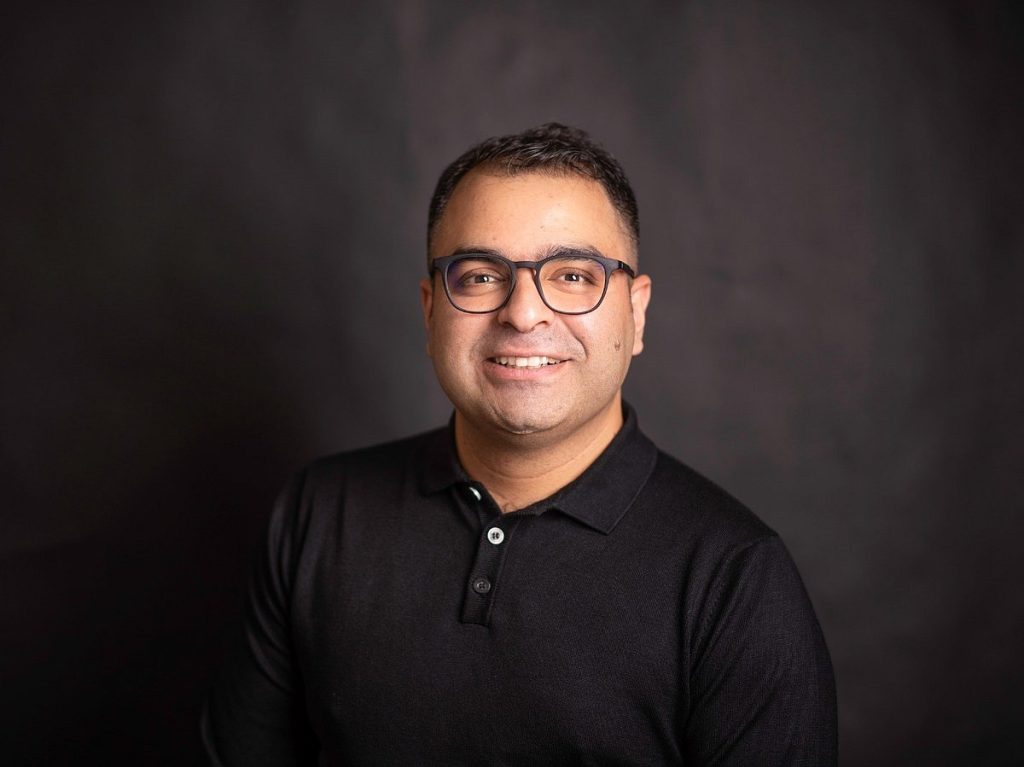
Responsibility came early
Akhtar was the eldest of seven siblings, which pushed him into work and family responsibility at a young age.
Long working days were part of life before he moved to Dubai, where he carried the same sense of responsibility into his career.
“Being the eldest of seven means you stop being a child earlier than other people. There was no version of my life where I got to figure things out slowly. From a young age I was working long days, sometimes eighteen hours, to help the family make ends meet.”
The pressure taught him that his decisions affected people beyond himself, an outlook that later shaped the way he approached business.
“That does two things to you. It teaches you that effort is non-negotiable, and it teaches you that other people are depending on whether you show up or not. I carried that into every business I have built since.”
The role that changed his career
Akhtar’s first major break came at Budget Rent a Car, where he was appointed Chief Software Architect.
His job was to develop the company’s website and build an online car rental booking system. The role introduced him to an industry that would define the next 15 years of his career.
Akhtar later built booking platforms for more than 100 rental companies, including Thrifty, Dollar and Payless.
The work gave him a close view of how rental companies operated and how customers booked vehicles online.
“I have a line I use about it: I did not choose the industry, the industry chose me.”
Years of building technology for rental businesses also exposed a gap that Akhtar believed the established operators were failing to address.
More than half of the world’s car rental companies were small, independent businesses, according to Akhtar. Many had strong customer service but lacked the eCommerce expertise needed to reach customers online.
Large rental companies dominated digital bookings, while local operators struggled to gain visibility.
Akhtar decided in December 2016 that he would stop building platforms for other companies and create his own.
“I did not want to keep handing that advantage to other people. In December 2016 I decided to build the platform I wished existed, one that put the independent operators and the customer first instead of the incumbents.”
Finalrentals began with Dh15,000
Akhtar invested Dh32,000 in Finalrentals. Licensing and setup costs left him with Dh15,000 in working capital.
He responded by designing the company around low costs from the beginning. Revenue was collected in real time, while borrowing was kept out of the business model.
“It is true. I started Finalrentals with Dh32,000, and after licensing and the other setup costs, the net operating capital I had in my hands was Dh15,000, to be exact.”
Advertising was one of the first expenses he ruled out because the company could not afford it.
Akhtar instead developed a technology layer he calls SEO DIP, which was designed to help individual pages appear in searches for specific locations, including phrases such as “rent a car in Karama”.
This led to Finalrentals to attract customers through search traffic without committing its limited capital to paid marketing.
“That is how a company with almost no marketing budget ended up getting effectively all of its traffic for free. Constraint forced the innovation. It usually does.”
Dubai became the foundation
Akhtar credits Dubai with giving him the environment to turn his software experience into a business.
The city allowed companies to be set up quickly and placed founders among people who had arrived with similar ambitions. Success, however, still depended on the founder’s ability to execute.
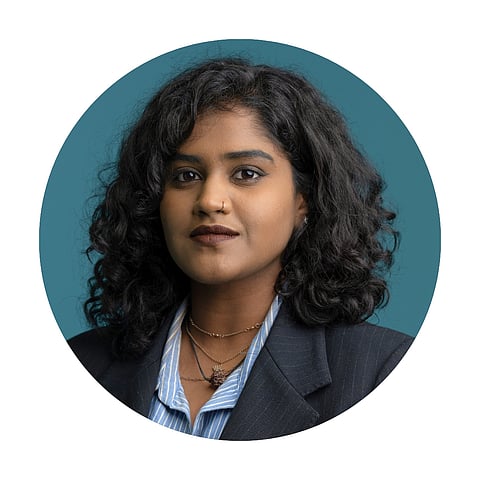
Nivetha Dayanand is Assistant Business Editor at Gulf News, where she spends her days unpacking money, markets, aviation, and the big shifts shaping life in the Gulf. Before returning to Gulf News, she launched Finance Middle East, complete with a podcast and video series.
Her reporting has taken her from breaking spot news to long-form features and high-profile interviews. Nivetha has interviewed Prince Khaled bin Alwaleed Al Saud, Indian ministers Hardeep Singh Puri and N. Chandrababu Naidu, IMF’s Jihad Azour, and a long list of CEOs, regulators, and founders who are reshaping the region’s economy.
An Erasmus Mundus journalism alum, Nivetha has shared classrooms and newsrooms with journalists from more than 40 countries, which probably explains her weakness for data, context, and a good follow-up question.
When she is away from her keyboard (AFK), you are most likely to find her at the gym with an Eminem playlist, bingeing One Piece, or exploring games on her PS5.