
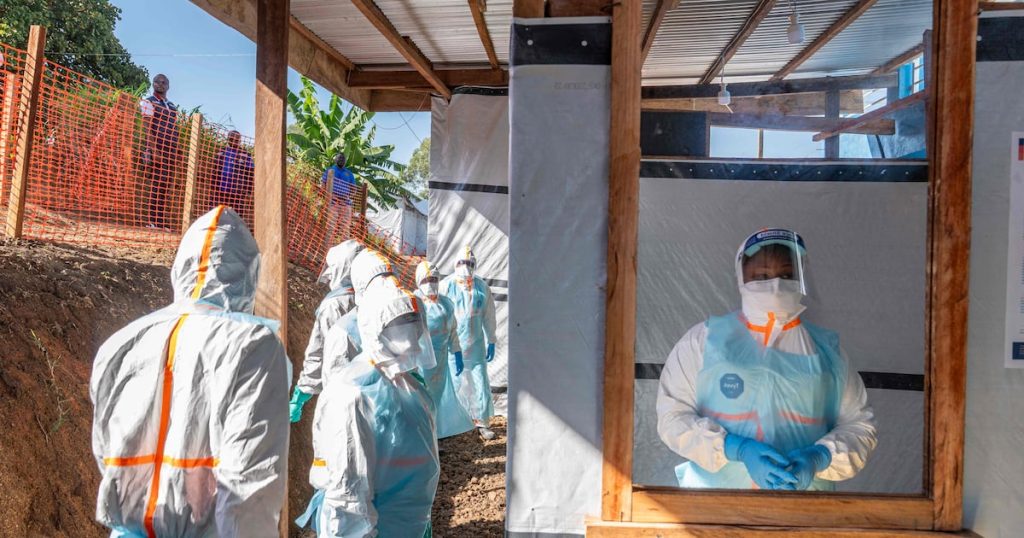
Precautionary measures are in place in the UAE in response to the Ebola virus outbreak in central Africa, and the public health situation in the Emirates is stable, the Ministry of Health and Prevention said on Wednesday.
The ministry said the spread of the virus remains primarily concentrated in the Democratic Republic of Congo and Uganda. It added that the World Health Organisation “continues to assess the overall global public health risk as low”.
“The public health situation in the UAE remains stable,” the ministry said in a statement. “The UAE continues to maintain precautionary preparedness measures focused on surveillance, early detection, airport readiness, and healthcare preparedness to protect public health,” it added.
Dr Tedros Adhanom Ghebreyesus, director general of the WHO, said on Wednesday that a Congolese resident who contracted the virus had travelled to the UAE before going to Uganda.
“The WHO is working with public health authorities in the UAE and Uganda to gather additional information, assess risk of exposure during travel and to facilitate contact tracing,” Dr Tedros said.
He thanked authorities in both countries for their support in mitigating the risks related to this case.
The WHO said there have been 321 confirmed cases of Ebola in the Democratic Republic of Congo outbreak and 116 suspected cases.
That is a significant reduction on the 1,000-plus cases suspected last week, after hundreds of infections were ruled out following further assessments.
Preventative measures
The UAE on Saturday warned citizens and residents against travelling to the Democratic Republic of Congo, Uganda or South Sudan “unless absolutely necessary” due to the Ebola outbreak.
The ministry said the safety measure had been taken “in light of an evolving public health situation” as central Africa seeks to contain the rare Bundibugyo ebolavirus strain, for which there is no vaccine.
It called on Emiratis currently in those countries to “exercise the utmost caution” and follow “health and safety instructions” issued by local authorities.
The ministry said they should register with the Twajudi service – which offers essential support to citizens abroad – and contact the ministry in case of emergencies.
What is Ebola virus?
Ebola is a relatively rare but deadly disease caused by a group of viruses. It primarily affects animals, typically fruit bats.
It can be transmitted to humans, with outbreaks often starting when people eat or handle infected animals. Symptoms take between two days and three weeks to present and are similar to the flu, involving fever, headaches and fatigue.
As the disease takes hold, it causes vomiting and diarrhoea, and can lead to organ failure. Some patients experience internal and external bleeding.
The virus spreads from one person to another by contact with infected bodily fluids or objects contaminated by those bodily fluids.
Because there is no vaccine for the Bundibugyo strain, there is concern over its potential to spread widely. Health agencies in Africa are focusing on rapid case detection, isolation, contact tracing, infection prevention and safe burials, as well as raising awareness of the virus and its threat.