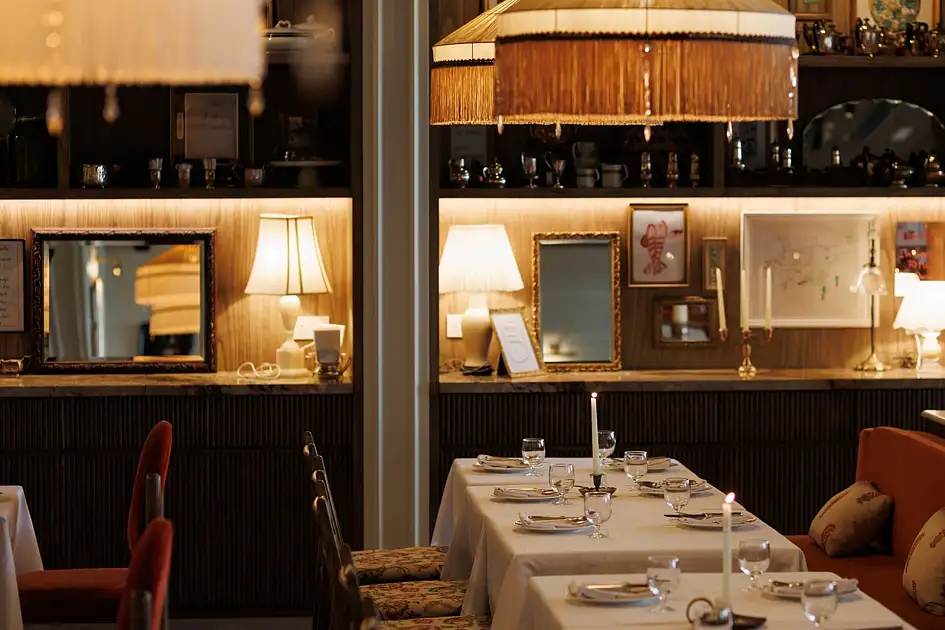
When Iskandarbek Narzibekov moved his family from London to Abu Dhabi in 2023, colleagues questioned the logic. The restaurateur had built a portfolio of acclaimed dining concepts across the British capital through his Pachamama Group, and conventional wisdom suggested the Gulf imported restaurant brands rather than creating them.
Three years later, his Abu Dhabi-founded brand Soraya is preparing to reverse that flow, launching in London as a one-of-a-kind restaurant concept born in the UAE capital designed specifically for international export.
“For years everyone thought the region only imports names,” Narzibekov told Khaleej Times. “I want to prove something else. You can build a brand here, shape it here, and then take it to London, Saudi Arabia, Asia, anywhere.”
Stay up to date with the latest news. Follow KT on WhatsApp Channels
Building and betting on Abu Dhabi
The sudden move was based on a bet on Abu Dhabi’s capacity to function beyond a mere consumer market for international hospitality concepts, but as a creative base for brands with global ambition. Narzibekov opened his first restaurant at 23 and spent over a decade establishing venues including Pachamama, Chicama, Bottarga, Zephyr and Nina across London, Monaco, and the globe before relocating.
His decision to move was deliberate rather than transactional. “Nobody paid me to move here. We invested our own money. I truly believe in this place,” he said. “My family lives here, my children go to school here. This was a real move, not just a business arrangement.”
Local brands’ export record
UAE brands are showing a considerable effort exporting in the field of hospitality for the past several years, though most success stories have emerged from Dubai. Food chain Filli has expanded across multiple countries including the UK, Mauritius and Nepal. Fix Chocolatier has staged pop-ups internationally including at Harrods in London, while Emirati chains GOAT and Saddle have additionally established their London presence. Soraya’s planned expansion would possibly mark Abu Dhabi’s entry into this growing export narrative.
Understanding local culture first
Before launching Soraya in Abu Dhabi in July 2024, Narzibekov spent months studying local dining culture, forming relationships with Emirati friends, and observing how families gather and host guests. The approach deliberately avoided importing proven formulas from his London portfolio.
“Many people come from abroad and just import what worked somewhere else. They bring the same food, same formula, same mentality,” he said. “I wanted to create something that belongs here and can grow from here.”
The resulting concept was focused on shared dining and extended gatherings, values he identified in Gulf hospitality culture. Soraya’s success in its home market has validated the model for the chef to sufficiently warrant international expansion, with London selected as the first overseas location.
From Abu Dhabi to the world
“If we open abroad, I want people to know this came from Abu Dhabi,” Narzibekov said. “That matters to me. It should not be hidden. It should be a point of pride.”
“Abu Dhabi is still early in its hospitality story,” he said. “But when it matures fully, it can become one of the most interesting cities in the world because it still has culture, family values and quality of life behind the growth.”
His broader expansion plans extend beyond London to Saudi Arabia, Bangkok and Hong Kong, all carrying Abu Dhabi provenance. A strategy where he is confident that Abu Dhabi’s cultural context can travel when properly translated.
“Countries spend fortunes promoting themselves through museums, sport, culture and tourism. But food travels faster than almost anything else,” he said. “Someone can love Peruvian food without ever visiting Peru. That is the power of cuisine.”
Tajik roots
Narzibekov’s hospitality philosophy traces to his childhood in Tajikistan, where his grandmother prepared elaborate meals for extended family and government officials visiting them. Those early experiences set his understanding of tables as sites of connection rather than transaction.
“I learned that the table is where people connect,” he said. “Hospitality is generosity, memory, warmth and consistency. It is how people feel when they leave, not only how the room looks when they enter.”
Through 971 Hospitality, the company he founded in Abu Dhabi, Narzibekov now employs close to 400 people globally across his restaurant portfolio, with his concurrent plans of expansion
His assessment of Abu Dhabi’s competitive advantage remains specific. “Because it has balance. It has ambition, but it still has identity. It is developing, but it has not lost itself. That combination is rare.”