
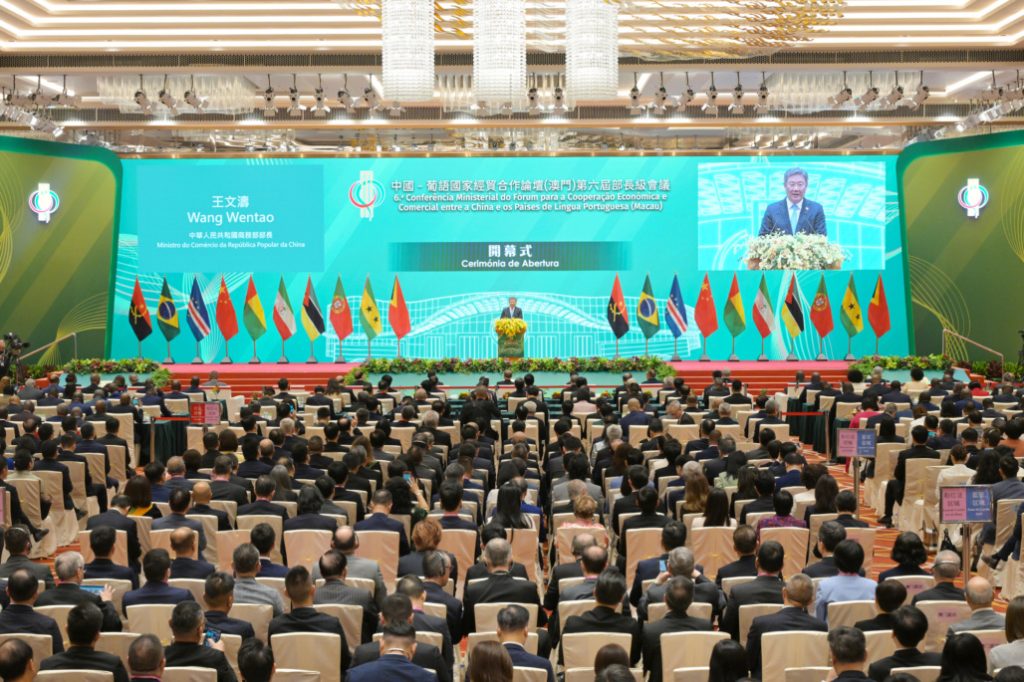
A new working paper by researcher Alberto Maresca suggests that combining Brazilian soft power with Chinese economic capacity can drive development in Portuguese-speaking African countries (PALOP) through triangular cooperation.
Maresca argues that while Forum Macau has successfully elevated diplomatic ties to the multilateral sphere, the primary challenge remains shifting its reliance away from excessive dependence on China to foster active participation from member states.
“Brazil’s foreign policy involves PALOP and cooperation triangular with China: Forum Macau in the multipolar order” (La política exterior de Brasil hacia los PALOP y la cooperación triangular con china: El foro de Macao en el orden multipolar, in the original language) is the title of a working paper recently published by Alberto Maresca, a researcher on Brazilian foreign policy at UNU-CRIS and Ghent University.
In this paper, Maresca argues that “Brazil poses a comparative advantage in the PALOP [Portuguese-speaking African countries], supported by the Portuguese language, historical and cultural ties, and academic cooperation, which constitutes a soft power that is difficult to replicate by other actors in the Global South.”
On the other hand, continues the Master in Latin American Studies graduate from Georgetown University (USA), “China stands out on its own economic and infrastructural capacity.”
In the document in question, Maresca proposes that, “read out of a logic of competence, a complementary relationship based on triangular cooperation could emerge, in which Brazilian soft power and Chinese economic muscle jointly contribute to the development of the PALOP. Within this framework, the Forum Macau presents itself as a strategic space to strengthen South-South multilateralism and Brazil’s international projection.”
“Having another channel, in Macau and especially in Hengqin, is an opportunity”
This study by Alberto Maresca seems to go somewhat against the grain of what is commonly perceived in Macau as Brazil’s historical disinterest in the Forum Macau.
Does Brazil have a foreign policy towards Portuguese-speaking countries?
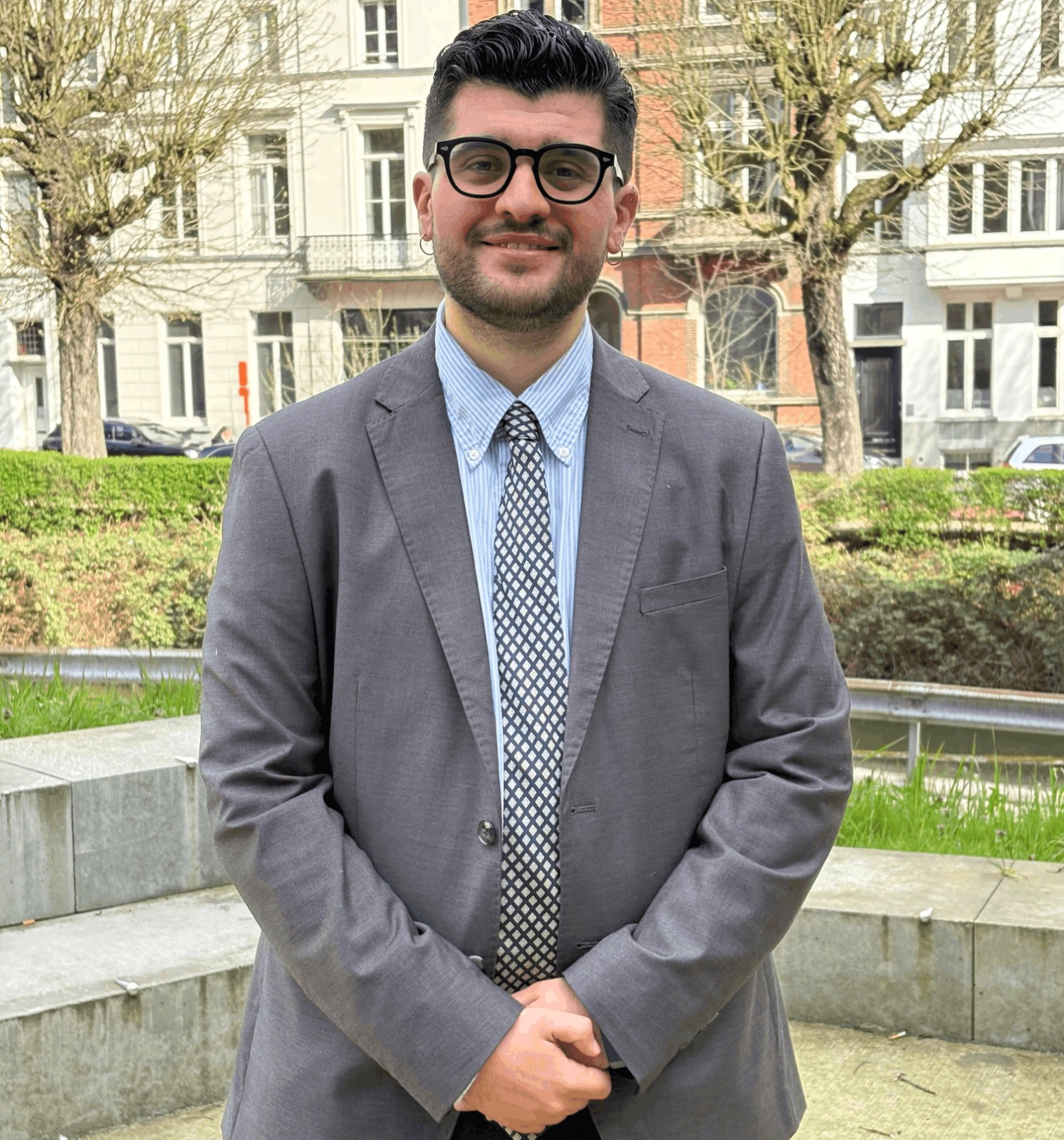
Maresca believes so: “Brazil has maintained a foreign policy focused on the PALOP countries since the Geisel government [1974–1979]. The Lula governments intensified these relations, especially with Angola and Mozambique, both for their energy resources and for Brazil’s objective of becoming a global player. For this, Brazil needs to be present in Africa, and I am referring to the continent as a whole, not just the PALOP countries.”
“Macau’s opening to the Spanish-speaking world is a prospective idea without current application or concrete actions to be implemented”
In an interview with Macau News Agency (MNA), the doctoral candidate in political science at Ghent University argues that triangular business involving Macau is not absurd: “China is about to become the world’s largest consumer market, especially for Brazilian proteins. Having another channel, in Macau and especially in Hengqin, from which to operate, is not a contradiction, but rather an opportunity.”
“The Forum (…) has not yet spread among its countries”
Although he concedes that without the Forum, “nothing” would have been lost in the bilateral relationship between China and Portuguese-speaking countries, the researcher explains that this organization created by China in Macau “does not replace the existing bilateral relations between Portuguese-speaking countries. On the contrary, the Forum Macau elevates these relations to the multilateral sphere, with the aim of broader institutionalisation.”
For Maresca, “the Forum Macau has institutionally elevated relations between China and the Portuguese-speaking world, expanding diplomatic exchanges beyond those maintained by embassies and consulates.”
“I believe that the Forum has grown in terms of activity, but it has not yet spread among its countries, which I see as the current objective”
For him, the problem does not lie “in whether the Forum Macau intensifies commercial or political relations between countries. The question, on the contrary, is how to make the Forum Macau cease to depend excessively on China and become a project in which Portuguese-speaking countries invest and actively participate.”
Therefore, what this researcher of Italian descent argues is that “any multilateral organisation is only as effective as its member states want it to be. I believe that the Forum has grown in terms of activity, but it has not yet spread among its countries, which I see as the current objective.”
Regarding Macau’s recent rapprochement with the Hispanic world, the Brazilian foreign policy researcher at the United Nations University Institute on Comparative Regional Integration Studies (UNU-CRIS) has more doubts: “This is a subject I was directly asked about when I was in Macau. Macau’s opening to the Spanish-speaking world is a prospective idea without current application or concrete actions to be implemented.”