
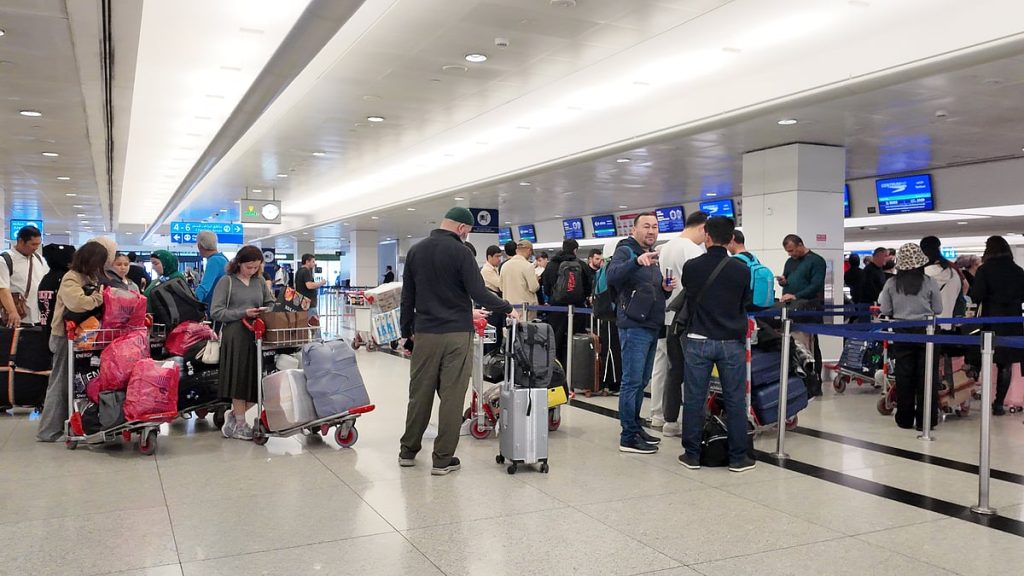
War status: Fighting continues
The security situation in the Middle East remains fluid.
Explosions were reported late Thursday on Iran’s Qeshm Island near the Strait of Hormuz as Iranian forces confronted what state-linked media described as “hostile enemy targets”, even as US President Donald Trump said he believed the conflict “has got to end pretty soon”.
Diplomatic efforts are gathering pace, with Turkish President Recep Tayyip Erdogan due in Saudi Arabia for talks with Crown Prince Mohammed Bin Salman, while Pakistan continues mediation efforts aimed at ending the conflict that has disrupted shipping through the Strait of Hormuz.
Despite the continuing fighting, there are early signs of recovery in regional aviation, with Qatar Airways set to resume flights to Bahrain, Kuwait and Erbil from Friday as airlines gradually restore parts of their regional networks.
International airlines continue suspensions
A growing number of international airlines continue to suspend or reduce services across the Gulf as security concerns persist.
Among the latest measures:
-
British Airways has suspended flights to Dubai, Bahrain, Amman and Tel Aviv until October 31.
-
Singapore Airlines, Air Canada, Cathay Pacific, Finnair and ITA Airways have suspended Dubai services until October 24.
-
Lufthansa and Swiss will not resume Dubai flights until September 13, while other Middle East routes remain suspended until late October.
-
Aegean Airlines and Air Astana have extended Dubai suspensions until August 31.
-
KLM has suspended Dubai services until August 23.
-
Philippine Airlines continues to suspend Dubai flights until October 2, although Manila-Doha services have resumed.
-
Turkish Airlines has resumed flights to Dubai and Abu Dhabi but continues to suspend services to Iran.
-
Wizz Air expects to resume Dubai and Abu Dhabi services during September.
Why some flights are taking longer
Although many UAE flights continue to operate, airlines are avoiding parts of the region’s airspace because of security concerns.
Passengers may experience:
-
Flight times extended by one to three hours because of longer routings.
-
Last-minute cancellations or schedule changes.
-
Longer connection times at transit airports.
-
Delays in baggage delivery.
Global travel advisories remain in place
Several governments continue to warn travellers about possible disruption across the region.
The US Department of State has advised travellers to prepare for flight cancellations, airspace closures and other travel disruptions.
The UK’s Foreign, Commonwealth and Development Office said the security situation remains unpredictable and urged travellers to monitor official updates.
Canada continues to advise against non-essential travel to the UAE, warning that renewed missile or drone activity could affect flights.
Australia has advised citizens in the region to consider leaving while commercial flights remain available, if it is safe to do so.
Meanwhile, the European Union Aviation Safety Agency (EASA) has extended its conflict-zone advisory covering Gulf airspace until August 31, urging airlines to exercise extreme caution because of the risk posed by missile and drone activity.
What travellers should do
If you are flying from the UAE today:
-
Check your flight status before leaving for the airport.
-
Monitor your airline’s website or app for updates.
-
Ensure your airline has your latest contact details.
-
Allow extra time for your journey.
-
Follow official travel advice issued by your country’s authorities if travelling overseas.