
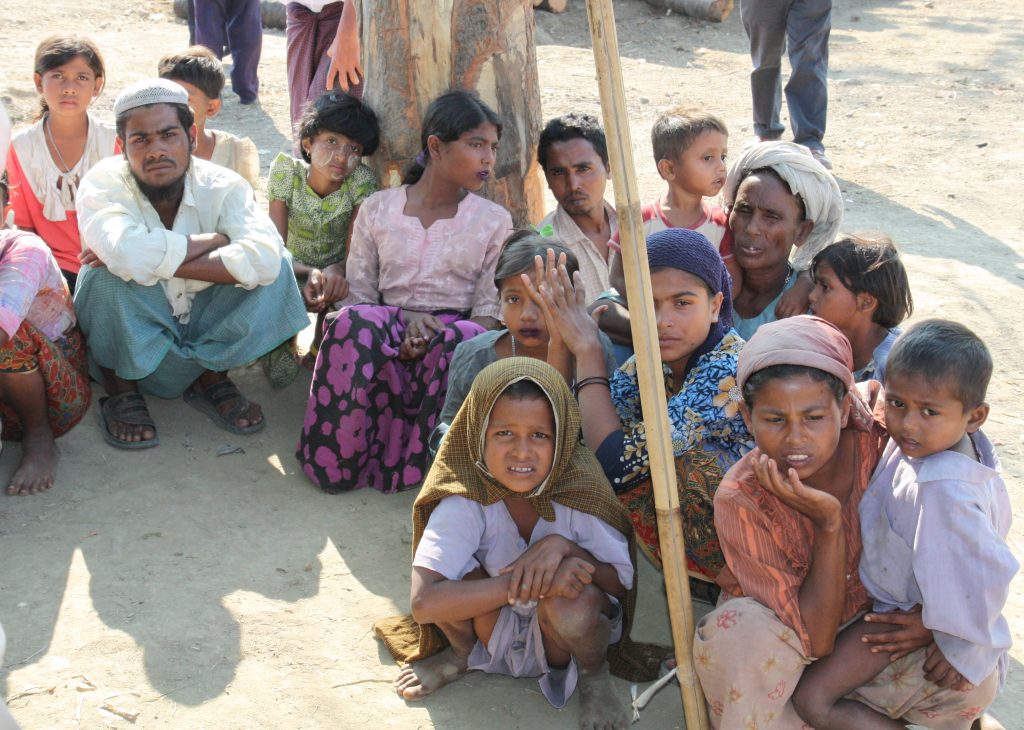
Amnesty Malaysia on Tuesday has condemned Prime Minister Anwar Ibrahim’s direction for authorities to take stringent measures against more than 100 Rohingya asylum seekers, who said they were forced from their homes by local residents and were subsequently detained after assembling outside of the UNHCR office in the nation’s capital.
In commenting on the sheer gravity of the situation, Amnesty International Malaysia’s spokesperson Divya Shesshsan Balakrishnan stated:
“Prime Minister Anwar Ibrahim’s response is deeply concerning because it turned what was fundamentally a humanitarian solution into an enforcement issue. These were Rohingya refugees, including women and children, who reportedly travelled to Kuala Lumpur seeking assistance after being displaced from their homes. Yet instead of providing protection and support, the Prime Minister’s response resulted in the arrests of entire families and threats of immigration action.”
The refugees traveled to the Malaysian capital of Kuala Lumpur on buses overnight with the aim of getting help from the Office of the United Nations High Commissioner for Refugees (UNHCR) regarding their resettlement. A Penang police official said the Rohingya “voluntarily moved” to the capital with the assistance of state and federal authorities, more specifically with the assistance of the national security council.
He also stated that they were being detained so that they could receive further checks at the police headquarters. Amnesty Malaysia has since decried this sentiment as being a blatant disregard of their rights in place of arbitrary detentions, political scapegoating, and forced returns.
Rohingya Muslim asylum seekers are the world’s largest stateless population. They are an ethnic minority group from Buddhist Myanmar, formerly known as Burma. The Rohingya have been living in Myanmar for centuries, however since 1982, the Rohingya have been denied citizenship and were further subjected to living in subpar conditions in their own country. Additionally, they have not been recognized as an official ethnic group, and are continually denied basic rights and protections by the government. This makes the Rohingya extremely vulnerable to exploitation, sexual and gender-based violence, and abuse.
In August 2017, violence erupted, with entire Rohingya villages burned to the ground and thousands of families killed or torn apart. As a result, more than 750,000 Rohingya fled Myanmar, seeking safety in neighboring Bangladesh and Malaysia. More recently, escalating violence following the military takeover in February 2021 led to the displacement of over 1.4 million Rohingya people by 2025. Today, approximately 95 percent of Rohingya households in Bangladesh rely on humanitarian assistance to meet their basic needs.
While Malaysia has largely displayed sympathy against Rohingya refugees between the years of 2012 to 2017, public sentiment has largely shifted to one of xenophobia. Sources have attributed this to a wave of misinformation in the online space, with AI-generated posts and altered videos falsely accusing refugees of demanding Malaysian citizenship and local land. This influx of hatred has since resulted in at least nine schools set up to cater to the needs of Rohingya children closing across the country.
Malaysia is also not a signatory to the 1951 UN Refugee Convention, which leaves asylum seekers without legal rights to access healthcare and gain employment.