
Harvard disclosed more than $36 million in gifts from sources attributed to China and Hong Kong that carried financial aid preferences tied to students’ countries, nationalities, geographic regions, or international status, according to a Crimson analysis of federal foreign-funding records.
But only about $4 million explicitly preferred Chinese or Hong Kong students. Most of the remaining gifts used generic language — such as “preference given to students from a particular country” — without naming the country, and records elsewhere in the database show that the preferred country often differed from the source of the gift.
The China-linked funding is part of a much broader pattern. Harvard disclosed roughly $210 million in foreign gifts carrying geographic or nationality-based financial aid preferences, more than any other university in the federal database. About $127 million — 61 percent of the total — did not publicly identify the preferred country.
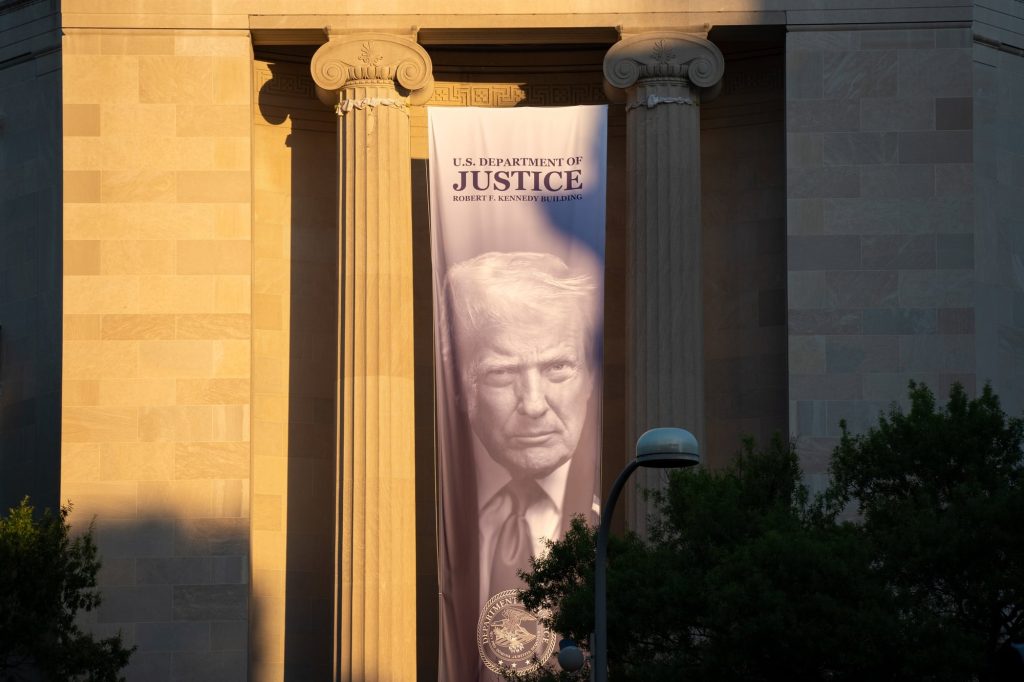
These gifts are at the center of a Department of Justice investigation into whether Harvard violated federal civil rights law by accepting foreign funding that carried preferences for students from particular countries.
The Justice Department said Monday that an audit of Harvard’s disclosures found evidence that some gifts and contracts require the University to establish or support financial aid programs “with preference given to students from particular countries.”
In a notice letter to Harvard, Assistant Attorney General Harmeet K. Dhillon wrote that the University “appears to be accepting these funds with restrictions and conditions from China-based sources and then providing this student financial aid with preference to foreign students based on their national origin, presumably Chinese.”
The DOJ has not reached a conclusion about whether Harvard violated the law. It directed the University to turn over underlying gift agreements and information about the students who received aid — details that are largely absent from the public disclosures.
The Crimson analyzed all 134,780 entries in the Education Department database of Section 117 disclosures complete through February. The Harvard gifts identifiable as carrying financial aid preferences were received between 2014 and 2025.

Get The Crimson in your inbox.
Reporters reviewed every transaction that a university marked as carrying a student financial aid restriction, along with records whose descriptions mentioned aid, scholarship, tuition, or student sponsorships.
The records are self-reported by universities. The analysis counted only transactions in which student aid was a principal purpose and separated gifts from contracts. It also distinguished aid carrying a geographic or nationality-based preference from funding for specific students whose nationalities were not disclosed.
Harvard is hardly the only university to receive China-linked gifts carrying financial aid preferences. The Crimson identified about $58.5 million in such gifts across 12 schools. The Justice Department did not respond to questions about why it chose to probe Harvard or whether it was reviewing the other institutions.
But Harvard accounted for nearly two-thirds of that total. The University of Chicago followed with $9.3 million, while Brown University reported $6.3 million and the Massachusetts Institute of Technology reported $1.9 million.
The pattern also extends far beyond China.
Harvard’s roughly $210 million in preference-related gifts came from sources attributed to 34 countries and territories. The total was more than six times that of Oregon State University, the next-highest recipient, and represented slightly more than half of all such gifts identified nationally.
Sources attributed to China and Hong Kong provided $36.8 million of Harvard’s total. Canada and the United Arab Emirates-linked sources provided $27.4 million and $25.2 million, respectively.
Of Harvard’s total, about $79 million of Harvard’s preference-related gifts named a country, nationality, or region, while $3.3 million broadly preferred international students.
The remaining $127 million used generic language about students from a “particular country” or “particular countries,” leaving the intended recipients unclear.
The restrictions varied widely.
One gift to Harvard from a source attributed to Kuwait states that financial aid should prefer “students from Kuwait or students from other Arab countries living in Kuwait, as well as students from the Gulf and other Arab countries.”
A gift from a source attributed to the United Kingdom gives “first preference for students from South Africa, second preference for students from the continent of Africa.” A Norway-attributed gift prefers students from South Africa, Liberia, Ethiopia, and then other sub-Saharan African countries.
Some gifts involved restrictions based on the recipients’ field of study. For example, one gift from a China-based donor to Brown University preferred “Chinese students who intend to pursue studies in the humanities.”
Harvard’s China- and Hong Kong-linked preference-aid gifts have not risen steadily in recent years.
More than three-quarters of the $36.8 million arrived between 2015 and 2018, with the annual total peaking at roughly $12 million in 2016. The figure fell below $1 million in each year from 2022 through 2024 before rising to $1.2 million in 2025.
Across all purposes — not only financial aid — Harvard reported more than $630 million in gifts and contracts from sources attributed to China and Hong Kong, more than any other American school.
New York University and Stanford University were runner-ups, reporting roughly $458 million and about $446 million, respectively.
Nationally, gifts from sources attributed to China and Hong Kong rebounded in recent years, rising from $164.1 million in 2023 to $236.6 million in 2024 and $255.6 million in 2025.
But the recent increase follows a steep decline from a 2018 peak of $311.7 million.
Harvard has continued to court donors in Asia amid heightened scrutiny of its ties to the region.
Harvard College Dean of Admissions and Financial Aid William R. Fitzsimmons ’67 made two separate visits to Hong Kong in March and April of this year. At an alumni presentation in February 2025, Fitzsimmons said the region had become increasingly important to Harvard’s financial aid fundraising, citing internal data showing that gifts from alumni and parents in Hong Kong account for a significant portion of the College’s financial aid funding.
Harvard spokesperson Jason A. Newton wrote in a statement that the University was reviewing the Justice Department’s letter and “will engage with the government regarding these issues.”
“Harvard follows the law for required reporting of donations and, consistent with our legal obligations under Title VI, does not unlawfully discriminate on the basis of race, ethnicity, or national origin in allocating financial aid,” the spokesperson wrote.
The new investigation marks the latest round of federal scrutiny of Harvard’s ties to China.
When U.S. President Donald Trump barred Harvard’s international students from entering the country last June, he pointed to the University’s financial ties to China. Harvard successfully blocked the order in court.
The move followed a demand from the Department of Education in April 2025 seeking records concerning Harvard’s foreign funding and a May 2025 probe by House Republicans accusing the University of having affiliations with a Chinese Communist Party paramilitary organization.
Harvard College’s admissions office is also facing a lawsuit from the DOJ for allegedly withholding admissions data, and two investigations from the Department of Education — one into alleged antisemitism and another into the University’s compliance with the Supreme Court’s 2023 decision striking down race-conscious admissions.
—Staff writer Celine Muir can be reached at [email protected] or Signal at celinem.33. Follow her on X @celinemuir1.
—Staff writer Alexa M. Schmitt can be reached at [email protected] or Signal at alexaschmitt.15. Follow her on X @alexa_m15_s.