
The regional price of natural gas produced in the Permian, the top U.S. oil basin, was negative for most of the first half of the year.
Rising associated gas output from oil-targeting wells has had nowhere to go. Producers had to either flare the gas, within allowed limits, or pay to get rid of what many Permian players see as an undesirable by-product of the valuable crude.
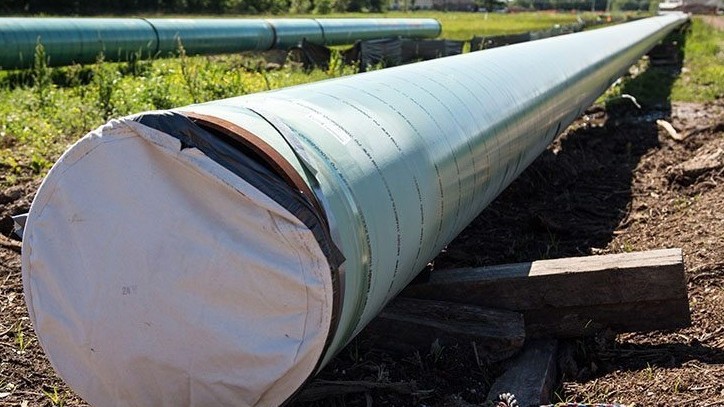
For years, the key constraint to local gas prices has been the insufficient pipeline takeaway capacity, which hasn’t grown in lockstep with the soaring gas production from oil-directed rigs as operators boost output in response to higher oil prices.
As a result, the natural gas spot price at the Waha hub, the regional pricing benchmark reflecting Midland-area gas production and pipeline capacity constraints, averaged -$2.19 per million British thermal units (MMBtu) in the first half of 2026.
The Waha price hit a record low of -$7.95 at the end of April, over $10 per MMBtu lower than the national benchmark at Henry Hub of about $2.70 per MMBtu at the time.
However, the Waha hub price turned positive in June and has held above zero for more than a month, thanks to the start-up of the expansion of the Gulf Coast Express Pipeline (GCX) and Energy Transfer’s new Hugh Brinson Pipeline, which began moving gas but whose full capacity will not be reached until March 2027.
Related: Equinor CEO: Europe May Miss Winter Gas Storage Goal
“The route is designed to move Permian and Midland Basin gas east from Waha and provide access to East Texas, the Katy Hub and Gulf Coast demand markets, including LNG export facilities, power plants, storage assets and industrial customers,” East Daley Analytics said in a note last week.
Aegis Hedging commented last week that “Analysts have been reporting that producers who were curtailing volumes, either shut in or flaring, have started to bring back those molecules as new pipeline capacity comes online.”
The new capacity will not solve the Permian excess gas problem at once. It will take several quarters for the current constraints to go away, Permian-focused oil and gas operators say.
But new constraints could emerge if the Strait of Hormuz crisis drags on and keeps oil prices elevated, encouraging additional oil drilling in the Permian, where most of the gas is an associated by-product and not the primary target of the operators.
Pipeline developers plan to bring 44.9 billion cubic feet per day (Bcf/d) of new natural gas pipeline capacity online in the United States in 2026 and 2027. Of these capacity additions, more than 66%, or 29.7 Bcf/d, originate in Texas, data from the U.S. Energy Information Administration (EIA) showed earlier this year.
The projects in Texas will provide additional takeaway capacity out of the Permian Basin and debottleneck the Waha Hub, the EIA said.
Hugh Brinson Pipeline, the Rio Bravo Pipeline Project, and the Blackcomb Pipeline are the three largest gas pipelines in Texas expected to enter into service by the end of the year, according to the EIA.
Until the congestion in the Permian basin eases, executives see natural gas takeaway capacity as the most significant constraint to their firm’s drilling activity in the Permian Basin in the next 12 months, the Dallas Fed Energy Survey showed in June.
Most executives at exploration and production firms focused primarily on the Permian said in the survey that they expect gas takeaway constraints in the Basin to be fully alleviated in 2027. The most frequently selected option was the first quarter of 2027, chosen by 25% of respondents. Yet, more than 10% expect the bottlenecks to be resolved no sooner than in 2028, and about 7% of respondents said “never”.
By Tsvetana Paraskova for Oilprice.com