
The release of China’s first-half economic data for 2026 has triggered familiar skepticism across Western media. As the second-quarter GDP growth moderated to 4.3 percent—bringing the first-half expansion to 4.7 percent—mainstream headlines were quick to double down on anxieties over domestic deflation and other challenges.
However, this reporting exposes a profound analytical blind spot. In evaluating China’s economic trajectory, Western media are stubbornly utilizing tactical microscopes to magnify cyclical friction, while remaining entirely blind to the strategic telescope revealing Beijing’s long-term horizon.
To understand where China is heading in this pivotal opening year of the 15th Five-Year Plan, one must dismantle the prevailing Western narratives through three distinct analytical dimensions where cyclical pain is deliberately being accepted to unlock long-term resilience.
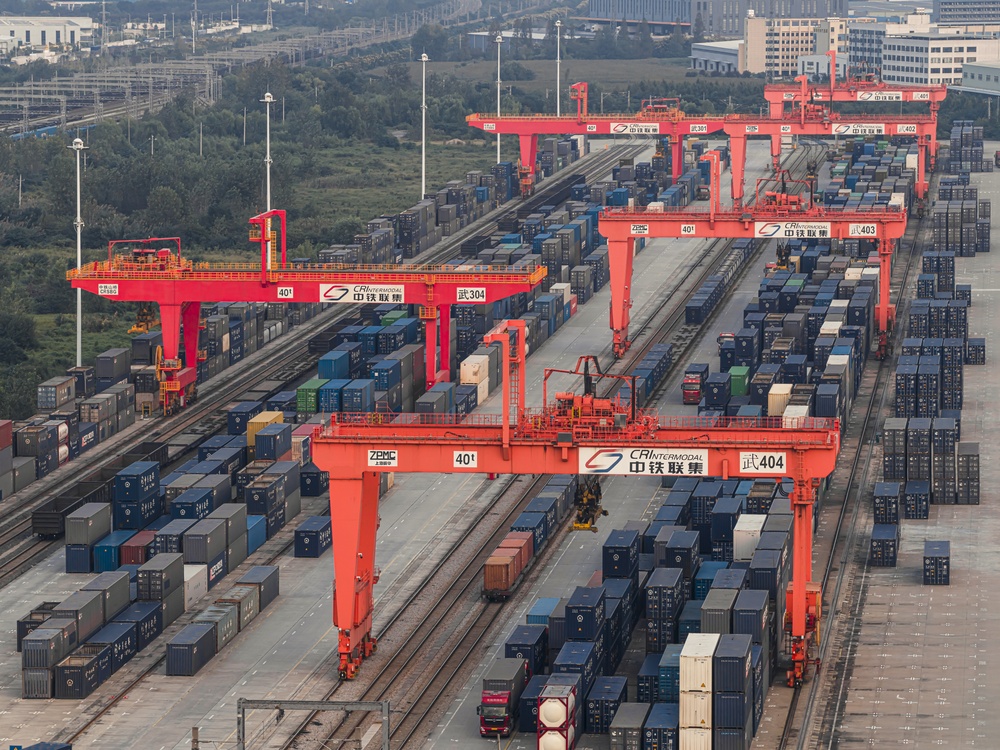
The first distortion lies in the Western narrative of “industrial overcapacity.” The standard critique posits that a collapsing domestic market has forced Beijing to aggressively dump excess industrial goods, particularly green technologies, onto global markets, threatening Western manufacturing and inviting aggressive tariff walls.
Yet, this slice-and-dice perspective deliberately ignores how China’s industrial machine acts as a macroeconomic stabilizer during global crises. Consider the current geopolitically induced energy shock: as the ongoing U.S.–Iran conflict continues to roil Middle Eastern supply lines and push global energy markets into high-stakes volatility, China’s trade data reveals an astonishing counter-intuitive reality.
According to the General Administration of Customs, China’s crude oil imports plummeted by 20 percent in April, 29 percent in May, and a staggering 41 percent in June.
This massive, sustained reduction in oil purchasing did not occur because China’s industrial engine stalled. In fact, June exports surged by a remarkable 20.8 percent in RMB terms, an increase made possible by China’s advanced green transition, immense domestic coal-to-chemical infrastructure, and deep strategic reserves.
By systematically removing its colossal demand from the global oil market, China effectively freed up an oil allocation that exceeded the combined emergency strategic reserves released by the rest of the world. As international analysts outside the media echo chamber have noted, China’s domestic resilience single-handedly preempted a catastrophic global inflationary spike. It is a striking intellectual contradiction for Western commentary to celebrate the global price stability brought by China’s reduced energy dependence while simultaneously demonizing the very green manufacturing that enabled it.
The second major criticism focuses on domestic consumption. Pointing to flatlining retail figures, Western economists argue that Beijing’s piecemeal “trade-in” subsidies are ineffective, warning that the country is sitting on a deflationary volcano because the state refuses to hand out direct cash transfers to citizens.
This view fundamentally misinterprets the strategic philosophy guiding Chinese policymaking. Beijing has consciously rejected the Western playbook of helicopter money, which temporarily juices consumer data at the cost of severe long-term inflationary hangovers and fiscal degradation.
Instead, the State Council’s recent approval of the 15th Five-Year Plan for Expanding Consumption, the first national-level special blueprint of its kind in the history of the People’s Republic, signals a shift from crisis management to deep structural surgery.
Beijing is not trying to force consumers to spend today but to build an institutional architecture where they feel secure enough to spend tomorrow. The strategy focuses on removing the systemic anxieties that historically drive high precautionary savings.
China has been introducing precision reforms: optimizing property management and reforming the housing provident fund to meet actual upgrading demands; building a comprehensive, subsidized network for three-tier eldercare and dementia care; and expanding public child-care systems. Even the aggressive enforcement of paid annual leave regulations and the regional promotion of primary and secondary school spring and autumn breaks are designed to structurally align leisure time with consumption opportunities.
This is not a policy of hesitation or lack of resources. Rather, it is a calculated, structural blueprint designed to replace temporary economic injections with permanent, long-term institutional drivers.
Finally, the persistent accusations of data manipulation stem from a fundamental mismatch between Western analytical models and China’s shifting economic reality. Foreign consultancies arguing that China’s GDP numbers are artificially inflated typically base their alternative models on traditional industrial inputs: crude steel output, cement production, rail freight volume, and legacy real estate transactions.
They are miscalculating because the very “cell structure” of the Chinese economic body is mutating. The old growth drivers are being systematically dismantled, and the resulting friction is what Western microscopes detect as weakness. However, the first-half data shows that New Quality Productive Forces are rapidly crossing the threshold from experimental sectors to core macroeconomic pillars. Equipment manufacturing grew by 9.3 percent, and high-tech manufacturing surged by 13.3 percent in the first half of the year, with new strategic sectors now contributing over 40 percent of total economic growth.
When everyday economic activity is driven by hundreds of trillions of daily token calls on artificial intelligence large language models, automated industrial robotics (up 28 percent), and advanced digital infrastructure, measuring China’s economic health solely through the lens of traditional heavy industry is an analytical anachronism. The contraction of the old real estate and heavy manufacturing matrix is a feature of China’s structural transition, not a bug.
The structural transition China has chosen is undeniably challenging. It requires navigating an international environment marked by geopolitical conflict and rising protectionism while managing the internal friction of an unprecedented industrial upgrade. China also remains highly dependent on fossil fuel imports, which means that market fluctuations can still significantly impact economic stability.
But by refusing to sacrifice its long-term structural sovereignty for the applause of short-term global capital markets, Beijing is building an economy that is fundamentally insulated from external shocks. While the West remains fixated on decoding the decimal points of quarterly GDP data, the broader historical picture reveals an economic powerhouse successfully swapping out its engine mid-flight. It is moving away from fragile, debt-fueled expansion toward a high-value, green, and highly autonomous economic future.
The geopolitical dividends of this resilience are already being mapped out by global public opinion. Pew’s latest 2026 data shows a historic inversion, with China’s favorability now outpacing the United States globally. True, it’s a low bar, and China’s popularity still remains just below 50 percent. But the reversal is significant. As Beijing quietly trades short-term velocity for long-term structural sovereignty, the rest of the world is responding not with media-driven skepticism but by casting a historic vote of confidence in China’s trajectory.