
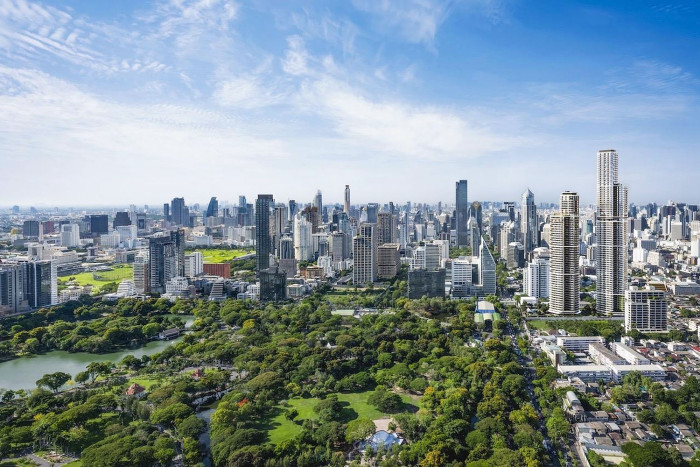
Asking prices for land in Greater Bangkok have stagnated this year, with some sites facing discounts of up to 40% as buyers negotiate aggressively amid a sharp contraction in the condo market caused by economic weakness.
According to property consultancy Cushman & Wakefield Thailand, land prices in Greater Bangkok previously rose consistently every year, often by double digits, largely driven by condo developers.
“For decades, land prices in Bangkok’s central business district and surrounding areas were largely driven by fierce competition among property developers racing to acquire sites for condo projects,” said Warat Sirisukdanukul, senior manager for capital markets and investment.
Intense competition pushed land prices steadily higher, but the peak land price cycle effectively ended during the pandemic, and the market has since entered a more subdued phase, he noted.
Mr Warat cited land along Sukhumvit Road between the Bang Chak and Udom Suk skytrain stations as an example. Asking prices are at 900,000-1 million baht per square wah, well above current transaction levels.
Before the pandemic, land transactions in the area were typically concluded at 600,000-700,000 baht per sq w.
The last transactions priced at 700,000 baht per sq w were recorded in 2017-18, during the peak of Bangkok’s condo boom.
However, following the condo market downturn, developers have become far more cautious as inventory remains elevated amid weak purchasing power and high mortgage rejection rates. As a result, developers are making counter-offers of only 500,000-600,000 baht per sq w, representing discounts of up to 40% from asking prices, he said.
“Despite buyers seeking discounts of up to 40%, transactions have yet to materialise because landowners are not facing financial distress and have little incentive to sell at those prices,” said Mr Warat.
“They are unwilling to accept offers at those price levels.”
The widening gap between asking and selling prices in prime locations signals land values are no longer on an upward trajectory.
Landowners who need to sell are likely to accept prices well below their expectations, he noted.
Landowners should change their strategy, advised Mr Warat. Rather than selling in a buyer’s market, leasing land on a long-term basis could offer better returns, while allowing owners to retain their assets until market conditions improve, he noted.
“Potential tenants are mainly hotel developers, supported by continued growth in the tourism sector,” Mr Warat said.
“Investors are not only Thai, but also from China, Japan and Europe, either developing projects independently or through joint ventures.”
He said converting vacant land into long-term leasehold agreements of 10-30 years would allow landowners to avoid selling at discounted prices in a weak market while generating stable, recurring rental income without relinquishing ownership.
Long-term leasing can also significantly reduce land and building tax liability, as leased sites are no longer classified as idle land.
Mr Warat said the strategy offers a more effective way to preserve asset values until market conditions improve.