
Close Menu
Simply Invest Asia
  • Home
  • About us
  • Explore industries/sectors
    • Automobile
    • Aviation
    • Banking
    • Biotechnology
    • Chemical & Fertilizer
    • Entertainment and Media
    • Food Processing
    • Healthcare
    • Iron and Steel
    • Leather
    • Mining
    • Oil and Gas
    • Pharmaceutical
  • Explore by countries
    • China
    • Dubai / UAE
    • Hong Kong
    • India
    • Indonesia
    • Japan
    • Malaysia
  • Explore cities
    • Bangkok
    • Beijing
    • Chongqing
    • Delhi
    • Dubai
    • Guangzhou
    • Jakarta
    • Kuala Lumpur
  • Why Asia
Facebook X (Twitter) Instagram Threads
Trending:
  • China’s Open AI Models Are Advancing Its Global Soft Power
  • Australia and India Finalize Uranium Trade Deal
  • Aurobindo Pharma sets up arm in Indonesia for manufacturing
  • Gallery of Chongqing Lijia Smart Hall / Gensler
  • PharmTech Weekly Roundup–July 10, 2026
  • Shein Gets Approval for Hong Kong IPO – The Business of Fashion
  • Beijing rejects NATO ‘moves’ picturing China as threat in Arctic
  • Global Food & Drink Briefing: Bangkok to Toronto
  • The UAE is building its future. Here are the 10 projects leading it
  • Thailand Creates a New Gateway to Malaysia as Sadao Border Crossing Revolutionises Tourism Routes, Freight Movement, Investment Opportunities and Regional Connectivity Across the ASEAN Region
  • The Business Capability Becoming More Valuable Than Scale
  • NutraCast: How biotechnology is powering the lifemaxxing movement
  • Trending Stocks Today, July 10, 2026: PC Jeweller Extends Rally, Vodafone Idea Gains, Vedanta Iron and Steel Surges And Freezes, Kalyan Jewellers Continues Climb
  • England vs India Test: Wong takes key wicket of Mandhana before she reaches century! – Sky Sports
  • Watch: Typhoon Bavi forecast to bring heavy rains and floods to Taiwan, Japan and China – BBC
  • Hong Kong Named Exclusive Asian Host of Middle East’s Flagship Tech Expo “LEAP East” for the Next Three Years
  • Pakistan-India Sporting Rivalry Set to Ignite Dubai
  • China approves Shein’s Hong Kong listing application
Friday, July 10
Facebook X (Twitter) Instagram
Simply Invest Asia
  • Home
  • About us
  • Explore industries/sectors
    • Automobile
    • Aviation
    • Banking
    • Biotechnology
    • Chemical & Fertilizer
    • Entertainment and Media
    • Food Processing
    • Healthcare
    • Iron and Steel
    • Leather
    • Mining
    • Oil and Gas
    • Pharmaceutical
  • Explore by countries
    • China
    • Dubai / UAE
    • Hong Kong
    • India
    • Indonesia
    • Japan
    • Malaysia
  • Explore cities
    • Bangkok
    • Beijing
    • Chongqing
    • Delhi
    • Dubai
    • Guangzhou
    • Jakarta
    • Kuala Lumpur
  • Why Asia
Simply Invest Asia
Home»Explore cities»Beijing»China Built Cheap AI. Now It’s Building a Great Wall Around It
Beijing

China Built Cheap AI. Now It’s Building a Great Wall Around It

By IslaJuly 7, 20265 Mins Read
Share
Facebook Twitter Pinterest Threads Bluesky Copy Link


China has been making big strides in its sprint to catch up with the American AI industry lately, thanks in large part to its focus on open source models, which have growing appeal for cash-strapped U.S. businesses. But that accessibility could soon be limited, as Beijing weighs the possibility of cutting off foreign access to the country’s top AI systems.

Chinese state officials met with Chinese tech developers Alibaba, ByteDance, and Z.ai over the past month to discuss limitations on overseas access, according to a Tuesday report from Reuters. The limitations would reportedly apply to both open source and proprietary models, including those that have yet to be released. They could also place restrictions around which business entities could provide funding to Chinese AI startups. On Beijing’s orders last month, Meta cut off all operations and data-sharing with Manus, just around six months after it had acquired the Chinese-founded AI startup in a $2 billion deal.

Many Chinese AI developers, meanwhile, have reportedly been cutting ties with U.S. chipmaker Nvidia in favor of Chinese silicon providers, following a commitment from Beijing to invest around 2 trillion yuan (equating to $294 billion) in domestic data center development over the next five years. 

Technical gains, and fears of Mythos

Anthropic introduces Claude Fable 5 and Claude Mythos 5.
© Shutterstock

The decision-making apparatus of the Chinese state is as opaque to outsiders as that of a large language model. But some key recent developments are likely behind the country’s nascent push to insulate its AI industry. First and foremost, there’s the fact that its own AI models have been closing the performance gap separating them from the most advanced models built by U.S. companies like OpenAI and Anthropic.

Last month, for example, the release of Z.ai’s latest model, GLM-5.2, shocked Silicon Valley by performing comparably to proprietary U.S. models in key cybersecurity benchmarks after supposedly being trained at a fraction of the cost. Anthropic and OpenAI have accused Chinese tech companies of harnessing American AI to build new models, but at least for the moment that kind of international, large-scale distillation is just frowned upon, rather than technically illegal—although that could change now that the Trump administration has also pledged to crack down on it. 

Training methods aside, there’s a growing sense that Chinese models can hold their own against their competitors in the U.S., especially in light of their lower costs.

China has also been rattled by Anthropic’s Mythos, which has been hailed as a kind of cybersecurity Houdini—an AI model that can detect flaws in even the most robust cyberdefenses. 

Given Beijing’s history of imposing strict, top-down control over Chinese cyberspace, such a model being developed by a U.S. company obviously poses a major threat. Zhou Hongyi, founder of Chinese cybersecurity firm 360 Security Technology, reportedly said during a recent conference in Beijing that the Chinese AI industry could not afford to allow the U.S. to command such a dominant position in global balance of cybersecurity capabilities. The push to cut off the country’s top AI models from foreign access and from Nvidia chips is very likely motivated by a desire to protect valuable Chinese IP in the age of Mythos.

The Silicon Curtain
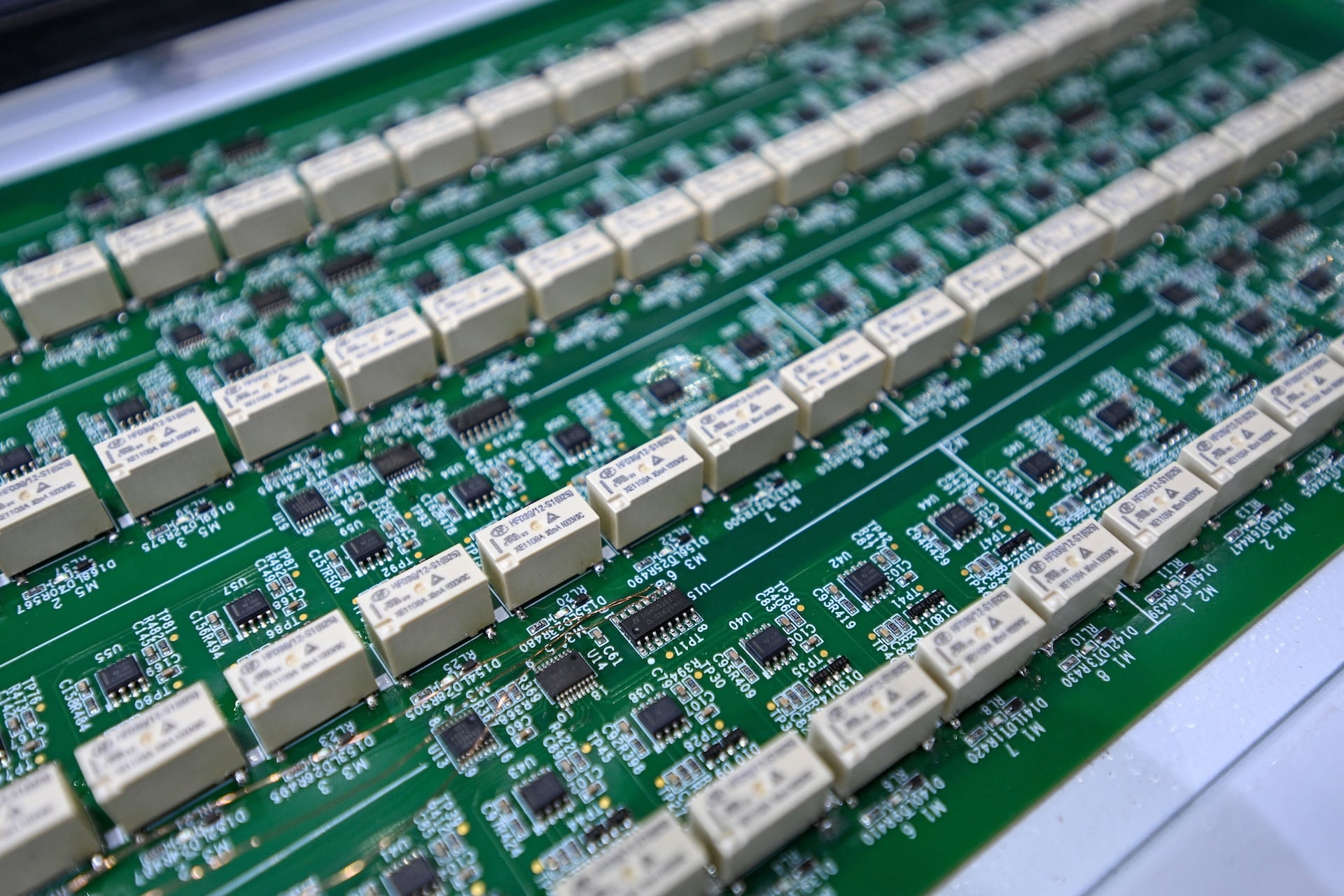
A motherboard is displayed at the 2025 World Semiconductor Conference & Expo in Nanjing, in China's eastern Jiangsu province on June 20, 2025.
A motherboard is displayed at the 2025 World Semiconductor Conference & Expo in Nanjing, in China’s eastern Jiangsu province on June 20, 2025. © Photo by CN-STR / AFP via Getty Images

In both Beijing and Washington, AI has become a critical piece on the geopolitical chessboard; there’s a deeply felt sense at the highest levels of government that the country that commands AI will command the world order in the twenty-first century. 

It remains to be seen whether Western capitalism or the Chinese model of top-down state control will be the quickest route to victory. The American AI industry is in a bit of an awkward phase, as it struggles to come to terms with a president who says he’s a champion of a free market but also increasingly insists on imposing federal control over how, when, and to whom new models are released. That could turn out to be a positive first step towards broadly beneficial regulation down the road, but in the short-term the lack of clarity around the new rules has also arguably benefited China, as businesses using American AI have been given reason to fear sudden and inexplicable suspensions of service. 

What does seem clear at this point is that no matter who wins the AI race, the evolution of AI is going to look a lot different in the U.S. than it does in China. Developers will be subject to different rules, and the AI systems they design will adhere to different legal codes and cultural norms. The author and historian Yuval Noah Harari has called this burgeoning technological-ideological divide the “Silicon Curtain.” Like the so-called Iron Curtain during the Cold War separating the U.S.- and Russian-controlled spheres of influence, the Silicon Curtain, Harari says, could mark an invisible, AI-enabled barrier across which political cooperation and even mutually agreed upon rules of discourse becomes close to impossible.

The Silicon Curtain has not yet closed over the world, but the growing insularity within both the U.S. and Chinese AI industries indicates that it could very well be waiting in the wings.


Source link

Related Posts

Beijing rejects NATO ‘moves’ picturing China as threat in Arctic

July 10, 2026

Beijing Dabeinong Technology’s June Hog Sales Revenue At 366 Million Yuan — TradingView News

July 10, 2026

China finds a more pragmatic Nordic reception on rare diplomatic tour

July 10, 2026
Add A Comment
Leave A Reply Cancel Reply

Top Posts

China Scraps 12,000 Degrees in Biggest Academic Overhaul in Years

June 14, 2026

Chinese Wall may stem India tech flows for electronics and automobile

June 1, 2026

Abandoned malls, whispers of nuclear war and young foreigners detained. This is what’s REALLY going on in Dubai… and the chilling warning one taxi driver gave to the Mail’s IAN BIRRELL

April 11, 2026
Don't Miss

China’s Open AI Models Are Advancing Its Global Soft Power

By IslaJuly 10, 2026

Credits Nathan Gardels is the editor-in-chief of Noema Magazine. He is also the co-founder of…

Australia and India Finalize Uranium Trade Deal

July 10, 2026

Aurobindo Pharma sets up arm in Indonesia for manufacturing

July 10, 2026

Gallery of Chongqing Lijia Smart Hall / Gensler

July 10, 2026
SUBSCRIBE TO OUR NEWSLETTER

Get our latest downloads and information first. Complete the form below to subscribe to our weekly newsletter.


I consent to being contacted via telephone and/or email and I consent to my data being stored in accordance with European GDPR regulations and agree to the terms of use and privacy policy.

Stay In Touch
  • Facebook
  • YouTube
  • TikTok
  • WhatsApp
  • Twitter
  • Instagram
Top Trending

Trending Stocks Today, July 10, 2026: PC Jeweller Extends Rally, Vodafone Idea Gains, Vedanta Iron and Steel Surges And Freezes, Kalyan Jewellers Continues Climb

By IslaJuly 10, 2026

England vs India Test: Wong takes key wicket of Mandhana before she reaches century! – Sky Sports

By IslaJuly 10, 2026

Watch: Typhoon Bavi forecast to bring heavy rains and floods to Taiwan, Japan and China – BBC

By IslaJuly 10, 2026
Most Popular

Govt takes possession of Delhi’s Jaipur Polo Ground after court rejects stay plea

June 13, 2026

After carrying over 10,000 passengers, a direct flight from Manchester Airport to Bangkok is quadrupling in frequency from December – here is the full flight schedule

June 20, 2026

Sea of Gold

June 23, 2026
Our Picks

ADCs, multispecific antibodies anchor $10B Pfizer-Innovent deal

May 29, 2026

The Average Lifespan Of Automobiles On The Road Is Increasing

June 27, 2026

Indian shares set for firmer open ahead of high-stakes RBI stance

June 5, 2026
SUBSCRIBE TO OUR NEWSLETTER

Get our latest downloads and information first. Complete the form below to subscribe to our weekly newsletter.


I consent to being contacted via telephone and/or email and I consent to my data being stored in accordance with European GDPR regulations and agree to the terms of use and privacy policy.

© 2026 Simply Invest Asia.
  • Get In Touch
  • Cookie Policy
  • Privacy policy
  • Terms & Conditions

Type above and press Enter to search. Press Esc to cancel.

SUBSCRIBE TO OUR NEWSLETTER

Get our latest downloads and information first.

Complete the form below to subscribe to our weekly newsletter.


I consent to being contacted via telephone and/or email and I consent to my data being stored in accordance with European GDPR regulations and agree to the terms of use and privacy policy.