
Published on
June 30, 2026

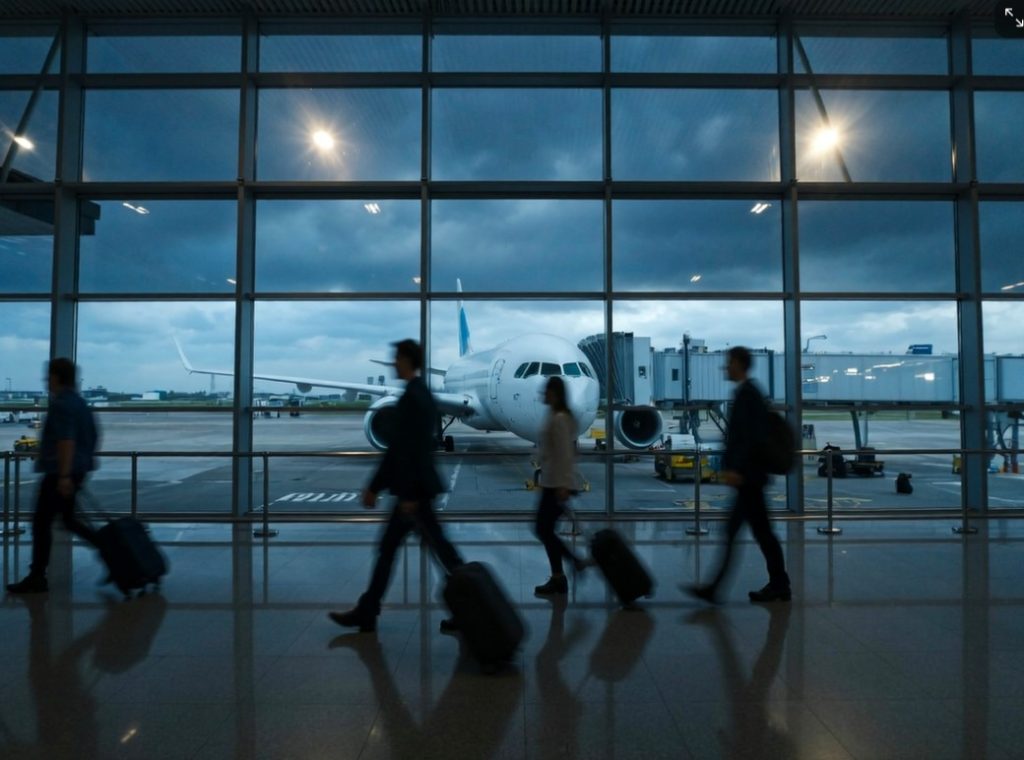
Image generated with Ai
The Indonesia AirAsia, Singapore Changi Airport, Jakarta-Singapore route, Kuala Lumpur, and regional aviation landscape has been fundamentally reshaped following one of the most significant low-cost airline network changes in Southeast Asia. As of June 30, 2026, the permanent withdrawal of Indonesia AirAsia from Singapore Changi Airport has been completed, marking the end of an era for one of the region’s busiest cross-border air corridors.
The final non-stop service between Jakarta and Singapore was operated on June 30, 2026, officially bringing the airline’s direct operations at Singapore Changi Airport to a close. A combination of rising airport charges and increasing global jet fuel prices has been identified as the primary factor behind the strategic decision. As a result, a major transformation has been introduced across Southeast Asia’s aviation network, with passengers, competing airlines, and regional hubs expected to experience lasting consequences.
Why Has Indonesia AirAsia Permanently Left Singapore Changi Airport?
A significant restructuring of Indonesia AirAsia’s regional network has now been completed. Following the operation of its final direct flight between Jakarta and Singapore on June 30, 2026, the airline’s long-standing presence at Singapore Changi Airport has officially come to an end.
According to AirAsia executives and industry analysts, the decision was driven by mounting operational pressures rather than declining passenger demand. Airport fees at Singapore Changi Airport have increased to a level where airport taxes now exceed the airline’s average base fares on several services. At the same time, soaring global jet fuel prices have continued to place additional financial strain on low-cost airline operations.
Under these conditions, the continuation of direct services was no longer considered commercially sustainable. Consequently, a permanent withdrawal from Singapore has been implemented, representing one of the most notable strategic changes within the Southeast Asian aviation market in recent years.
How Will Jakarta Passengers Be Affected?
A dramatic shift has been introduced for travellers flying between Jakarta and Singapore using Indonesia AirAsia.
Advertisement
Advertisement
Beginning on July 1, 2026, direct low-cost flights on the airline are no longer available. Instead, passengers are being redirected through Kuala Lumpur, fundamentally changing the travel experience.
What was previously a straightforward journey of around two hours has now been converted into an itinerary involving transit connections. Depending on schedules and layover durations, total travel times can extend beyond ten hours.
The disappearance of non-stop connectivity is expected to influence passenger preferences, particularly among business travellers and leisure passengers seeking affordable and time-efficient travel options. The change also represents a broader transformation in how Indonesia AirAsia will serve one of Southeast Asia’s busiest travel corridors.
Why Is Kuala Lumpur Emerging as the Biggest Winner?
While Singapore loses a long-established operator, Kuala Lumpur has been positioned as the principal beneficiary of this strategic realignment.
Instead of maintaining separate direct services into Singapore from Indonesia, AirAsia has chosen to consolidate traffic through its Malaysian hub. Additional capacity has been allocated to flights operating between Jakarta and Kuala Lumpur as well as Kuala Lumpur and Singapore.
This hub-based strategy allows passenger demand from multiple destinations to be channelled through Kuala Lumpur before continuing onward to Singapore.
Advertisement
Advertisement
The airline is also strengthening utilisation across its existing network by maximising load factors on its 11 daily flights connecting Malaysia and Singapore. Through this approach, operational efficiency is expected to improve while aircraft deployment becomes more concentrated around AirAsia’s strongest hub.
What Has Happened to Bali, Surabaya and Other Indonesian Cities?
The withdrawal from Singapore has not occurred suddenly. Instead, it has represented the final stage of a gradual network reduction that has unfolded over several years.
Earlier in 2026, direct services between Singapore and Bali, also known as Denpasar, were already discontinued during April. That decision significantly reduced Indonesia AirAsia’s direct connectivity between Singapore and one of Indonesia’s most popular tourism destinations.
The scaling-back process had begun even earlier. Direct Singapore services from Surabaya were terminated in 2023, while flights from Yogyakarta were withdrawn in 2024.
With the latest closure of the Jakarta route, Indonesia AirAsia has effectively completed its near-total exit from the Singapore market. The airline’s direct footprint at Singapore Changi Airport has therefore been almost entirely eliminated.
How Will Regional Aviation Dynamics Change?
The airline’s departure is expected to create a substantial redistribution of market capacity across Southeast Asia.
Advertisement
Advertisement
Independent analyst reports from Sobie Aviation indicate that before the pandemic, Indonesia AirAsia ranked as Singapore Changi Airport’s fifth-largest foreign airline. At its operational peak, the carrier maintained 11 daily slot pairs at the airport.
Those valuable airport slots have now become available for redistribution among competing airlines.
Industry observers anticipate that seven other regional airlines will move quickly to capture the displaced passenger demand. Low-cost operators such as Scoot and Citilink are widely expected to absorb a considerable share of travellers previously carried by Indonesia AirAsia.
This shift is likely to intensify competition on key regional routes while strengthening the positions of airlines already maintaining extensive operations at Singapore Changi Airport.
Rather than reducing overall passenger demand, the withdrawal is expected to redistribute travellers among competing carriers, creating a new competitive balance throughout the regional aviation market.
Does This Withdrawal Affect the Commercial Scooter Market?
Although speculation has emerged regarding broader economic impacts, no verified evidence supports claims that Indonesia AirAsia’s withdrawal has influenced the commercial scooter industry.
Advertisement
Advertisement
Changes in airline operations can affect tourism flows, airport activity and airline market share. However, no confirmed economic or statistical relationship has been established between the suspension of these flights and growth in commercial scooter sales.
Current evidence indicates that the disruption remains confined to commercial aviation networks, airport operations and regional airline competition.
As a result, any assumptions linking these aviation developments with changes in ground transportation vehicle sales remain unsupported by verified data.
What Does This Mean for Southeast Asia’s Aviation Future?
Indonesia AirAsia’s permanent departure from Singapore Changi Airport represents more than the cancellation of a single route. It reflects the increasing financial pressures confronting low-cost airlines as airport charges continue to rise and operating expenses remain elevated.
The strategic consolidation through Kuala Lumpur signals a renewed emphasis on hub-based operations designed to improve efficiency while preserving network connectivity. At the same time, Singapore’s aviation market is expected to undergo a period of competitive adjustment as rival airlines expand to fill the capacity left behind.
For passengers, the immediate impact will be experienced through fewer direct travel options, longer journey times on certain routes and a greater reliance on transit connections. For the wider aviation industry, the development marks another significant chapter in the continuing evolution of Southeast Asia’s highly competitive airline landscape, where operational economics are increasingly shaping network decisions and redefining regional connectivity.

Advertisement
Advertisement
