
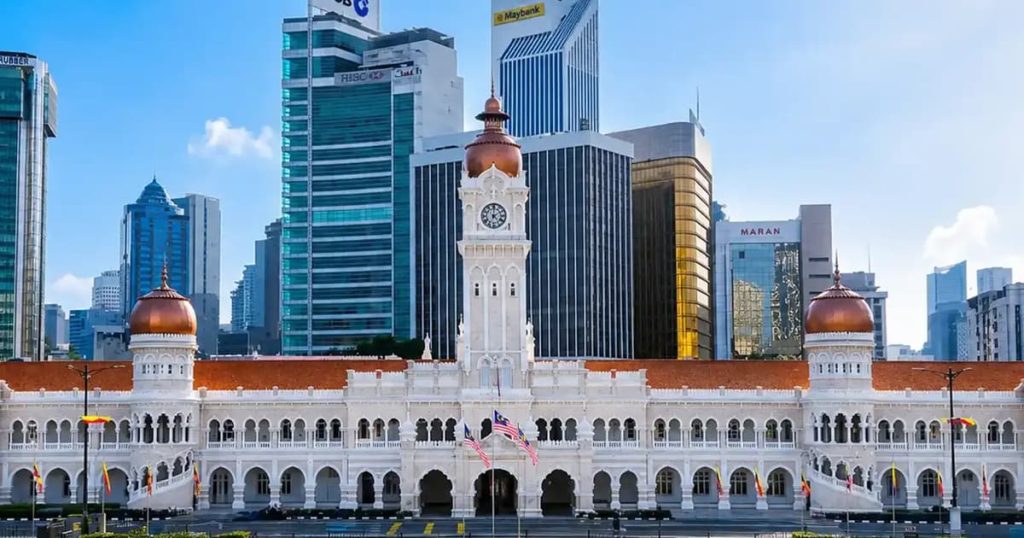

Some of Kuala Lumpur’s oldest streets are drawing people back, as restored buildings, murals, and small businesses bring life to corners once easily overlooked.
Parts of the capital’s historic centre — including Medan Pasar, the Merdeka 118 Precinct, Petaling Street, Central Market, Bangunan Sultan Abdul Samad and the streets near Dataran Merdeka among others — are being reintroduced as places where people can visit, work, and gather.
That is the idea behind Warisan KL, an initiative aimed at turning heritage assets into living spaces again.
For Khazanah Nasional Bhd, which supports the initiative through Dana Warisan, the work is part of a wider effort to strengthen Kuala Lumpur’s appeal as both an economic hub and cultural gateway.
Khazanah managing director Amirul Feisal Wan Zahir said the objective is not simply to conserve historic buildings but to activate them as vibrant spaces that attract visitors and, in doing so, generate greater economic activity in support of local businesses.
He said Bangunan Sultan Abdul Samad has attracted more than 160,000 visitors since it was reopened in February, while Carcosa Seri Negara had drawn close to 23,000 visitors since its opening last December.
“This encouraging turnout reflects strong public interest in reconnecting with Malaysia’s history and supports the broader aspiration of revitalising Kuala Lumpur’s historic core as a vibrant cultural destination,” he said.
Giving old streets new pull
For Zeen Chang, co-founder of Kwai Chai Hong, a Chinatown enclave at Lorong Panggung, the revival of old Kuala Lumpur is also about giving local communities the confidence to tell their own stories.
She said Warisan KL had created a ripple effect, with major institutions setting the tone for pride in heritage and local communities following suit.
Central Market director Benjamin Bong said the wider old KL area has transformed from what was once seen as a “sleepy tourist trap” into one of the city’s liveliest weekend destinations. “It’s no longer a museum piece — it’s a living creative hub,” he said.
Bong said young Malaysians have been returning for weekend fairs, Petaling Street’s cafes and bars, and walkable routes stretching from Central Market to the River of Life.
At Medan Pasar, Japanese restaurant Kappa Kaisen Izakaya co-founder Sho Emi said the area’s revival is already being felt by businesses.
“Our sales have been increasing, and we feel there is strong potential in this area, especially with tourists, and growing local interest in this restored space,” he said.
Creador Foundation founders Brahmal Vasudevan and Shanthi Kandiah said conservation alone risked turning living places into exhibits.
They said Medan Pasar had always been a place where people passed through, worked, traded and gathered, and that its revival must include public life, not just restored facades.
The real test is the street
At the Merdeka 118 precinct, PNB Merdeka Ventures is also positioning heritage as part of everyday city life.
The firm’s CEO Izwan Ibrahim said the reopening of Stadium Merdeka for public recreational use and major events had restored the landmark to its original spirit as a place that brings people together.
“We hope to continue sustaining meaningful third spaces for visitors as well as the neighbouring communities who have long been part of the area’s story.
“Within a single precinct, we seek to celebrate both Malaysia’s bold ambitions for the future and the humble beginnings that shaped our nation. We hope to offer younger generations opportunities to engage with history in a meaningful and accessible way,” he said.
Still, those involved say old KL’s revival will depend as much on the street experience as on restored buildings.
They point out that shaded walkways, clearer pavements, better lighting and safer streets are needed if the area is to become truly walkable and culturally active.