
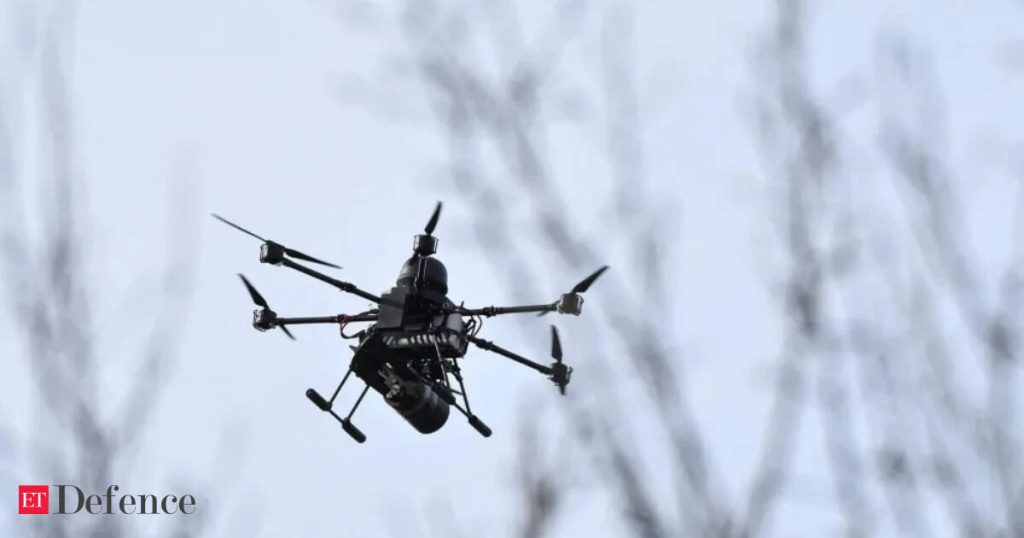
Executed across a comprehensive 72-hour operational evaluation window, the field trials deployed scalable, multi-aircraft autonomous tactical cells tasked with securing a 20,000-square-metre simulated contested perimeter through high-frequency, 30-minute rapid-tasking cycles, it said.
The swarm infrastructure was stress-tested across two high-stakes operational environments, the company said, adding that first, multirole tactical drones executed a coordinated find-fix-finish mission over a predefined perimeter.
“Most so-called autonomous systems fall apart the moment the link to their master is jammed, drops, or lags,” said Amar Bedi, CEO of Tashi Network.
“In these trials, we proved the opposite. Once you have a shared source of truth at the edge, the swarm doesn’t ask for permission to keep the mission alive. Humans stay in the loop for intent, but machines handle the millisecond-by-millisecond choreography. We are moving from remote-controlled fleets to thinking swarms,” he added.

The trial demonstrates how a decentralised mesh keeps missions going even when individual drones drop out, batteries run low, or links back to base are intermittent, it said.
Over the past year, global defence budgets have tilted decisively toward massed, networked uncrewed systems. While the US Pentagon’s proposed USD 54.6 billion push for autonomous warfare underscores the massive global pivot toward AI-enabled autonomous warfare, the Indian Army‘s technology roadmap for unmanned aerial systems and loitering munitions has intensified the domestic race for technological sovereignty.
In contested airspace, keeping a swarm coherent amidst intense electronic warfare has shifted from a theoretical concept to an immediate frontline operational requirement, it said.
The joint exercise, among the first of its kind in India, reflects this broader shift as armed forces move from one-off drones to coordinated swarms that reconnoitre, strike and re-task autonomously, as per the statement.
“For us, this wasn’t just a flight test, it was a systems test,” said Pawan Khatri, Founder & CEO of DroneVerse.
“Our customers in defence and internal security don’t just want more hardware, they want teams of drones that can think together across different vendors. Seeing our fully indigenous, NDAA-compliant platforms self-organise, split a task, and seamlessly rebuild the mission when a unit heads home is exactly the capability frontline forces require.
“This builds on our recent AI-enabled autonomous deployments with Indian Army units, turning isolated drones into a resilient team,” he added.