

- A shift to annual hosting would put the 2027 Beijing and Shanghai shows on the same stage in the same year for the first time.
- A show schedule circulating on social media has fueled speculation, but the official website has yet to confirm any change.
The biggest mystery in China’s auto industry right now isn’t a new car. It’s a question of scheduling: whether the Beijing Auto Show, held once every two years during the past more than 30 years, will switch to an annual event.
The speculation began on June 17. A WeChat public account focused on exhibition news published a 2026-2027 show schedule. The table listed the 20th Beijing International Automotive Exhibition, set for March 27 to April 5, 2027, and labeled it “held annually.”
Various bloggers then reposted a screenshot of the table, saying the Beijing show had moved from biennial to annual. Several media outlets followed up on the claim.
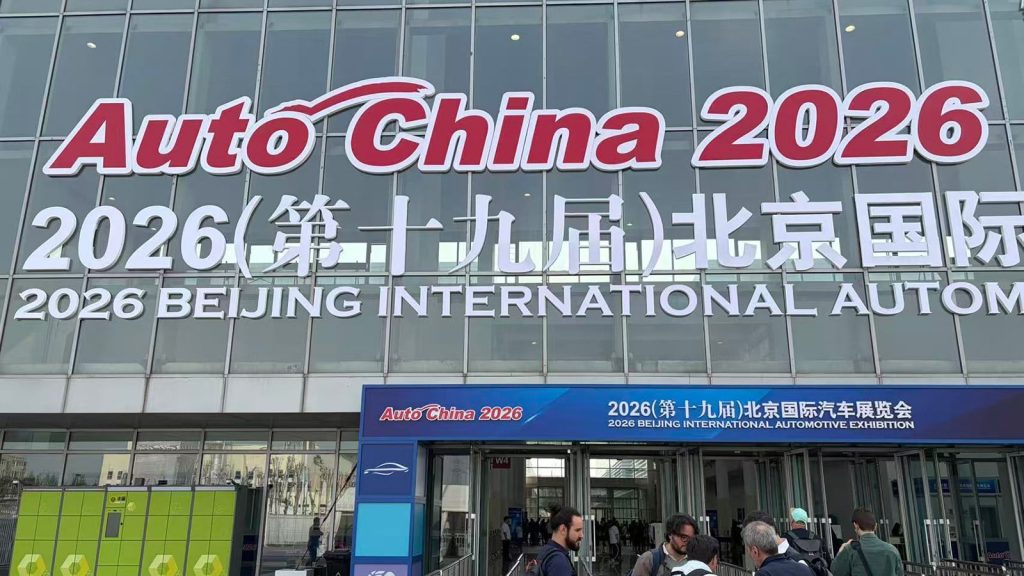
But the official picture remains unclear. The website long used to publish Beijing show information, autochinashow.org, has yet to post any 2027 details. Its homepage still shows content from the 2026 (19th) exhibition.
The most careful verification came from financial media outlet Caiwen. Its reporter called the organizing body, the China Society of Automotive Engineers, where a staff member said: “Haven’t heard about that. Some of the people online is probably just chasing traffic.”
Asked whether the Beijing show was still biennial, the staff member said: “Right, go by the information on the official website.”
But Caiwen then dialed the Beijing show’s official 400 hotline, where the response was: “Internally we’ve already decided on annual. The 2027 show information will be updated on the official website later.”
Caixin, a well-known Chinese media outlet, also reported the change, saying it had confirmed the shift via the show’s inquiry hotline on June 19.
However, the web address Caixin cited appears to be a different site, autobeijing.com.cn. That site lists the same 2027 dates of March 27 to April 5.
Notably, this website has no SSL certificate, prompting browsers to flag it as “not secure” on visit, and the site’s reliability is in question.
The Beijing Daily, meanwhile, reported on June 21 that it had confirmed via a hotline call that the show would be held in 2027. But the paper also noted that, as of publication, the organizer had given no official response.
Behind the mystery lies the breakdown of a long-standing partnership between the two shows.
The Shanghai and Beijing auto shows began in 1985 and 1990, respectively. From 2003, the two sides reached an understanding: the Shanghai show in odd years, the Beijing show in even years. This staggered arrangement lasted more than 20 years.
But the cooperation has ended. In August 2024, the Shanghai branch of the China Council for the Promotion of International Trade sent a termination notice to the Beijing show’s organizer, the Automotive Sub-council of the China Council for the Promotion of International Trade. The latter then lost its co-organizer status for the 2025 Shanghai show, and went on to lose successive lawsuits.
Behind this lies a fight over money. By Automotive Business Review’s estimate based on 2023 booth prices, the 360,000-square-meter venue of the 2025 Shanghai show could generate roughly 720 million yuan ($106 million) in revenue from venue rental alone.
A shift to annual hosting would let the Beijing show fill the gap left by the loss from Shanghai.
If the change is real, the 2027 Beijing show (March 27 to April 5) and the Shanghai show (April 25 to May 2) would be less than 20 days apart, putting the two A-class shows on the same stage in the same year for the first time.
The timing is delicate. China’s auto market is contracting, with the industry’s profit margin in the first quarter of 2026 at just 3.2%, a record low.
For automakers, taking part in two A-class shows in one year, each often costing tens of millions of yuan, represents a heavy cost burden.
Until the organizer issues a formal announcement, the question remains unsettled.

Intelligence and electrification technologies emerged as core highlights, with multiple automakers showcasing models integrated with AI.
($1 = 6.7905 yuan)