
Close Menu
Simply Invest Asia
  • Home
  • About us
  • Explore industries/sectors
    • Automobile
    • Aviation
    • Banking
    • Biotechnology
    • Chemical & Fertilizer
    • Entertainment and Media
    • Food Processing
    • Healthcare
    • Iron and Steel
    • Leather
    • Mining
    • Oil and Gas
    • Pharmaceutical
  • Explore by countries
    • China
    • Dubai / UAE
    • Hong Kong
    • India
    • Indonesia
    • Japan
    • Malaysia
  • Explore cities
    • Bangkok
    • Beijing
    • Chongqing
    • Delhi
    • Dubai
    • Guangzhou
    • Jakarta
    • Kuala Lumpur
  • Why Asia
Facebook X (Twitter) Instagram Threads
Trending:
  • Delhi extends slum rehab cutoff year from 2015 to 2025 | Delhi News
  • Action urged against misinformation about Rohingya in Malaysia
  • Chinese Autonomous Driving Startup Momenta Advances Hong Kong IPO Plan
  • UAE Gender Balance Council advances work on new national strategy – ARN News Centre
  • Škoda Peaq makes its world debut – offering practical space for seven
  • Boost Systems Cargo Baskets Fitted with Starlink Mini Mount – Aviation International News
  • Muslims Protest against Church Construction in Indonesia
  • India prepares contingency plans for 300 monsoon-hit districts By Investing.com
  • Guangzhou Lingnan Group Holdings’ Share Trade To Halt From June 24 — TradingView News
  • UK officials suppressed intel exposing Sudan genocide to protect lucrative UAE ties – thecradle.co
  • 3 Oil And Gas Stocks With Margin And Balance Sheet Questions
  • Hong Kong’s first five-year plan needs a governing proposition
  • Return to the top: China’s LineShine beats US El Capitan in Top500 supercomputer rankings
  • Japan Needs More than Foreign Currency Intervention | American Enterprise Institute
  • If Brussels starts a trade war, Beijing will finish it – Financial Times
  • India must aim to become ‘Food for the World’, say industry leaders | Bengaluru News
  • Loyalty Without Leverage: India’s US Tilt Yields Little – The Diplomat
  • Report: Multi-stop travel is reshaping UAE travellers’ spending
Tuesday, June 23
Facebook X (Twitter) Instagram
Simply Invest Asia
  • Home
  • About us
  • Explore industries/sectors
    • Automobile
    • Aviation
    • Banking
    • Biotechnology
    • Chemical & Fertilizer
    • Entertainment and Media
    • Food Processing
    • Healthcare
    • Iron and Steel
    • Leather
    • Mining
    • Oil and Gas
    • Pharmaceutical
  • Explore by countries
    • China
    • Dubai / UAE
    • Hong Kong
    • India
    • Indonesia
    • Japan
    • Malaysia
  • Explore cities
    • Bangkok
    • Beijing
    • Chongqing
    • Delhi
    • Dubai
    • Guangzhou
    • Jakarta
    • Kuala Lumpur
  • Why Asia
Simply Invest Asia
Home»Explore by countries»India»Loyalty Without Leverage: India’s US Tilt Yields Little – The Diplomat
India

Loyalty Without Leverage: India’s US Tilt Yields Little – The Diplomat

By IslaJune 23, 20265 Mins Read
Share
Facebook Twitter Pinterest Threads Bluesky Copy Link


In a move that signaled a blunt recalibration of South Asian geopolitics, the United States has quietly shifted its strategic focus. It has reverted its “Indo-Pacific Command” back to its traditional designation of U.S. Pacific Command (USPACOM).

The reversal effectively undoes a 2018 policy, issued during the first Trump administration, that symbolically merged the maritime interests of the U.S. across both the Pacific and Indian oceans. Under the newly restructured USPACOM, the Indian Ocean is being treated largely as a strategic back up plan.

The policy shift sends a clear signal that Washington views its ties with New Delhi as subsidiary to its broader relationships with China and Pakistan, yet India remains surprisingly undeterred. Despite the apparent administrative and symbolic downgrade, New Delhi seems determined to demonstrate its strategic tilt toward the U.S., preparing to collaborate closely under a command structure that now positions the Indian Ocean as a secondary theater.

With a single strategic sweep, Washington has decisively reprioritized the Pacific. This is a major shift in American geopolitical strategy and not merely a semantic tweak. The Pacific has re-emerged as the ultimate strategic theater. Its shores are lined with critical global flashpoints and major players, including China – explicitly designated as the United States’ “near-peer” competitor – and Russia in the northeast, a vital gateway to the resource-rich Arctic routes of the future. 

The region also anchors Washington’s most critical allies, including Taiwan, Japan, the Philippines, and South Korea, while containing vital maritime choke points like the Straits of Malacca and the heavily contested passages of the North and South China Seas. Ultimately, this major restructuring serves as a direct response to the rapidly evolving and increasingly tense dynamics of China-U.S. relations.

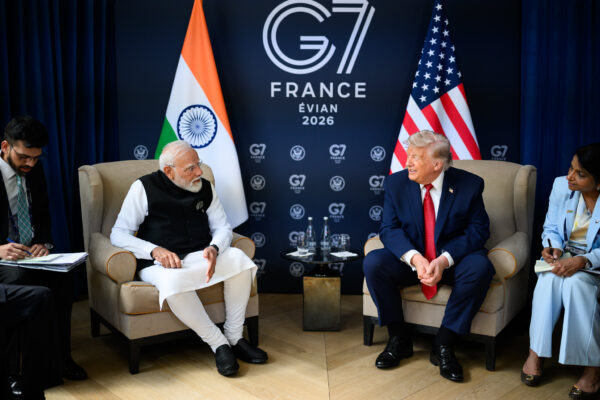
Under the new “constructive strategic stability” put in place during the summit between Trump and Xi Jinping in Beijing in May 2026, the two agreed to respect each other’s red lines and “manage” their relationship. For now, the China threat may have receded but it remains a useful tool for the United States to retain the co-dependency of their Asian allies. 

India has shown ambiguity but is part of Washington’ co-dependency thesis. 

The U.S. expects far more service from India and has been exacting in its demands – demands India has consistently met. Washington ordered India to reduce purchases of discounted Russian oil; India complied, sacrificing its own energy security.  Later, it “allowed” India to buy Russian oil again when it suited U.S. interests. 

The U.S. imposed punitive tariffs of 50 percent – its highest level – and floated a trade deal whose details remain undisclosed. India also pledged to invest $500 billion in the U.S. over the next few years to support American re-industrialization, at its own cost.

India stopped buying oil from Iran in 2019 under U.S. pressure. It then downplayed the International North-South Transport Corridor (INSTC), where Iran’s Chabahar port was to be a key link for India’s sea-rail transport route to Russia via Central Asia. India’s multimillion dollar investments in Chabahar stagnated once the U.S. intervened. 

Meanwhile, Washington’s closest Middle East allies proposed the India-Middle East-Europe Economic Corridor (IMEC), linking India to Europe through the UAE, Saudi Arabia, Israel, and Greece – bypassing Iran and ignoring Russia. 

India nearly abandoned INSTC, years in the making, for IMEC, which remains a paper dream. 

After the Iran-Israel-U.S. war, the UAE suffered economic and logistics setbacks, while Saudi Arabia moved toward rapprochement with Iran. China, welcomed across the Middle East, especially by Iran, is poised to secure reconstruction contracts and a role in a renewed regional security architecture where both China and the U.S. may participate.

Trump has publicly thanked Russia, China, and Pakistan for their respective constructive roles in the Middle East. India had hoped to curry favor with Washington by aligning with the Jewish lobby and becoming indispensable to Israel. It diluted its traditional support for Palestine, supplying weapons to Israel despite the latter violating humanitarian and international law through ethnic cleansing. India, once a staunch defender of international law, compromised its position by arming a state committing humanitarian crimes.

Prime Minister Narendra Modi’s February visit to Israel was ill-timed, occurring just before the U.S. and Israel unilaterally attacked Iran, a traditional Indian ally. When the U.S. Navy sank an Iranian vessel returning home after an India-initiated naval exercise, India was humiliated. But New Delhi did not condemn Washington. 

Later, the U.S. struck Indian vessels in the Strait of Hormuz, killing three sailors, underscoring its disregard for India. Today, Israel is unpopular globally, forcing even Washington to distance itself. 

India’s misreading of these shifts, while calling Israel the “Fatherland” (for the Jewish people who migrated from India), has not gone unnoticed by the Global South, Arab nations, and others whose goodwill India seeks.

India’s attempt to balance ties with the U.S. has turned into a tilt, which is still deemed insufficient by Washington. The U.S. has shifted its South Asia policy toward Pakistan. This was evident after India’s May 2025 Operation Sindoor, in which Trump claimed to have mediated peace. 

Washington views Pakistan as a major ally for its Middle East and Central Asia ambitions. It endorsed the Pakistan-Saudi Defense Partnership, potentially with a nuclear component, and cultivated close ties with Pakistan’s Army and Field Marshal Asim Munir. India’s long-standing effort to isolate Pakistan as a “terror supporting state” has failed.

For a decade, India’s strategic establishment has claimed four guiding principles: strategic autonomy, multivector engagements, Global South leadership, and multipolarity. Recent Indian foreign policy misadventures have undercut each. 

Originally published under Creative Commons by 360info™.


Source link

Related Posts

India prepares contingency plans for 300 monsoon-hit districts By Investing.com

June 23, 2026

Spinny bags title sponsorship of India Ireland T20I series – Indian Television Dot Com

June 23, 2026

Puresil India launches first silica sand processing plant

June 23, 2026
Add A Comment
Leave A Reply Cancel Reply

Top Posts

China Scraps 12,000 Degrees in Biggest Academic Overhaul in Years

June 14, 2026

Chinese Wall may stem India tech flows for electronics and automobile

June 1, 2026

Abandoned malls, whispers of nuclear war and young foreigners detained. This is what’s REALLY going on in Dubai… and the chilling warning one taxi driver gave to the Mail’s IAN BIRRELL

April 11, 2026
Don't Miss

Delhi extends slum rehab cutoff year from 2015 to 2025 | Delhi News

By IslaJune 23, 2026

New Delhi: In a long-awaited decision that is likely to benefit lakhs of slum-dwellers, chief…

Action urged against misinformation about Rohingya in Malaysia

June 23, 2026

Chinese Autonomous Driving Startup Momenta Advances Hong Kong IPO Plan

June 23, 2026

UAE Gender Balance Council advances work on new national strategy – ARN News Centre

June 23, 2026
SUBSCRIBE TO OUR NEWSLETTER

Get our latest downloads and information first. Complete the form below to subscribe to our weekly newsletter.


I consent to being contacted via telephone and/or email and I consent to my data being stored in accordance with European GDPR regulations and agree to the terms of use and privacy policy.

Stay In Touch
  • Facebook
  • YouTube
  • TikTok
  • WhatsApp
  • Twitter
  • Instagram
Top Trending

Return to the top: China’s LineShine beats US El Capitan in Top500 supercomputer rankings

By IslaJune 23, 2026

Japan Needs More than Foreign Currency Intervention | American Enterprise Institute

By IslaJune 23, 2026

If Brussels starts a trade war, Beijing will finish it – Financial Times

By IslaJune 23, 2026
Most Popular

IndiGo set to cut intl flights from city, Malaysia Airlines to reduce frequency | Kolkata News

June 5, 2026

Tube Rotators Market Growth Outlook to 2035: Demand Accelerates on Biotech R&D and Industrial Scale-Up – News and Statistics

June 14, 2026

EXPLAINER: Can India’s new nuclear law finally unlock private investment in the sector?

April 29, 2026
Our Picks

China reports advances in racing fuel, shale oil and carbon fiber – news.cgtn.com

June 17, 2026

Sell Indonesia sweeps desks as Prabowo tightens grip

June 5, 2026

Central Asia is another proving ground for Hong Kong as a superconnector

June 8, 2026
SUBSCRIBE TO OUR NEWSLETTER

Get our latest downloads and information first. Complete the form below to subscribe to our weekly newsletter.


I consent to being contacted via telephone and/or email and I consent to my data being stored in accordance with European GDPR regulations and agree to the terms of use and privacy policy.

© 2026 Simply Invest Asia.
  • Get In Touch
  • Cookie Policy
  • Privacy policy
  • Terms & Conditions

Type above and press Enter to search. Press Esc to cancel.

SUBSCRIBE TO OUR NEWSLETTER

Get our latest downloads and information first.

Complete the form below to subscribe to our weekly newsletter.


I consent to being contacted via telephone and/or email and I consent to my data being stored in accordance with European GDPR regulations and agree to the terms of use and privacy policy.