
The United Arab Emirates has emerged as one of the world’s most dynamic foodservice destinations, driven by its thriving tourism industry, multicultural population, luxury hospitality sector, and rapidly evolving consumer preferences. From Michelin-starred restaurants and luxury hotel dining to quick-service chains, cafés, cloud kitchens, and food delivery platforms, the UAE offers one of the most diverse culinary landscapes globally.
The country’s strategic location between Europe, Asia, and Africa has helped establish it as a global hub for tourism, business, and international events. This international appeal has significantly influenced food consumption habits, creating demand for cuisines from virtually every corner of the world.
Today, foodservice has become a critical component of the UAE economy, supporting tourism, hospitality, retail, employment, and entrepreneurship. Continuous investments in tourism infrastructure, smart technologies, and dining innovation continue to strengthen the sector’s long-term outlook.
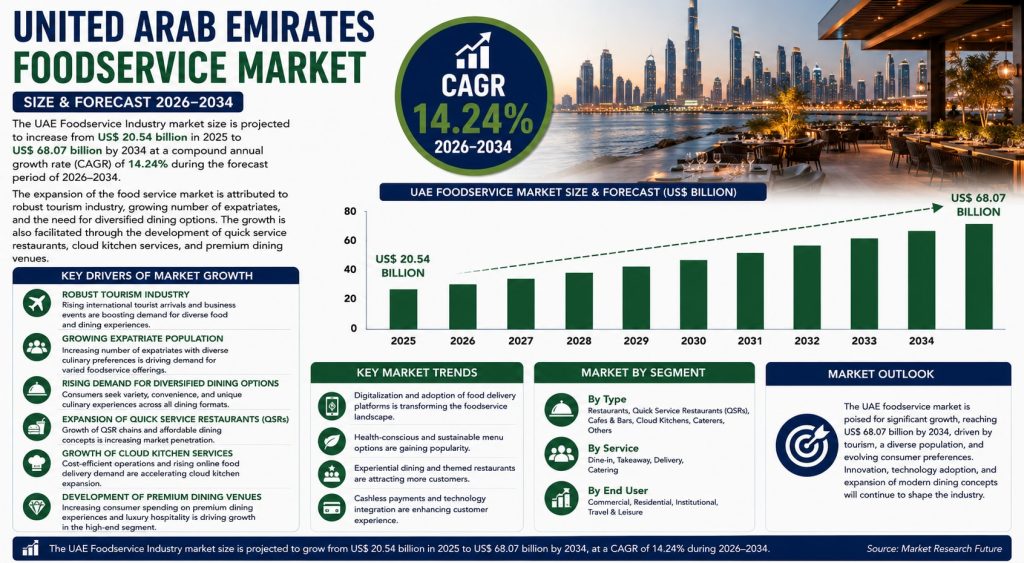
According to Renub Research, the UAE Foodservice Market is expected to grow from US$ 20.54 billion in 2025 to US$ 68.07 billion by 2034, expanding at a remarkable CAGR of 14.24% during 2026–2034. Growth is being fueled by tourism expansion, increasing expatriate populations, digital food delivery platforms, cloud kitchens, and premium dining experiences.
Understanding the UAE Foodservice Industry
Foodservice refers to businesses involved in preparing, serving, and distributing food and beverages for immediate consumption outside the home.
The industry encompasses restaurants, cafés, bars, quick-service restaurants (QSRs), hotels, catering services, cloud kitchens, institutional dining facilities, food courts, and delivery platforms.
In the UAE, foodservice has evolved into a highly sophisticated industry characterized by innovation, multicultural offerings, and strong consumer spending.
Consumers increasingly seek convenience, quality, variety, and unique dining experiences. This has encouraged operators to continuously innovate through menu development, technology integration, and enhanced customer engagement strategies.
As urbanization and disposable incomes continue rising, the foodservice sector remains one of the country’s fastest-growing industries.
Tourism Remains the Strongest Market Driver
Tourism continues to be the primary catalyst behind the growth of the UAE foodservice market.
Dubai and Abu Dhabi consistently rank among the world’s most visited cities, attracting millions of tourists annually for leisure, business, shopping, entertainment, and cultural experiences.
Visitors contribute significantly to restaurant spending across luxury dining venues, international restaurant chains, cafés, street food outlets, and hotel restaurants.
The tourism industry directly supports demand for diverse culinary offerings that cater to international tastes and preferences.
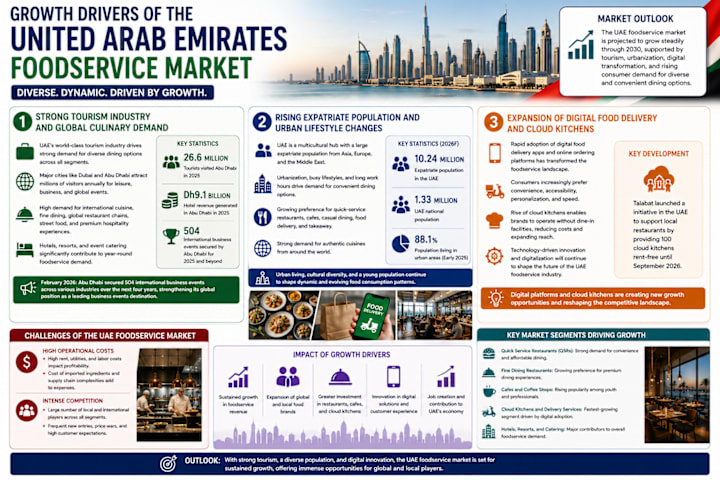
Abu Dhabi alone welcomed approximately 26.6 million visitors during 2025, generating hotel revenues of around Dh9.1 billion.
The continuous influx of international travelers ensures year-round demand for foodservice establishments throughout the country.
International Events Fuel Restaurant Spending
The UAE has become one of the world’s leading destinations for international conferences, exhibitions, sporting events, and business gatherings.
Large-scale events create significant demand for restaurants, catering services, cafés, and hospitality venues.
Global exhibitions, trade shows, sporting competitions, and cultural festivals attract visitors from diverse backgrounds, creating opportunities for foodservice operators.
In February 2026, the UAE further strengthened its position as a global business events destination by securing 504 international business events scheduled over the coming years.
These events contribute not only to tourism growth but also to increased spending across foodservice channels.
As the UAE continues attracting international gatherings, the foodservice industry is expected to benefit substantially.
Expanding Expatriate Population Supports Diverse Cuisine Demand
The UAE’s large expatriate community plays a critical role in shaping foodservice demand.
Foreign nationals account for the majority of the country’s population, creating one of the most culturally diverse consumer markets in the world.
Residents from Asia, Europe, Africa, North America, and the Middle East bring distinct culinary preferences that influence restaurant offerings.
As a result, consumers have access to authentic Indian, Chinese, Japanese, Italian, Lebanese, American, Korean, Thai, Mexican, and numerous other cuisines.
Industry estimates suggest that expatriates will account for approximately 10.24 million residents in 2026, compared with around 1.33 million UAE nationals.
This multicultural demographic continues driving demand for international dining concepts and specialized foodservice offerings.
Urban Lifestyles Increase Convenience-Oriented Consumption
Rapid urbanization and changing lifestyles are significantly influencing foodservice consumption patterns.
Many consumers lead busy professional lives and increasingly seek convenient meal solutions that fit demanding schedules.
Quick-service restaurants, fast-casual dining outlets, takeaway services, cafés, and food delivery platforms have become increasingly popular.
The UAE’s urban population represented approximately 88.1% of the country’s total population in 2025.
Urban consumers often prioritize convenience, speed, accessibility, and digital ordering capabilities when selecting foodservice providers.
This trend continues supporting growth across multiple segments of the market.
Digital Food Delivery Is Transforming the Industry
One of the most significant developments within the UAE foodservice sector has been the rapid expansion of digital food delivery services.
Consumers increasingly rely on mobile applications and online platforms to order meals from restaurants and foodservice operators.
Digital ordering offers convenience, personalized recommendations, flexible payment options, and faster service experiences.
Major delivery platforms have significantly expanded consumer access to restaurants while creating new revenue opportunities for operators.
The growth of digital ecosystems has fundamentally altered consumer behavior and accelerated market growth.
As mobile technology continues advancing, digital ordering is expected to become even more deeply integrated into foodservice operations.
Cloud Kitchens Are Revolutionizing Restaurant Models
The emergence of cloud kitchens represents one of the most transformative trends within the UAE foodservice market.
Cloud kitchens operate without traditional dining spaces and focus exclusively on delivery and takeaway orders.
These facilities allow restaurant operators to reduce overhead costs associated with premium real estate while expanding service coverage.
Cloud kitchens offer operational flexibility, lower startup costs, and faster scalability compared with traditional restaurants.
In 2026, Talabat introduced an initiative offering rent-free cloud kitchen facilities to 100 restaurant brands within the UAE, supporting growth among small and medium-sized foodservice operators.
As consumer demand for food delivery increases, cloud kitchens are expected to play an increasingly important role within the industry.
Cafés and Specialty Coffee Culture Continue Expanding
Cafés have become an essential part of the UAE’s social and business culture.
Coffee shops serve as meeting spaces for professionals, entrepreneurs, students, and tourists.
The growing popularity of specialty coffee, premium tea offerings, artisan beverages, and unique café experiences has strengthened this segment.
Consumers increasingly seek personalized experiences, premium products, and aesthetically appealing environments.
International coffee chains and independent specialty cafés continue expanding throughout major cities.
The café sector remains one of the most vibrant and innovative segments of the UAE foodservice market.
Quick-Service Restaurants Drive Mass-Market Growth
Quick-service restaurants remain a major contributor to foodservice revenue.
Consumers appreciate the convenience, affordability, and consistency offered by QSR operators.
Popular categories include burgers, pizza, fried chicken, sandwiches, bakery products, ice cream, and meat-based cuisines.
The combination of strong brand recognition, digital ordering capabilities, and extensive delivery networks supports ongoing growth.
QSRs benefit particularly from busy urban lifestyles and increasing demand for convenient meal solutions.
As population growth and urbanization continue, the segment is expected to remain highly attractive.
Burger Segment Gains Momentum
The burger category has become one of the fastest-growing segments within the UAE foodservice market.
International fast-food chains continue expanding while local gourmet burger concepts attract increasingly sophisticated consumers.
Demand is driven by convenience, affordability, customization options, and strong consumer familiarity.
The rise of premium burger brands emphasizing high-quality ingredients, artisanal preparation methods, and unique flavor combinations has further strengthened the category.
Food delivery services have also contributed significantly to burger sales growth.
Pizza Remains a Consumer Favorite
Pizza continues to be one of the most popular foodservice categories across the UAE.
Its versatility, shareability, and suitability for delivery make it highly attractive to consumers.
International pizza chains dominate much of the market, while local operators continue innovating through gourmet toppings, healthier crusts, and fusion-inspired recipes.
Pizza remains a preferred choice for family meals, social gatherings, business lunches, and casual dining occasions.
The growth of delivery platforms has further accelerated segment expansion.
Chained Outlets Strengthen Market Leadership
Chained foodservice outlets represent a major force within the UAE market.
Consumers often prefer established brands because of consistent quality, food safety standards, and reliable customer experiences.
International restaurant chains continue expanding across shopping malls, airports, hospitality venues, and lifestyle destinations.
Franchise business models have facilitated rapid growth while enabling operators to scale efficiently.
Digital loyalty programs, mobile applications, and integrated delivery solutions further enhance customer engagement.
Chained outlets are expected to remain dominant across multiple foodservice categories.
Foodservice Retail Gains Popularity
Foodservice retail is becoming increasingly important as consumers seek ready-to-eat and grab-and-go meal options.
Supermarkets, convenience stores, gourmet retailers, and specialty food outlets now offer extensive selections of prepared meals, sandwiches, salads, baked goods, and beverages.
This trend is driven by urban lifestyles, convenience-oriented consumption habits, and rising demand for high-quality ready-made food products.
Technological improvements in food preservation and packaging continue supporting segment growth.
Dubai Leads the UAE Foodservice Industry
Dubai remains the largest and most advanced foodservice market in the country.
The emirate’s strong tourism industry, luxury hospitality sector, international population, and year-round event calendar create exceptional opportunities for foodservice operators.
Dubai offers one of the world’s most diverse restaurant landscapes, ranging from street food vendors to Michelin-starred fine dining establishments.
The city’s continued investment in tourism, entertainment, and lifestyle infrastructure supports long-term market expansion.
Abu Dhabi Strengthens Its Position
Abu Dhabi continues experiencing robust foodservice growth supported by tourism development, government initiatives, cultural attractions, and rising disposable incomes.
Luxury hotels, international restaurants, premium cafés, and fine dining venues contribute significantly to market activity.
The emirate’s growing tourism sector and expanding entertainment offerings are expected to generate additional opportunities for foodservice operators.
Sharjah and Fujairah Offer Emerging Opportunities
Sharjah’s growing population, cultural diversity, and family-oriented consumer base continue supporting steady foodservice growth.
The market is characterized by casual dining establishments, cafés, affordable restaurants, and family-focused concepts.
Meanwhile, Fujairah benefits from tourism growth, coastal hospitality development, and increasing domestic travel activity.
These emerging markets provide attractive opportunities for operators seeking expansion beyond Dubai and Abu Dhabi.
High Costs and Intense Competition Create Challenges
Despite strong growth prospects, foodservice operators face several challenges.
High rental costs, labor expenses, raw material inflation, and licensing requirements increase operational complexity.
Competition remains intense as international chains, local brands, and independent operators compete for market share.
Maintaining profitability while delivering exceptional customer experiences requires continuous innovation and operational efficiency.
Workforce Dependence and Regulatory Compliance Remain Key Issues
The UAE foodservice sector relies heavily on expatriate labor across kitchen operations, customer service, and management roles.
Recruitment, retention, visa regulations, and workforce turnover continue presenting challenges for operators.
Additionally, strict food safety, hygiene, and regulatory standards require ongoing compliance investments.
While these regulations help maintain industry quality, they also increase operating costs and administrative responsibilities.
Final Thoughts
The UAE foodservice market is entering a period of extraordinary growth driven by tourism expansion, urbanization, digital transformation, and evolving consumer lifestyles.
The combination of multicultural demand, cloud kitchen innovation, food delivery platforms, premium dining experiences, and strong economic development continues creating attractive opportunities across the sector.
Although challenges related to competition, operational costs, labor dependence, and regulatory compliance remain, the industry’s long-term outlook remains exceptionally positive.
With the market projected to grow from US$ 20.54 billion in 2025 to US$ 68.07 billion by 2034, the UAE foodservice industry is poised to remain one of the most dynamic and innovative food markets in the world.