
Mohammed Rizwan is angered at the growing anti-Muslim crimes in India. “I cannot even post on social media now,” said the 21-year-old engineering student living in India’s West Bengal state.
“It wasn’t like this before, I could call out whomever I wanted.” Rizwan linked his own silence to the arrest of a local Muslim who was arrested for “protesting on social media.”
On May 4, Indian Prime Minister Narendra Modi’s Bharatiya Janata Party (BJP) won one of the most contentious political battles in the country in West Bengal. Modi’s victory was celebrated countrywide, with his supporters calling it a “historic” win.
Meanwhile, in West Bengal – a border state of more than 100 million people – a different kind of crackdown on Muslims began taking shape.
A Manipulated Mandate
Modi’s victory in West Bengal stands as one of the most contentious and controversial political battles in the country.
Several critics have called the BJP’s victory questionable, and alleged electoral manipulation. The election took place after a deeply controversial special intensive revision (SIR) of electoral rolls conducted by the Election Commission of India, where it claimed to remove duplicate, deceased, or otherwise “ineligible” voters.
Across West Bengal, more than 9 million names were initially flagged, removed, or subjected to scrutiny during the exercise.
The BJP, which rules at the Union level of the Indian government in its third tenure, has made its brand name by calling for open targeting of India’s minority communities such as Muslims and Christians. For the last six years, the U.S. Commission on International Religious Freedom (USCIRF) has consistently recommended that the U.S. State Department designate India as a “Country of Particular Concern” (CPC), due to severe violations of religious freedoms. Although the State Department has not taken up that recommendation, USCIRF continues to make it.
The BJP’s victory in West Bengal arrived with its own share of problems. BJP leaders, in various speeches during the runup to the election, labeled Muslims as “vermin,” “pests,” “intruders,” and “Bangladeshis.” They described Muslims as leeches who latch onto Indian territory. West Bengal’s new chief minister, Suvendu Adhikari of the BJP, has a history of hate directed at Muslims. In December last year, he called on India’s “100 crore [equal to 1 billion] Hindus” to teach a Gaza-like “lesson” to “everyone.” On May 5, a day after he won at the polls, Adhikari said he would work “for the Hindus” who voted for him.
Dr. Z. Ayesha, a social activist based in West Bengal’s Kolkata, believes that the Muslims of West Bengal were apprehensive of the results being in BJP’s favor.
“This was mostly due to the pre-existing deplorable conditions of minorities in the BJP-governed states. Hence, their victory has evoked (reasonable) fear and (justified) unrest in them,” Ayesha said. “After the declaration of the election results, so many untoward incidents have taken place targeting Muslims in the state. The chief minister’s remarks deeply reflect his biased mindset and arouses justifiable anxiety and fear in the minorities of this state.”
Muslims in the state have also expressed their disappointment with the SIR. “After the list was made public and so many rightful names were deleted from it, they were in great distress and turmoil thinking about the future,” Ayesha said.
Despite attending multiple court hearings and trying to prove the veracity of their long-standing legal documents, Ayesha said that a major chunk of people didn’t feature in the final voter list. This, many local Muslims said, cemented their beliefs about exactly how the BJP won the elections in West Bengal.
Recalibrating Regional Ruckus
On June 4, Bangladesh said it had foiled several attempts by India to force people into the country, reviving a dispute over alleged undocumented migration between the South Asian neighbors. This pushback from West Bengal was felt in Bangladesh almost immediately after BJP took over the state.
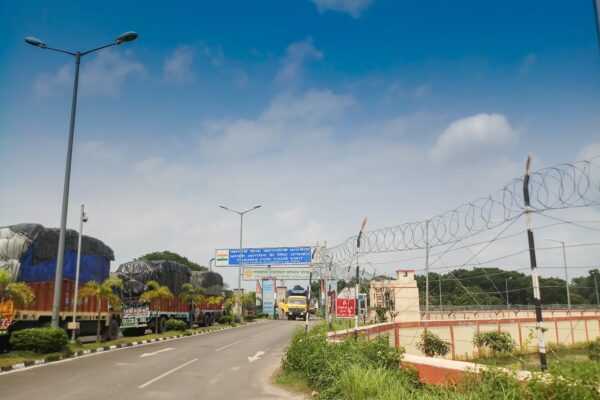
India and Bangladesh share one of the longest land frontiers in the world, stretching for more than 4,000 km (2,500 miles) across all sorts of terrain, making it difficult to police. Out of this kilometer count, over half (2,216 km) of India’s border with Bangladesh is in West Bengal.
In April 2026, India’s Border Security Force (BSF) announced that it was releasing crocodiles and venomous snakes into riverine stretches along the Bangladesh border to deter people from crossing into India via the river route. Then, in May, after assuming power, Adhikari announced the transfer of land to the BSF within 45 days to fence the border with Bangladesh.
In response, Humayun Kabir, the foreign affairs adviser to Bangladeshi Prime Minister Tarique Rahman said, “The people of Bangladesh are not afraid of barbed wire. The government of Bangladesh is not afraid of barbed wire either. Where we need to speak, we will.”
Snigdhendu Bhattacharya, a Kolkata-based journalist and author, views this current combination of leaderships in both countries with caution. Bhattacharya said that ever since the BJP assumed power at the Union level in 2014, the party had been blaming former West Bengal Chief Minister Mamta Banerjee for being a blockade to settling the Teesta Water Treaty – a long-standing, unresolved transboundary river dispute between India and Bangladesh.
“But now BJP itself cannot agree on this treaty because it will upset their own voters in North Bengal,” he explained.
Bhattacharya noted that Adhikari recently said that rather than putting people in detention centers, he was in favor of sending them back to Bangladesh.
“So these statements show that pushbacks from India will increase. The last few days, tensions on the border have increased, with India pushing people into Bangladesh, and Bangladesh refusing to accept them. Many were stuck in no man’s land,” he explained.
On the BJP’s win in the border state, Dr. Amit Ranjan, a research fellow at the Institute of South Asian Studies (ISAS), at the National University of Singapore (NUS) said, “The new government need to understand that their everyday politics on Bangladesh and Bangladeshis may harm India’s interest. India-Bangladesh ties have already been strained after Hasina’s exit. After Tarique Rahman came into power the two countries are trying to reset their relationship. The new power elites in Dhaka are different from the one under Hasina. Even ground reality is different in the country.”
Ranjan told The Diplomat that for decades, the BJP flagged concerns over infiltration and “illegal” migration in Indian states bordering Bangladesh.
“Its West Bengal election manifesto too included the slogan ‘Detect, Delete, and Deport’ those living in the state ‘illegally.’ But this issue drew a sharp reaction, with [Bangladeshi] Foreign Minister Khalilur Rahman saying that Dhaka would take action if ‘push-in’ incidents occur following the change of government in the state,” he said.
Ranjan elaborated that there are also water-sharing issues.
“Both renewal of the Ganga Water Treaty and finalization of the Teesta waters treaty may play a crucial role in resetting of India-Bangladesh ties. The role of Dinesh Trivedi, new political appointee as Indian High Commissioner to Dhaka, is also significant in deciding the fate of India-Bangladesh ties,” he said.
In Bangladesh, researcher and author Altaf Pervez said that the push-in activity from West Bengal into Bangladesh is seen as deeply unwelcome move in the eyes of the Bangladeshi people.
“While this has happened before, people are now noticing it is occurring under West Bengal’s new administration. Bangladeshi civil society has anticipated that if the BJP gained power in India’s border states, as it has at the Union level, border tensions would increase. That expectation has proven accurate,” Pervez said.
Amid longstanding bilateral issues that remain unresolved, Pervez observed that with the BJP now in power in most Indian states that share a border with Bangladesh, such as West Bengal, Assam, and Tripura, citizens in Bangladesh anticipate more complications.
“So the hopes for easing tensions between the two countries appear to be fading,” he said.
Wringing Rohingya Refugees
“We can’t even dream of moving to India, we too understand how the BJP works. Even in our camps we can sense the tension at the border,” said Muhammed Alom RJ, a Rohingya refugee in Bangladesh’s Cox Bazaar refugee camp.
The camp is one of the most densely populated refugee camps in the world and is more than 1.5 times more populated than Dhaka – the world’s most densely populated city. Rohingyas live in the camp in hope of having a future outside its confines.
But Sabber Kyaw Min, a Rohingya refugee who has lived in India for two decades, shivers at the thought of the BJP ruling more parts of India. Min, who runs a human rights organization, Rohingya Human Rights Initiative (ROHRIngya), has lived half of his refugee life in Kolkata.
“We saw what happened last year when Rohingya refugees were thrown into the sea by India. Ever since 2014, we see increased violence and harassment targeting Rohingyas, being peddled by the BJP. Bangladesh is one-tenth the size of India, but has a bigger heart, our people don’t face this there. The BJP is inspiring other countries to hate Rohingyas too. Malaysia, Indonesia all are developing the hate we see in India,” Min lamented.
“Several Rohingyas have died at detention camps in India, in West Bengal’s Dum Dum Jail too, many lost their life waiting for help, but it never came. Our fear is that either we will be thrown into the sea, lynched, or dumped in these camps, if the government of the day continues to peddle hate against us,” Min told The Diplomat.
As each day passes since the BJP takeover of West Bengal, Muslims and Rohingyas in the region talk in hushed tones and try not to attract attention. For they do not know when they might irk those in power and lose claim to basic human rights or be pushed across the border.