
More than three months of escalating tensions in the Middle East have rattled Japan’s economy. Concerns over naphtha supplies—a key feedstock used in a wide range of chemical products—have highlighted the fragility of global supply chains. However, wider adoption of one technology could help reduce Japan’s reliance on imported resources: the chemical recycling of waste plastics.
Chemical recycling breaks materials down into their molecular components for reuse. In the case of plastics derived from naphtha, the process converts them back into oil that can then be used again as a feedstock.
New Facilities Come Online
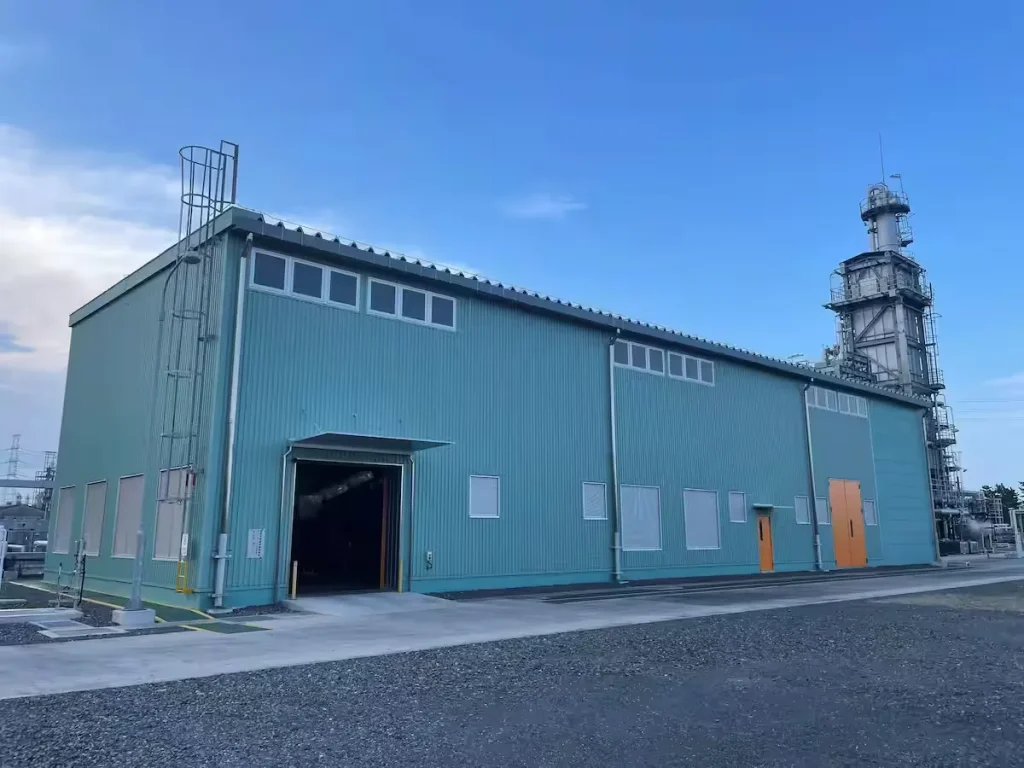
In July last year, Mitsubishi Chemical and ENEOS completed a chemical recycling facility for waste plastics at Mitsubishi Chemical’s Ibaraki Plant. After a period of trial operations, the facility entered commercial service in March.
The companies use high-temperature, high-pressure water known as “supercritical water” to break down waste plastics. The technology was licensed from the British company Mura Technology.
While plastics can be decomposed using heat alone, conventional methods apply heat externally, creating localized high temperatures inside the equipment that can cause the waste plastic to carbonize.
By using supercritical water, heat is distributed more evenly throughout the material, resulting in higher oil yields, according to the head of Mitsubishi Chemical’s CN and CE Business Group.
The facility can process up to 20,000 tons of waste plastics annually. It produces two main types of oil: a synthetic crude oil and a naphtha fraction. ENEOS refines the synthetic oil into petroleum products such as gasoline, while Mitsubishi Chemical uses the naphtha fraction as a feedstock for basic chemicals.

Petroleum company Idemitsu Kosan has also built a chemical recycling facility on land adjacent to its Chiba complex. The plant can process 20,000 tons of waste plastics per year and began commercial operations in April.
The company uses catalysts originally developed for oil refining. Rather than being discarded as industrial waste after their refining life ends, these catalysts can be repurposed for plastic recycling, helping to produce oil with a higher naphtha yield.
Scaling Up to Cut Costs
Challenges remain, particularly in terms of cost. Compared with using naphtha produced directly from crude oil, chemical recycling currently costs two to three times more.
Expanding processing capacity will be key to bringing those costs down. Mitsubishi Chemical plans to increase its annual waste-plastic recycling capacity to more than 100,000 tons in the 2030s. Idemitsu is considering not only expanding its Chiba facility but also installing waste-plastic recycling units at refineries across Japan, including sites in Aichi and Hokkaido.
According to Nobuhiro Miyagishi, executive officer and general manager of Idemitsu’s Basic Chemicals Department, the company is also exploring a model in which chemical recycling facilities would be built alongside municipal waste-treatment plants.
Broader adoption will also require expanding the range of plastics that can be processed. Mitsubishi Chemical’s facility currently handles soft polyolefins, including polypropylene and polyethylene. Idemitsu can process polypropylene, polyethylene, and polystyrene—common plastics used in products such as garbage bags, plastic wrap, and Styrofoam. Both companies are developing technologies that would enable the recycling of rigid plastics as well.

Advantages of Chemical Recycling
According to the Plastic Waste Management Institute, Japan generated 9.11 million tons of waste plastics in 2024. Of that total, only about 20% was recycled through material recycling, in which plastics are reused as raw materials. Nearly 70% was processed through thermal recycling, which recovers energy by incinerating waste.
Material recycling has its limitations. Repeated recycling can gradually degrade the strength and quality of plastics, reducing their usefulness over time. Incineration, meanwhile, produces carbon dioxide (CO₂) emissions.
Chemical recycling avoids this problem because plastics are broken down into their molecular components before being reused. Furthermore, compared with incinerating waste plastics made from crude-oil-derived naphtha, chemical recycling can reduce emissions by about 40%.
As a result, a growing number of companies are incorporating chemical recycling into their product cycles. Mitsubishi Chemical is working with companies including Kewpie and Albion, which collect used plastic containers from their products and reuse chemically recycled materials in new packaging.
Idemitsu Kosan is also expanding its partnerships. One example is its collaboration with Takenaka Corporation, which uses chemical recycling to process used construction materials.
Strengthening Resource Security
The recent crisis has highlighted the importance of energy security. While Middle Eastern crude oil has long been an economically attractive option, relying on it for more than 90% of Japan’s oil imports carries significant risks.
As a resource-poor country, Japan needs to maintain a broad range of supply options, even if doing so entails somewhat higher costs.
The chemical recycling of waste plastics could become one such option. By continuing to overcome technical challenges through innovation, Japan hopes to expand its “urban oil field”—recovering valuable resources from waste generated at home.
Government support will also be essential to turning that vision into reality.
RELATED:
(Read the article in Japanese.)
Author: Shunichi Takahashi, The Sankei Shimbun