
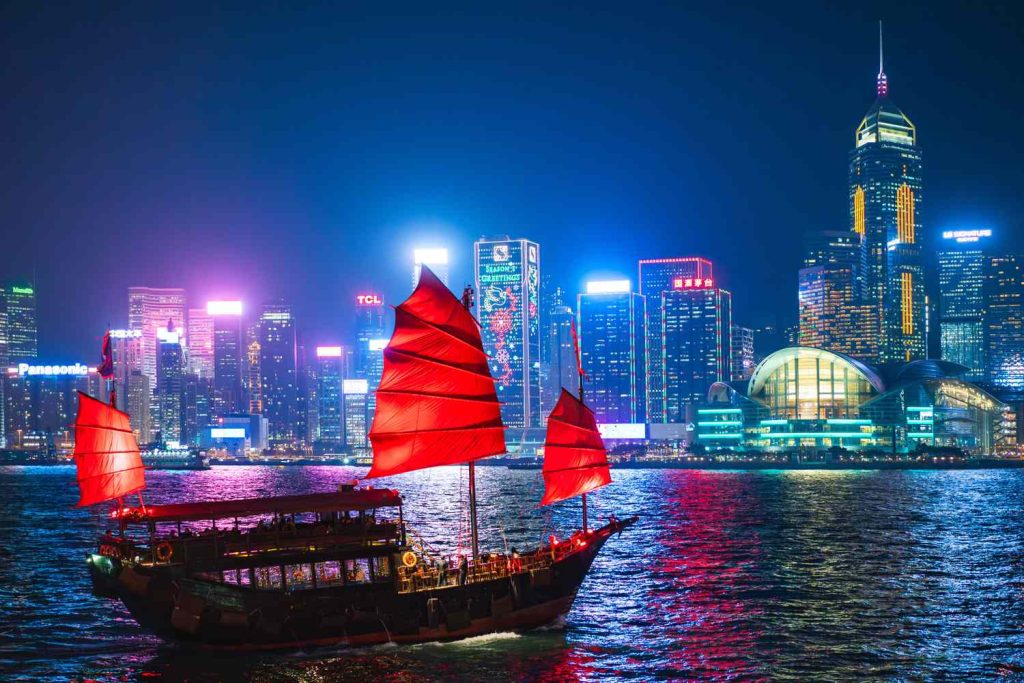
If you haven’t been to Hong Kong in a while, I can’t blame you — and I live here. Travel warnings were raised in 2019 during citywide protests, and before anyone could catch their breath, faces were covered, flights were canceled, and the once-24-hour city was shut down. That moment of forced introspection, when identities were rocked to the very core, was beyond difficult. But like hot iron from a forge, the city — my city — has emerged renewed, and there’s no better place to see that than in our food and drink scene.
“I had a bar, and with the pandemic curfews, we weren’t doing much business,” recalls Vicky Cheng, the chef behind the acclaimed “Chinese x French” fine-dining spot Vea and the haute Chinese restaurant Wing. “In the bar space, we started making supper for friends, like clay pot rice — things we wanted to eat,” he says of Wing’s beginnings. “Believe it or not, we originally wanted to create a casual restaurant.” Today, Wing epitomizes contemporary Chinese fine dining, ranking No. 11 on the World’s 50 Best Restaurants list in 2025. Many of its dishes are now considered iconic: jiggly sea cucumber in a thin spring roll wrapper with scallion sauce, or housemade century eggs with crystal clear whites, served with a lacy drizzle of tingly mala chile sauce. The menu evokes the food Hong Kongers grew up with, amplified and refined.
The desire to dig deep into our personal and collective identities percolated citywide. Suddenly freed from the expectations of travelers and business diners, chefs began cooking, first and foremost, for themselves and their community.
This shift in perspective was seismic. For a long time, Hong Kongers have looked abroad, especially to the West and Japan, for the latest trends. But in recent years, as Vicky Lau, chef of the two-Michelin-starred, French-meets-Chinese Tate Dining Room, observes, “people began to be more open-minded about different kinds of cuisine closer to home.” This newfound curiosity has led chefs like Lau to explore the vast larder of mainland China.
In practical terms, purchasing ingredients from the mainland was easier than flying them in from other countries (the special administrative region is geographically attached to China), especially given China’s advanced logistics network. But new openness to sourcing from China wasn’t just about supply chain adjustments; it was also a philosophical shift. Hong Kongers had long been skeptical of anything made in China, whose reputation was marred by stories of “fake food.” These days, China has come a long way in terms of ingredient quality and traceability, and as the definition of luxury shifts from imported foie gras toward hyperseasonal, regional, and expertly sourced foods, chefs and diners are embracing the bounty in our backyard.
Lau’s exploration of regional Chinese ingredients led to her newest opening, the Yunnan-inspired bistro Jija, which means “chirping birds” or, in Cantonese slang, “excited chatter.” She describes it as a “Chinese kind of bistro” built on the cuisine of southwestern China: Prized seasonal mushroom varieties burst with umami in a housemade mushroom and pork sausage; Chinese artichokes, rarely seen outside Yunnan, are pickled with black cardamom, Szechuan pepper, and star anise. Even the simplest side of stir-fried vegetables provides a window into the region: In spring, for example, long, minty, crunchy wild rice shoots might be tossed in a searing-hot wok with yancaigao, a salty-sour fermented vegetable paste reminiscent of fish sauce. Though Yunnan is just 800 miles away from Hong Kong (approximately the distance between New York City and Chicago), for Lau it once felt like another world. Her research, travels, and direct conversations with growers have unearthed Yunnan’s nuanced richness and brought it within arm’s reach.
“I think there’s such beauty in that cuisine; it looks very casual, but it’s got lots of flavor,” she says. “It’s very ingredient-driven and very accessible.” Her favorite finds include ganbajun, the prized wild coral fungus indigenous to the region, as well as more familiar fungi like morels and pencil-shaped black termite mushrooms.
Like Lau, chef Tony Mok of Path restaurant draws inspiration from close to home. Growing up in a wai chuen, one of the centuries-old walled villages of Hong Kong’s New Territories, with a father who trained in a traditional Cantonese kitchen, his inspirations are profoundly personal and unabashedly homegrown. Mok says he designed his intimate eight-seat restaurant, with counter seating around an open kitchen, “so that customers can talk to me directly and ask me questions anytime,” because the food is ultimately his story. “The inspiration comes from things I ate in the village when I was little as well as dishes that are common in Hong Kong food culture. But I don’t want to just replicate it. I want to express these traditional flavors in a new way.”
His take on dan dan noodles has a luxurious pile of Hong Kong’s native flower crab instead of the usual pork, and he caresses each serving of chalky white al dente noodles by hand to assess their starchiness, a technique learned from making Korean mul naengmyeon (cold noodles). The noodles sit atop a silky roasted-cashew sauce and are finished in chile oil and a shower of crispy, garlicky breadcrumbs. He serves the dish cold, a refreshing spin tailored to Hong Kong’s heat.
The embrace of local ingredients and traditions extends beyond fine dining and can be found at every price point throughout the city. “In Hong Kong, a lot of the people who started these traditions are still in business, so younger folk have the opportunity to approach them and, with the right amount of sincerity, courage, and curiosity, really internalize the ways of doing business and the techniques involved,” says Hong Kong–raised 2021 F&W Best New Chef Lucas Sin who is working on a book inspired by the city’s cha chaan tengs (dinerlike all-day eateries). Tai On Coffee & Tea Shop, he says, “was one of the first” revived cha chaan tengs. It now serves flat whites alongside locally inspired mashups like creamed corn on French toast, where an intense corn velouté and grilled corn on the cob meet thick-cut, fluffy white bread, fried to golden perfection. “It’s always heartening to see new people stepping in with the goal of continuing a business and celebrating what people have been doing for a long, long time,” Sin says.
Old ways are getting new life everywhere: Rowdy hot pot den Big JJ shakes things up by re-creating the energy of an old-school dai pai dong, or street stall, while offering high-quality (and sometimes obscure) cuts of beef, sliced expertly for cooking at the table, as well as a thoughtful wine selection. At the “Cantonese cocktail salon” Kinsman, drinks draw from traditional Chinese and locally made liquors — the Kaya Toast blends jiuniang, a sweet fermented rice wine, with clarified brioche vodka made using bread from the celebrated Bakehouse bakery.
As someone who grew up in Hong Kong in the 1990s, people often ask me whether much has changed since the “handover” in 1997, when Hong Kong ceased to be a British colony. When it comes to food, I’d say the changes have only just begun.
Where to eat and drink in Hong Kong
Wing
Courtesy of Wing
French-trained chef Vicky Cheng taught himself to cook Chinese food, and dishes like his fragrant Alaskan king crab with crispy cheung fun and baby pigeon are the delicious and intricate result. Book a table at Wing well in advance.
Path
Courtesy of Path
Born and bred in a Hong Kong village, Tony Mok presents the flavors of his youth through a modern, personal lens — think beef short rib braised with fermented black beans and broccoli and XO sauce in a carrot tuile.
Jee
Courtesy of Jee
A collaboration between rising chef Oliver Li and Cantonese master chef Siu Hin-Chi, Jee serves a modern Cantonese tasting menu featuring dishes such as orzo fried “rice” with aged radish, as well as Wagyu and abalone pithiviers.
Duddell’s
Courtesy of Duddell’s
Hong Kong’s most stylish residents can be seen wolfing down flawless dim sum at Duddell’s, which conveniently has an outpost in the Hong Kong Airport (HKG); even traditionalists can’t resist subtle innovations like the roast goose pie.
Big JJ Seafood Hotpot
Courtesy of Big JJ Seafood Hotpot
This loud and unapologetically hip hot pot den serves up quality cuts of beef, dai pai dong (street stall) vibes, a rocking Cantopop playlist, and a clever wine list.
Jija
Photo by Ryuke Sky for Jija
At Vicky Lau’s chic Yunnan-inspired bistro, expect vibrant, spicy-sour flavors and farm-fresh, fermented, and foraged vegetables and fungi in dishes like “broken” tofu croquettes with fermented tofu sauce or oxtail soup with Chinese quince, fermented tomato, and fiery chiles.
Plantation Tea Bar
Courtesy of Plantation Tea Bar
Tea aficionado Nana Chan’s serene Plantation Tea Bar is dedicated to exploring the nuances and craft of fine teas from China, Taiwan, and beyond.
Tai On Coffee & Tea Shop
This 1960s cha chaan teng has been revived and offers contemporary takes on the East-meets-West genre’s classic dishes — stir-fried pasta, deep-fried French toast — alongside barista-made coffees.
Kinsman
Courtesy of Kinsman
This bar expertly weaves Cantonese nostalgia into cocktails. Think traditional Chinese liquors, herbs, and flavors presented with modern sophistication.
Qura Bar
Photo by Henrik Hui for Qura
Many forget that the best views of the harbor are from Kowloon, and Qura is the place to take those in, with a list of revamped and classic cocktails by champion bartender Quentin Luk. The substantial food menu has everything from bar bites to a three-course dinner.
Where to stay in Hong Kong
Courtesy of Eaton HK
Rosewood Hong Kong
Although just seven years old, this harborfront stunner has already rewritten what luxury and hospitality mean in the city. If you can drag yourself out of your freestanding bathtub, consider visiting Rosewood Hong Kong’s Chinese restaurant The Legacy House or DarkSide bar. Rooms from $772
Upper House Hong Kong
Understated and discreet, this exclusive gem is an oasis of calm and minimalist design. The hundred or so rooms are enviably large for Hong Kong, and Upper House Hong Kong’s unique position makes you feel as if you’re simultaneously in the heart of the city and floating slightly above it. Enjoy the views from the hotel’s all-day restaurant Salisterra. Rooms from $789
Eaton
If you really want to be in the thick of things, this is the place to stay. A cultural hub as much as a pied-à-terre, Eaton hosts community events and is home to a buzzy terrace bar, Terrible Baby, and the Cantonese restaurant Yat Tung Heen. Rooms from $98