
Most media and entertainment brands have more behavioural data than they know what to do with. The ones turning it into measurable outcomes share a common operating model.
Personalisation has been a stated priority for media, entertainment, sports, and gaming brands for the best part of a decade. Yet the gap between intent and execution remains wide. That gap is one of the central themes of Braze’s new Media & Entertainment Personalisation Report.
Drawing on direct practitioner experience from streaming, sports, gaming, and music brands across Asia, ANZ, and the GCC, the report examines the pressures driving change in the industry, the capability gaps holding brands back, and the personalisation strategies, data foundations, and AI applications delivering measurable results.
Building unified fan profiles from interactions
Most brands already collect plenty of data. The problem is identifying which signals are actually useful for engagement decisions. Every interaction is a signal, but not every signal is equally meaningful. What people watch, click, buy, ignore, and return to all tell a story, and separating useful signals from noise is where most brands fall behind.
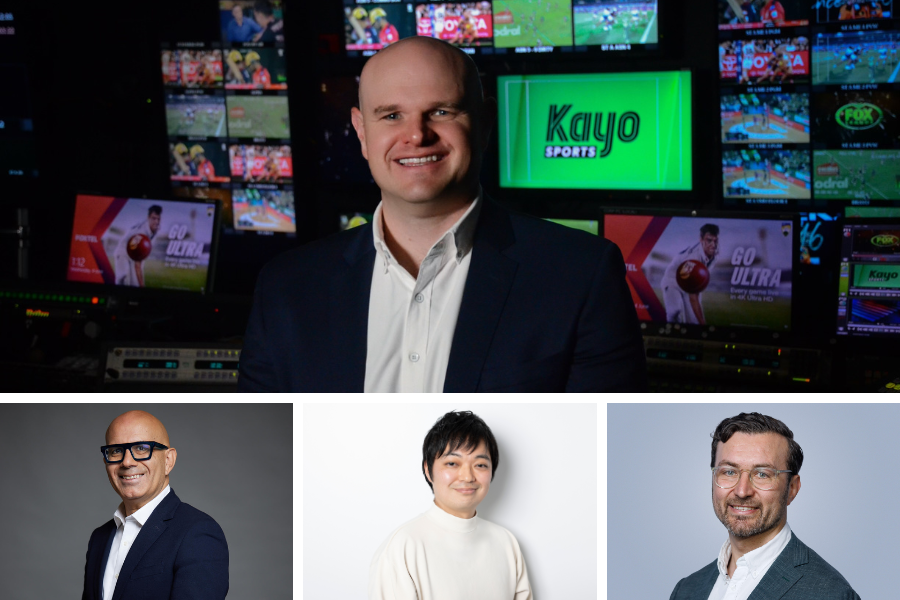
Peter Filopoulos, chief marketing and digital officer with Canadian Soccer Media and Entertainment (formerly with Football Australia), frames the goal in terms of quality over quantity.
“The goal isn’t more data. It’s better signals. Who is this person? What do they care about? What’s valuable to them now?” Filopoulos said.
Sport offers a natural testing ground for second-screen engagement, because fans are already pulling out their phones during live moments. Josh Marton, general manager of public affairs and marketing at Golf Australia, notes that golf’s handicap system functions as a persistent digital companion. Players regularly check how their handicap has shifted after each round, providing a real-time engagement hook that sits alongside the live experience.
“For us to take it to the next level, we need to be stronger in setting up triggerable automations linked to the golf experience that genuinely add value for players,” he said.
Growth patterns and consumer behaviour across Asia, ANZ, and the GCC
The growth dynamics across Asia, ANZ, and the GCC are distinct, but they share common underlying drivers. Across all three regions, audiences engage with meaning, belonging, and identity. The differences lie in how those drivers express themselves through platforms, business models, and consumer expectations.
Asia’s streaming and gaming markets are the region’s primary growth engines. Online video revenues are expected to rise from about US$64 billion (AUD $91 billion) in 2024 to roughly US$89 billion (AUD $126 billion) by 2029, with streaming set to overtake traditional TV by 2027. Engagement flows through platforms, creators, and social ecosystems, with mobile as the dominant screen.
Con Raso, managing director of global music cloud platform Tuned Global, notes that telcos operating music streaming services across Asia can reduce friction with bundled data, direct carrier billing, and large-scale distribution.
“Telco-powered services outperform global platforms on relevance, particularly when discovery and promotion mechanisms are tuned toward domestic talent,” Raso said.
Superfan models are also gaining traction in Asia, where platforms layer mechanics like exclusive content, artist tipping, and community-driven engagement on top of streaming to drive higher retention and new revenue streams.
Sport now competes directly with all entertainment, not just other sports. With fans following six to eight sports on average, any single property is fighting for attention year-round against a much wider field.
Yudai Goto, CRM team lead, experience design at TVer, Japan’s ad-supported streaming platform operated jointly by the country’s major commercial broadcasters, sees the retention challenge arriving from an unexpected direction.
“One of the major shifts in the video streaming landscape compared to two years ago is the rapid rollout of lower-priced, ad-supported plans. While this has made it easier for users to subscribe to multiple services on a whim, it also means brands now need a much stronger hook or a unique value proposition to be the one that truly gets chosen,” Goto said.
Start narrow, then scale
Effective personalisation often starts simpler than brands expect. Three approaches consistently work. Showing different content based on preferences, coordinating messages across channels, and triggering actions based on behaviour. Dynamic content does not always need machine learning. Showing basketball content to basketball fans can outperform complex algorithmic recommendation in some cases.
“Stop overthinking it. Start with triggers, add dynamic content, coordinate channels. The sophistication can come after the basics work,” Tim Armstrong, director at Mangrove Digital, said.
The coordination piece is where most brands fall down. Omnichannel personalisation means email, push, and in-app messaging work together. Most brands send three separate personalised campaigns that do not correspond to one another. The same principle applies across screens. The goal is a cohesive experience that follows the fan, not a collection of isolated messages competing for attention.
Where to invest to get more out of personalisation
Personalisation fails when it is treated as a marketing project. When it is owned by one team, measured by campaign metrics, and disconnected from product and data decisions, it cannot scale. The strongest returns come from foundational capabilities rather than features. Unified data, a single fan identity, clear ownership, simple journeys, and organisational alignment consistently outperform more sophisticated but poorly grounded efforts.
“Personalisation succeeds when it’s treated as a capability, not a campaign. You can only scale personalisation so far without a solid data structure,” Josh Jones, who leads CRM capability and enablement at Sportsbet, said.
Organisational capability matters as much as technical capability. Clear ownership of data, alignment between teams, solid priorities in what to build next, and a test-and-learn culture that ties efforts to measurable outcomes all determine whether personalisation scales or stalls.
The most effective starting point is use cases that clearly impact the customer experience and align with business goals, rather than trying to personalise
everything at once. The technology landscape is also changing quickly, and brands need the ability to move with it rather than locking their roadmap to a single provider.
“You don’t want to be stuck in the mud of ‘I’ve gone all in with this provider, and therefore my roadmap becomes their roadmap for the next ten years.’ You want the openness of a buy model for modules that you add on, and the ability to replace them when you need to,” Anthony O’Byrne, managing director of growth at Kayo Sports, said.
For the full picture, including the market pressures driving these shifts, the tooling decisions that support or constrain personalisation, and the AI applications delivering measurable results, read the complete Braze Media & Entertainment Personalisation Report.