

The International Monetary Fund’s Finance & Development magazine, in its June 2026 issue, poses a pointed question: what happens when economic policy and national security become the same thing?
The end of the Cold War promised a more harmonious era for international relations.
That vision is now under threat as governments increasingly turn to tariffs, sanctions and export controls to advance national security goals. The line between economic and security policy is blurring. A new era of geoeconomics is taking hold.
Malaysia is living inside that era right now.
The forced labour tariff
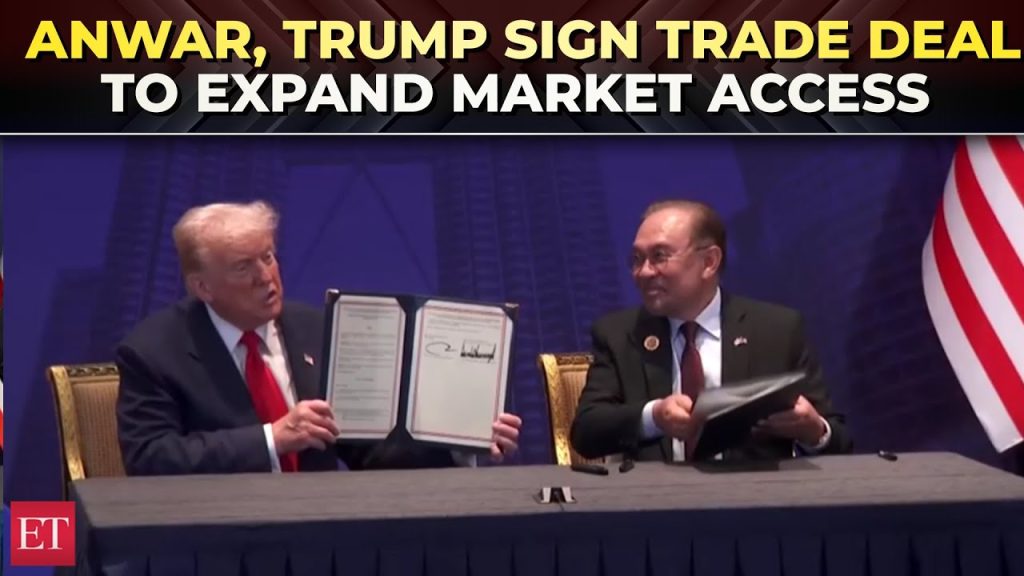
Consider the proposed 10% US duty on Malaysian goods, justified by an alleged failure to curb forced labour. By any reasonable standard, the penalty appears to far exceed the problem it claims to address.
This is not merely a trade dispute. Tariffs, sanctions and export controls are once again being wielded as tools of leverage, marking the return of geoeconomics, where economic policy and national security converge.
The forced labour finding arrives at a time when Washington is recalibrating its economic relationships across Southeast Asia, not only on the basis of market efficiency, but on who controls what and who is aligned with whom.
Josh Lipsky, the chair of international economics and founding director of the GeoEconomics Center at the Atlantic Council, reminds us that for most of the world, from Brazil to India to Turkey, geoeconomics is simply how international business has always been. What has changed is that the world’s largest economy is now joining in, with consequences for everyone.
For Malaysia, a small open economy deeply embedded in global supply chains, those consequences are structurally serious.
Choke points and the dependency trap
Christopher Clayton (Yale), Matteo Maggiori (Stanford) and Jesse Schreger (Columbia) show how control of choke points – financial infrastructure, technology, critical commodities – can confer immense power. They also warn that overusing such power is self-defeating: it drives other nations to seek alternatives and erodes the very leverage being wielded.
Malaysia sits uncomfortably close to several of these choke points without controlling any of them.
Capital flows into Malaysian rare earth processing not because Malaysian institutions are trusted partners. It flows because the extraction chain must run through somebody – and that somebody must be aligned with Washington’s supply chain calculations.
Meanwhile, the influx of semiconductor companies and data centres, often celebrated as investment and job creation, may conceal a structural dependency.
Total factor productivity gains may flow largely to foreign capital, while Malaysian labour, land and energy are consumed as low-cost inputs. The country hosts the physical hardware but does not own the high-value elements of the supply chain.
This is the semi-peripheral condition: integrated into global capitalism, indispensable to it, but locked out of the sectors that dictate everything else.
What the IMF tells middle powers
NK Singh, the president of the Institute of Economic Growth in India, argues in the June 2026 F&D issue that middle powers can shape the emerging order by forming issue-based coalitions.
For Malaysia, the most credible version of this is the Asean consensus model though successive governments have historically constrained Asean from acting decisively under pressure.
Clayton, Maggiori and Schreger call for policy tools that allow limited intervention to enhance economic security while preserving the benefits of globalisation. Their warning is clear: overusing geoeconomic leverage is self-defeating.
Autarky, the pursuit of complete economic self-sufficiency, is not an option.With a Trade Openness Index of roughly 137% of gross development product (GDP) and total trade reaching RM3.1tn annually, Malaysia’s exposure is vast and highly concentrated in sectors like electrical and electronics and in its dependence on the US and Chinese markets.
Five tools Malaysia can deploy
Currency and payment diversification: The ringgit’s near-total reliance on dollar-clearing creates structural vulnerability. Bilateral local currency settlement agreements – already initiated with China, India and several Asean partners – should be expanded and deepened. This is basic monetary sovereignty.
Tighter investment governance: Critical minerals, rare earths and data infrastructure need a legal architecture that distinguishes between foreign direct investment and foreign control.
Ownership thresholds, technology transfer requirements and profit repatriation caps are the vocabulary of economic sovereignty.
Productive industrial policy: Attracting semiconductor fabrication plants is useful. Building domestic process engineering capacity is better, through targeted public universities, government-linked firms and supply chain small and medium-sized enterprises.
Scaled-up skills investment: The Gear-Up programme is a step in the right direction. It needs tenfold scaling and rigorous outcome accountability.
Multilateral rules engagement: Aaditya Mattoo, Michele Ruta and Robert Staiger, in their 2024 National Bureau of Economic Research paper, Geopolitics and the World Trading System, argue that geopolitical competition need not end trade cooperation, but it does require rethinking the rules.
Malaysia should be far more vocal at the World Trade Organization and Comprehensive and Progressive Agreement for Trans-Pacific Partnership trade talks. It should make the case that weaponising trade undermines the rules that smaller economies live by. Silence is complicity.
Gordon Hanson of Harvard Kennedy School argues that place-based policies offer regions left behind by globalisation a path beyond economic populism. For Malaysia, this means fiscal investment in domestic demand, addressing wage stagnation, graduate underemployment and housing affordability. In this way, a portion of economic activity will be insulated from external shocks.
Resilience and restraint
Malaysia cannot match the coercive capacity of great powers. But it can reduce its vulnerability and diversify its dependencies. It can build the productive capacity that converts foreign capital from a source of extraction into a foundation for genuine development for the people.
The geoeconomic age has arrived whether Malaysia invited it or not. The issue is not whether to engage but whether to engage as a subject of other nations’ strategies – or as a country with a strategy of its own.
The people of this nation deserve the second option.
The views expressed in Aliran’s media statements and the NGO statements we have endorsed reflect Aliran’s official stand. Views and opinions expressed in other pieces published here do not necessarily reflect Aliran’s official position.
- Tegakkan maruah serta kualiti kehidupan rakyat
- Galakkan pembangunan saksama, lestari serta tangani krisis alam sekitar
- Raikan kerencaman dan keterangkuman
- Selamatkan demokrasi dan angkatkan keluhuran undang-undang
- Lawan rasuah dan kronisme
