
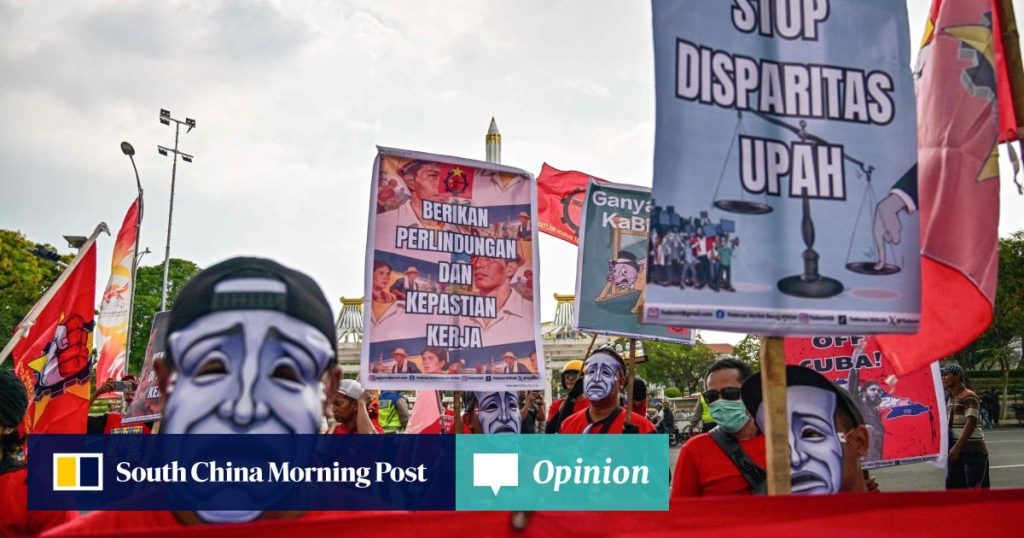
This oppositional split represents the latest iteration of a decades-long structural tension within Indonesian organised labour: between unions that operate inside the existing political cartel and those that attempt to build independent power outside elite patronage. The polarisation between the elite union bureaucracy and the more militant, independent-minded activists has been a fundamental division since organised labour re-entered the political terrain soon after 1998.
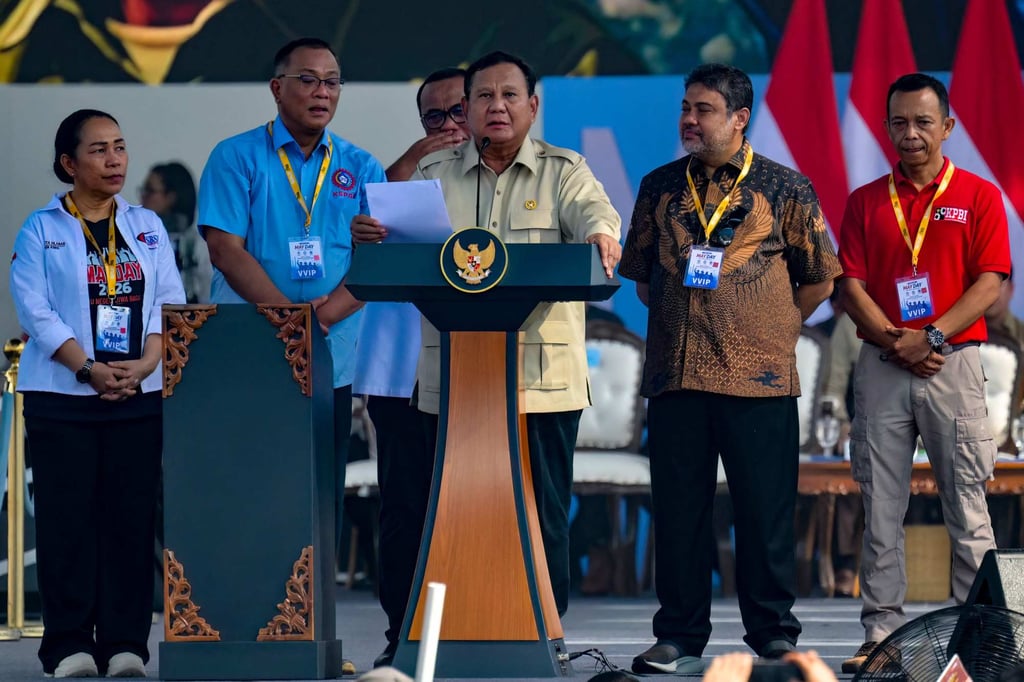
The competing rallies also exposed two contradictory conceptions of what trade unions are for. The first stream mostly traces its origins back to the official unions of the Suharto era. The second traces its origins to the pro-democracy movement of the 1990s. The first is represented by major confederations: the Confederation of All-Indonesian Workers’ Union (KSPSI), the Indonesian Trade Union Confederation (KSPI) and the Confederation of United Indonesian Workers (KPBI). KSPI president Said Iqbal is its main figure and was among those standing with Prabowo at the Monas fiesta. Some smaller federations also took part.
The second conception is represented by the Alliance of Labour Movement with the People (GEBRAK), which includes the 100,000-strong Indonesian Trade Union Congress Alliance (KASBI), the Indonesian Workers’ Struggle Federation (FPBI) and several other smaller formations. GEBRAK has a much more anti-system orientation, heading its May Day statement with “Fight Capitalism, Imperialism and Militarism”. It has no single central figure.
Among all workers, including those in the informal sector, at least 80 per cent now earn less than the official minimum wage. Even in the formal sector, workers employed through labour-hire companies can fall below that threshold.