
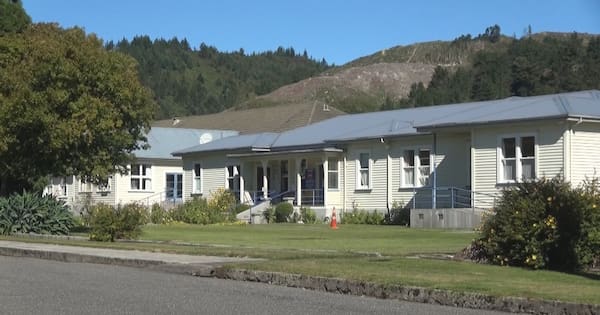
The tiny town of Reefton, on the South Island’s West Coast, has decided to take matters into its own hands after losing a critical residential healthcare unit in 2022.
The closure of Ziman House has seen countless elderly residents forced to leave their community for retirement home care in neighbouring towns.
The final straw, has been watching a 50 year old multiple sclerosis sufferer recently forced to move to Murchison, over an hour away from his family, to get the health care he needs.
Mike Bicknell has had to leave his wife and three teenage children behind, something he struggles with daily. He said he feels forgotten. “There’s a whole community there that needs something.”
His family makes the 100 kilometre pilgrimage to visit him once a week on a Sunday afternoon, he watches the clock in his room until they get there. “It means the world, I’m already counting down the seconds and hours til next Sunday”.
Reefton Care Trust member Matt O’Regan describes Mike’s situation as “bordering on criminal the pressure you put on the person themselves”.
Another Reefton Care Trust member, Helen Bollinger, said: “It’s pretty tragic. It’s not pretty, but it is tragic. It’s hard for the whole family.”
When Ziman House closed in 2022 the community started fighting with protests and petitions, but all to no avail when it was confirmed it wouldn’t re-open in 2024.
Now the thousand strong community is getting behind the Reefton Care Trust to find ways to provide different kinds of healthcare so people like Mike can come home.
“We would dearly love to have our hospital but if Health NZ keeps telling us its not fit for purpose then we need something that is fit for purpose,” said O’Regan.
Bollinger added they are now researching how they could make this happen, with nothing off the table “to actually provide residential care for elderly people and people like Mike, there’s many Mikes in this town, that’s the ultimate aim for the Reefton Care Trust”.
In a statement, Health New Zealand acknowledges the impact of the Ziman House closure but says reopening it is not feasible, and it’s instead continuing to support and explore community-based options for Reefton through ongoing engagement.
For now, Mike’s relying on his community to bring him back home, as he continues his countdown: “I think its 119 hours from now until they come.”