
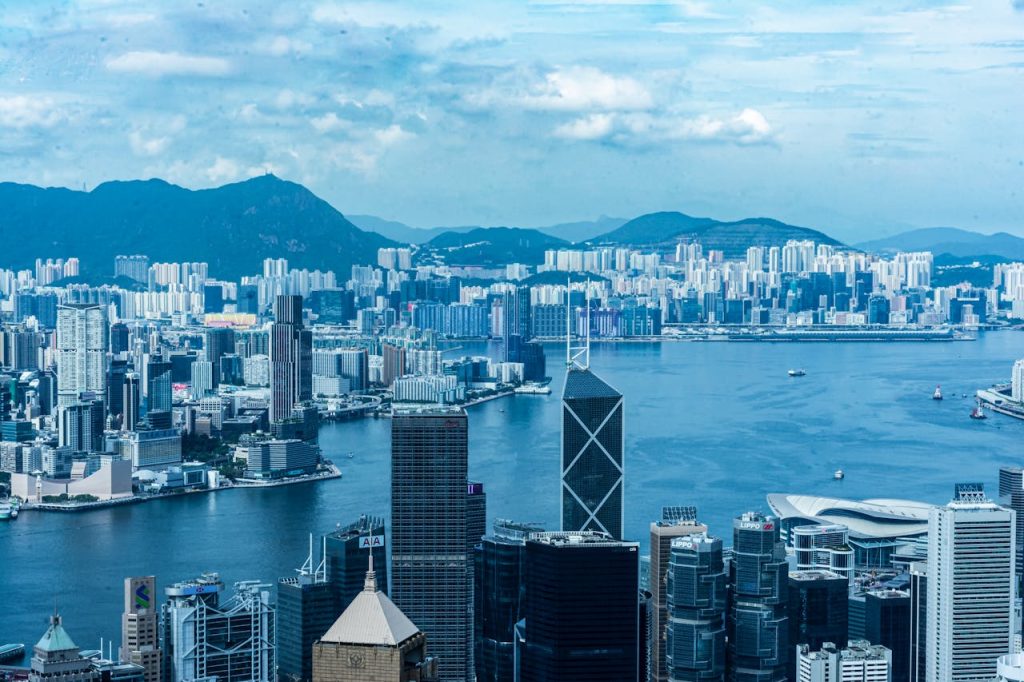
The Hong Kong Stock Exchange’s benchmark Hang Seng Index closed the prior session at 26,393.71 points, representing a decline of 0.87% as Asia-Pacific markets broadly retreated in the face of renewed US-Iran clashes in the Strait of Hormuz.
Hong Kong’s equity market, one of the world’s most internationally exposed given its role as a gateway between Chinese capital and global investors, has been buffeted by the dual forces of geopolitical risk and the ongoing recovery in Chinese consumer sentiment.
The Hang Seng’s positioning at the start of May 2026 reflects several months of measured recovery. From lows seen during the peak of the Iran conflict-induced sell-off in March, the index has staged a meaningful rebound, driven by improving Chinese economic data, the global AI investment cycle, and a partial easing of the energy price shock as a ceasefire — however fragile — took hold in mid-April.
US-Iran Conflict: The Dominant Market Driver
The fragile ceasefire between the United States and Iran continues to be the single most important variable shaping Hong Kong equity sentiment. The latest round of skirmishes on May 7 — where US Navy destroyers intercepted Iranian attacks in the Strait of Hormuz — reminded investors that the conflict remains unresolved and that escalation risk has not disappeared.
For Hong Kong, the implications are significant across several dimensions. Elevated oil prices increase costs across Hong Kong’s service-oriented economy, reduce discretionary consumer spending, and weigh on the valuations of energy-intensive businesses. The shipping disruption through the Strait affects Hong Kong’s role as a regional logistics and trade hub, creating secondary economic headwinds. Furthermore, rising energy costs in China — Hong Kong’s principal economic hinterland — reduce the earnings power of the mainland Chinese companies that constitute a large proportion of the Hang Seng’s market capitalisation.
Any credible progress toward a permanent peace deal between the US and Iran would likely trigger a sharp rally in the Hang Seng, given the index’s dual sensitivity to lower energy prices and the risk-on sentiment that would follow a geopolitical de-escalation.
Chinese Tech and AI Stocks: The Performance Engine
Technology, internet, and AI-linked stocks have been the dominant drivers of Hang Seng performance in 2026. Companies such as Alibaba, Tencent, Meituan, and JD.com — all substantial index constituents — have benefited from a combination of improving Chinese consumer fundamentals, cost-cutting drives that have improved margins significantly, and the broader AI enthusiasm that has driven technology stock multiples higher globally.
Alibaba’s restructuring efforts and renewed capital return programme have been received positively by the market. Tencent’s gaming and WeChat monetisation businesses have delivered earnings beats, while Meituan has demonstrated solid growth in its local services segments. These large-cap technology names together account for a significant share of total Hang Seng market capitalisation, meaning their performance has an outsized influence on the index level.
Chinese AI infrastructure investment has been a particularly strong narrative. Domestic equivalents to Nvidia are attracting significant capital, and the government’s stated commitment to AI self-sufficiency has provided a policy tailwind for the sector that markets are increasingly pricing into valuations.
Property Sector: A Persistent Drag
The Hong Kong and broader Chinese property sectors remain a structural headwind for the Hang Seng. The multi-year deleveraging of Chinese property developers has not yet reached a clean resolution, and while the pace of distress has moderated compared to the acute crisis years of 2021–2023, residual balance sheet uncertainty continues to weigh on sentiment.
Hong Kong’s domestic property market faces its own distinct challenges: high interest rates relative to prior years have cooled transaction volumes, and population and corporate migration flows remain a structural demographic question for the territory. The local banking sector, heavily exposed to property collateral, is being watched carefully by investors for any signs of asset quality deterioration.
That said, recent monetary policy from the Hong Kong Monetary Authority has been supportive, and any move by the Federal Reserve toward rate normalisation would be passed through automatically to Hong Kong given the currency peg to the US dollar. Markets are therefore pricing in some eventual relief for domestic property from lower rates in H2 2026 or 2027.
Technical Picture and Currency Considerations
The Hang Seng is currently trading below its 2026 year-to-date high of approximately 28,000 points, which was reached during the early-year tech-driven rally. The index needs to reclaim and hold above the 27,000 level to build confidence for a resumption of the uptrend. Resistance in the 27,500–28,000 zone will be closely watched by technical traders.
The Hong Kong dollar peg to the US dollar means that Hang Seng valuations for international investors are directly affected by USD movements. The dollar’s recent weakening — the DXY index has declined materially over the past twelve months — has improved the attractiveness of Hong Kong equities on a currency-adjusted basis for non-US investors, partially offsetting the impact of geopolitical risk premia.
Outlook for the Coming Days
The near-term outlook for the Hong Kong Stock Exchange is binary in nature. A credible US-Iran peace deal would be the single most powerful positive catalyst, potentially driving a 3–5% rally in the Hang Seng within days of announcement. A deterioration in hostilities, or a failure of ongoing negotiations, would likely see the index give back recent gains and retest the 25,000–25,500 support zone.
Beyond the geopolitical variable, investors will monitor China’s April economic data package, any PBoC policy signals, and earnings from major Hang Seng constituents yet to report. The consensus remains constructive for Hong Kong equities on a six-to-twelve-month horizon, with J.P. Morgan and other leading houses maintaining overweight calls on Chinese equities. The path, however, runs through a resolution of the energy and geopolitical crisis that has dominated market narratives since late February 2026.