
Close Menu
Simply Invest Asia
  • Home
  • About us
  • Explore industries/sectors
    • Automobile
    • Aviation
    • Banking
    • Biotechnology
    • Chemical & Fertilizer
    • Entertainment and Media
    • Food Processing
    • Healthcare
    • Iron and Steel
    • Leather
    • Mining
    • Oil and Gas
    • Pharmaceutical
  • Explore by countries
    • China
    • Dubai / UAE
    • Hong Kong
    • India
    • Indonesia
    • Japan
    • Malaysia
  • Explore cities
    • Bangkok
    • Beijing
    • Chongqing
    • Delhi
    • Dubai
    • Guangzhou
    • Jakarta
    • Kuala Lumpur
  • Why Asia
Facebook X (Twitter) Instagram Threads
Trending:
  • World Cup 2026: Match times for fans in the UAE
  • The EU-India trade deal shows a new EU trade approach is possible
  • Tempus AI (TEM) Is One Of The Best Healthcare Mid-Cap AI Stock According To Analysts
  • Google Cloud outage update: Fire at data centre, Traffic rerouted from impacted facility in Delhi
  • SKÅL Bangkok celebrates 70 years with charity lunch and AGM
  • Oil Discovery for Qatar Energy offshore Namibia – Europétrole
  • China Southern Airlines to launch daily Guangzhou–Delhi Flights from September 21
  • Rise in China’s producer prices continues amid ongoing tensions in Middle East
  • Seven people and two companies charged after deadly Hong Kong fire
  • Developer AHS buys Shangri-La hotel in Dubai and plans to launch new Dh25bn project this year
  • US strengthens nuclear umbrella for Japan
  • Military officers behind acid attack on Indonesian activist sentenced to jail
  • Google Cloud suffers network disruptions after fire at third-party data center in India
  • Beijing United Information Technology Hits Day Low Amid P…
  • Home entertainment, trends in physical media: the 4K Blu-ray segment is growing
  • India’s quasi-alliance with Israel and the UAE won’t have a happy ending
  • Hong Kong charges 7 people and 2 firms over deadly fire that killed 168
  • Malaysia’s palm oil reserves jump most in five months as exports slump — MPOB
Wednesday, June 10
Facebook X (Twitter) Instagram
Simply Invest Asia
  • Home
  • About us
  • Explore industries/sectors
    • Automobile
    • Aviation
    • Banking
    • Biotechnology
    • Chemical & Fertilizer
    • Entertainment and Media
    • Food Processing
    • Healthcare
    • Iron and Steel
    • Leather
    • Mining
    • Oil and Gas
    • Pharmaceutical
  • Explore by countries
    • China
    • Dubai / UAE
    • Hong Kong
    • India
    • Indonesia
    • Japan
    • Malaysia
  • Explore cities
    • Bangkok
    • Beijing
    • Chongqing
    • Delhi
    • Dubai
    • Guangzhou
    • Jakarta
    • Kuala Lumpur
  • Why Asia
Simply Invest Asia
Home»Explore by countries»India»Canberra should keep a close watch on the Colombo Security Conclave
India

Canberra should keep a close watch on the Colombo Security Conclave

By IslaMay 28, 20265 Mins Read
Share
Facebook Twitter Pinterest Threads Bluesky Copy Link


By CEO Lisa Singh and Research Fellow Tushar Joshi

Australia’s 2026 National Defence strategy places India front and centre as a “top-tier security partner” and “our most important defence partner in the Northeast Indian Ocean”. It also emphasises that Defence will “strengthen engagement with Bangladesh, Sri Lanka and the Maldives” with a focus on regional security and collective maritime domain awareness.

It is therefore surprising that one of the most consequential developments unfolding in these waters has received little attention in Canberra.

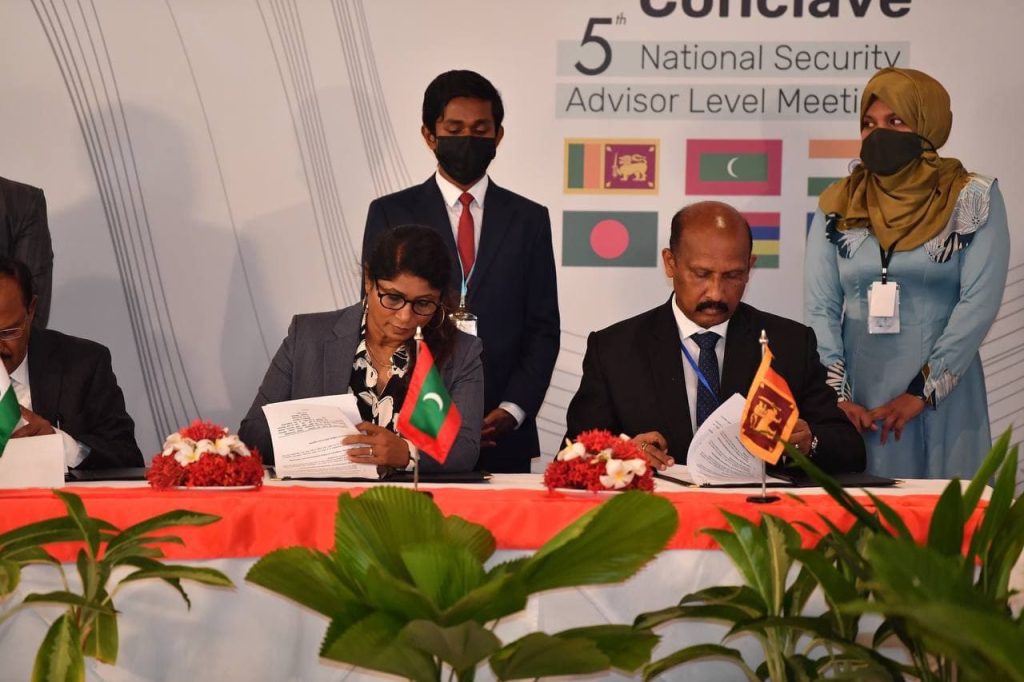
On 19 April, Indian Foreign Secretary Vikram Misri confirmed that the Colombo Security Conclave (CSC) would be upgraded into a formally institutionalised regional security organisation with a permanent secretariat in Colombo and a Secretary-General-led structure. Comprising six Indian Ocean littoral states – India, Sri Lanka, Maldives, Mauritius, Bangladesh, and Seychelles – the revamped organisation is planned to be led by a former Indian Navy vice chief.

This structural transformation marks a genuine shift. Unlike its past iteration as a loose trilateral dialogue between India, Sri Lanka and Maldives that was heavily dependent for its success on navigating the fluctuations of political alignment, this institutionalisation builds bureaucratic durability and continuity that will hopefully survive localised political changes.

The CSC fills this vacuum by being geographically concentrated, security-oriented, and operationally focused.

While agreement to establish the permanent Secretariat was signed in 2024, the Iran war has acted as a strong catalyst for these Indian Ocean states to formalise the regional security group. In essence the CSC will become the premier maritime security forum in the Northeast Indian Ocean.

India’s leadership in the Conclave formalisation represents a significant gain in fostering practical cooperation with littoral states on shared non-traditional threats.

India pushed the revival of the CSC for the past decade as its primary institutional architect. This has been in response to China’s ongoing efforts to limit India’s influence, through controlling sea lines of communication, ports and trade. Regardless, India has long been a driver for building regional structures in the Indian Ocean region, particularly led through its maritime focused SAGAR policy, which has since evolved into the more expansive MAHASAGAR vision (Mutual and Holistic Advancement for Security and Growth Across Regions), reflecting its more integrated approach to maritime cooperation, security, and regional development.

Since its 2011 inception, the CSC has had a rocky history with long bouts of stagnation and domestic political frictions. Starting out as a trilateral between India, Sri Lanka and Maldives, after its 2020 revival its membership expanded to include Mauritius (2022), Bangladesh (2024) and Seychelles (2025).

This uplift of the CSC reflects the changing dynamics of the Indian Ocean region – a trend towards states building smaller, issue-focused and hyper-functional minilateral arrangements. Larger institutional partnerships, such as the South Asian Association for Regional Cooperation (SAARC), remain politically paralysed. The Indian Ocean Rim Association (IORA), of which Australia is a founding member, lacks a hard security mandate. The Indian Ocean Naval Symposium (IONS), with its “consensus-bound regionalism” approach requiring unanimous endorsement of all participants, lacks a permanent operational structure. The CSC fills this vacuum by being geographically concentrated, security-oriented, and operationally focused.

China’s expanding presence through naval deployments, dual-use infrastructure projects and growing political influence in Sri Lanka and the Maldives has also intensified India’s concerns about the strategic balance in its maritime neighbourhood. These include Beijing’s long-term lease of Sri Lanka’s Hambantota Port, the recurring docking of Chinese surveillance vessels like the Shi Yan 6, and the Maldives’ recent bilateral military assistance pact with Beijing.

Beijing may likely view the CSC’s institutionalisation as India consolidating its sphere of influence to limit China. On the other hand, Washington may welcome such regional burden-sharing as aligning with its broader interests in the Indo-Pacific, although the unpredictability of the Trump administration’s foreign policy makes any long-term assessment uncertain.

Roughly two-thirds of Australia’s maritime trade traverses the Indian Ocean, leaving its commercial shipping deeply tied to vulnerable sea lanes and chokepoints such as the Strait of Hormuz and Bab el-Mandeb. Though Canberra is not a participant, the CSC operates within the exact geographic pivot where Australia’s primary trade lines exit Southeast Asian chokepoints.

Beyond the shared interests in maritime security and domain awareness, the non-traditional security threats on the CSC’s agenda such as illegal fishing, cyber threats, transnational narcotics and climate disasters align directly with Australia’s security interests.

Canberra’s acknowledgement of the CSC upgrade to a permanent secretariat would recognise the role India has played in the evolution of the Conclave and signal Australia’s interest as a future observer as the new grouping considers expanding its observer membership.

Expressing support for this formal regional security network would not only align with Australia’s new Defence Strategy, it would also advance Australia’s broader maritime security agenda of practical engagement, diplomacy and defence cooperation with regional partners. The experience and expertise Australia could bring to the formalised CSC would not only complement its existing security initiatives – including through IORA – but also provide practical engagement in the Northeast Indian Ocean region, which India, as the primary security leader in the region, would welcome.

This article was originally published in the Lowy Interpreter. This image is sourced from the The Government of the Republic of Maldives. 


Source link

Related Posts

The EU-India trade deal shows a new EU trade approach is possible

June 10, 2026

Google Cloud suffers network disruptions after fire at third-party data center in India

June 10, 2026

Assessing India’s Monetary Policy and Growth Amid External Headwinds

June 10, 2026
Add A Comment
Leave A Reply Cancel Reply

Top Posts

Chinese Wall may stem India tech flows for electronics and automobile

June 1, 2026

Abandoned malls, whispers of nuclear war and young foreigners detained. This is what’s REALLY going on in Dubai… and the chilling warning one taxi driver gave to the Mail’s IAN BIRRELL

April 11, 2026

Von der Leyen warned about China. Europe didn’t listen. Will it now?

June 6, 2026
Don't Miss

World Cup 2026: Match times for fans in the UAE

By IslaJune 10, 2026

Prepare to renegotiate your bedtimeThe World Cup 2026 might be unfolding thousands of kilometres away,…

The EU-India trade deal shows a new EU trade approach is possible

June 10, 2026

Tempus AI (TEM) Is One Of The Best Healthcare Mid-Cap AI Stock According To Analysts

June 10, 2026

Google Cloud outage update: Fire at data centre, Traffic rerouted from impacted facility in Delhi

June 10, 2026
SUBSCRIBE TO OUR NEWSLETTER

Get our latest downloads and information first. Complete the form below to subscribe to our weekly newsletter.


I consent to being contacted via telephone and/or email and I consent to my data being stored in accordance with European GDPR regulations and agree to the terms of use and privacy policy.

Stay In Touch
  • Facebook
  • YouTube
  • TikTok
  • WhatsApp
  • Twitter
  • Instagram
Top Trending

Google Cloud suffers network disruptions after fire at third-party data center in India

By IslaJune 10, 2026

Beijing United Information Technology Hits Day Low Amid P…

By IslaJune 10, 2026

Home entertainment, trends in physical media: the 4K Blu-ray segment is growing

By IslaJune 10, 2026
Most Popular

First Three Episodes of “BLEACH: Thousand-Year Blood War – The Calamity” Exclusively Head to U.S. Theatres Before Broadcast and Streaming from VIZ Media and Fathom Entertainment On June 25-29

April 15, 2026

After series of war games, China offering ‘One China’ incentives to Taiwan after welcoming opposition leader

April 12, 2026

Every tire produces a chemical that kills coho salmon. Can scientists pump the brakes?

April 10, 2026
Our Picks

India-Singapore arbitration clauses: Seat, venue and enforcement

May 5, 2026

Digital Edge tops out first data center at new campus outside Jakarta, Indonesia

May 29, 2026

Gasoline Motorbike Ban Proposal Threatens Indonesia’s Two-Wheeler Duopoly

April 17, 2026
SUBSCRIBE TO OUR NEWSLETTER

Get our latest downloads and information first. Complete the form below to subscribe to our weekly newsletter.


I consent to being contacted via telephone and/or email and I consent to my data being stored in accordance with European GDPR regulations and agree to the terms of use and privacy policy.

© 2026 Simply Invest Asia.
  • Get In Touch
  • Cookie Policy
  • Privacy policy
  • Terms & Conditions

Type above and press Enter to search. Press Esc to cancel.

SUBSCRIBE TO OUR NEWSLETTER

Get our latest downloads and information first.

Complete the form below to subscribe to our weekly newsletter.


I consent to being contacted via telephone and/or email and I consent to my data being stored in accordance with European GDPR regulations and agree to the terms of use and privacy policy.