
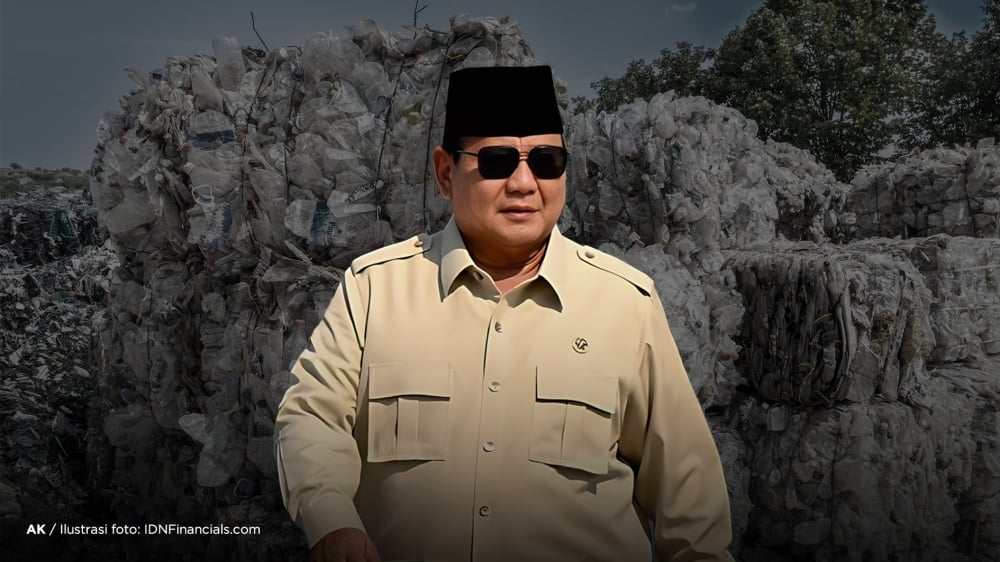
Gov’t aims to drive energy transition faster with 100 GW solar plan, EV adoption, and hydrogen tech.
JAKARTA – The Indonesian government is continuing to accelerate its national energy transition agenda through a range of strategic measures, from large-scale renewable energy development to the adoption of low-emission technologies in the transportation and industrial sectors.
Energy and Mineral Resources Minister Bahlil Lahadalia said the government was implementing President Prabowo Subianto’s directive to strengthen energy security while reducing dependence on fossil fuels.
One of the key programmes currently being promoted is the development of solar power plants with a capacity of up to 100 gigawatts (GW). The project forms part of efforts to expand the use of clean energy across Indonesia.
“Our energy transition is moving at full speed. We are building 100GW of solar power plants,” President Prabowo said during his speech at the Special Summit of the Brunei Darussalam-Indonesia-Malaysia-Philippines East ASEAN Growth Area (BIMP-EAGA) in Cebu, the Philippines, on Thursday (7/5).
Bahlil added that all of these programmes would require cross-sector collaboration involving the government, private sector and international partners to ensure energy transition targets can be achieved sustainably.
“We are also encouraging the use of solar energy through the development of 100GW of solar power plants to reduce fossil fuel consumption. Of course, this will require collaboration from many parties to complete the task,” he said, as quoted from an official release on esdm.go.id on Friday (8/5).
In addition to solar energy development, the government is also promoting alternative energy sources such as hydrogen, ammonia and nuclear power as part of future energy diversification efforts.
On the consumption side, the government is expanding electrification through electric vehicles (EVs) and the use of induction stoves to reduce household dependence on fossil fuels.
Other measures include energy efficiency policies, a moratorium on new coal-fired power plants, and the development of carbon capture technologies such as CCS and CCUS to reduce emissions from industrial sectors and power generation.
Amid rising energy demand and global climate change challenges, ASEAN countries are increasingly looking towards clean energy as the future of the region.
For Indonesia and other Southeast Asian nations, the transition towards renewable energy is no longer merely a concept, but a strategic step towards building regional energy resilience and delivering more inclusive prosperity.
President Prabowo said ASEAN has enormous potential to develop renewable energy, ranging from hydropower, solar and wind energy to fertile land that remains underutilised.
He said this potential represented one of the region’s key assets in supporting the energy transition across the subregion.
“The question is whether we are ready to act on that potential. Not only to meet our subregional needs, but also to contribute to ASEAN’s energy transition,” the President said.
He also highlighted various opportunities for alternative energy development, including hydropower projects in Borneo (Kalimantan), expansion of solar energy projects in Palawan, and wind energy utilisation in coastal areas. (DK/ZH)