
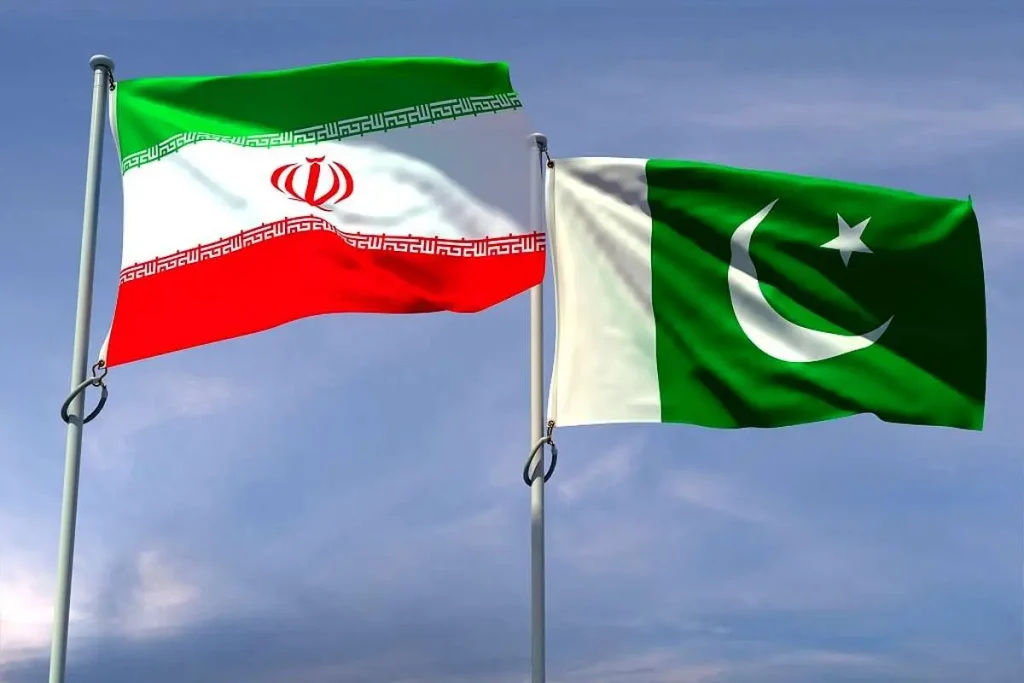
WANA (May 03) – In a major shift for regional logistics, Pakistan has issued official authorization for transit goods to pass through its territory to Iran after years of delay. This move positions the ports of Gwadar, Karachi, and Qasim as vital support hubs for Iranian southern ports, effectively providing a strategic alternative during the current maritime blockade.
Activation of the Transit Corridor
Following extensive diplomatic efforts, the Pakistani Ministry of Commerce has issued a directive allowing third-country goods to be transported across its soil to Iran.
The order designates road routes from the ports of Gwadar, Karachi, and Qasim leading to the Gabd and Taftan border crossings. This decision implements a long-standing international passenger and goods transport agreement signed between the two nations in June 2008.
The development is viewed as a significant turning point for Iran’s supply chain security. Historically, Iran relied heavily on UAE ports—specifically Jebel Ali—for imports and transit. However, increased maritime blockades and regional political shifts have rendered those routes unstable, prompting Tehran to diversify its logistics through Pakistan.
Strategic Advantages of Pakistani Ports
The integration of Pakistani infrastructure offers several advantages for the Iranian economy:
Gwadar Port: Due to its proximity to Iran’s eastern border and direct connection to the Gwadar route, it provides a shorter and more cost-effective path for time-sensitive cargo.
Karachi and Qasim Ports: These hubs offer extensive infrastructure and global network connectivity, serving as a robust complement to Iran’s maritime capacity.
Central Asian Access: While Iran gains a bypass to the blockade, Pakistan gains a strategic axis through Iran to reach markets in Central Asia and the Caucasus, especially as instability on the Afghan border has disrupted traditional routes.
Infrastructure Readiness
Crucial to this logistics puzzle are the border terminals of Mirjaveh and Rimdan. Mirjaveh has seen recent infrastructure upgrades, while Rimdan, active since 2020, is being developed into a major commercial node. Both sites have improved their transit capacity to handle the anticipated surge in commercial traffic.
Experts note that the success of this corridor—which targets a $10 billion bilateral trade ceiling—will depend on land route security, the speed of customs procedures, and road quality.
Furthermore, by linking with the $60 billion China-Pakistan Economic Corridor (CPEC) and the Belt and Road Initiative (BRI), this route acts as a strategic bridge between South Asia and Eurasia.
The viability of this corridor was recently demonstrated when a shipment of frozen meat reached Tashkent, Uzbekistan, from Pakistan via Iranian territory under the TIR Convention. This shift highlights Iran’s geographical advantage in overcoming economic and maritime sieges.