


NEW DELHI – India faces thousands of medical negligence cases every year, but structural problems make it extremely difficult for patients’ families to find out what has happened to their loved ones – let alone win compensation when treatment has been botched.
“A shadow of death is looming over us,” Ashwini Bajaj, a Haryana-based businessman, told Health Policy Watch, recalling the treatment of his 24-year-old son, Deshbandhu, more than a year after his death.
In December 2024, Deshbandhu, an MBA student at Punjab University and Bajaj’s only son, developed a fever that lasted more than two days. On 26 December, he visited a hospital near his university in Chandigarh, where he was prescribed medicines and given a series of tests, including a liver function test (LFT).
By the time the results came out later that evening, Deshbandhu had returned to his parents’ home in Hisar, around 200 kilometres away. The next day, he went to a private hospital there, but his condition deteriorated rapidly. His oxygen saturation dropped to 65%, and doctors warned of acute liver failure.
“We were told his condition was very critical and that the hospital did not have the resources to treat him,” Bajaj said. “We were asked to take him to a super-speciality hospital. It felt as if the ground beneath our feet had slipped away.”
Deshbandhu was shifted to a major private hospital in Gurugram. “My son was there for over three weeks. His condition kept deteriorating. He went with jaundice, and he developed intestinal obstruction, kidney stress, and pneumonia,” Bajaj said.
Deshbandhu died on 20 January 2025, a few days after his 24th birthday. Bajaj says he has been unable to return to work.
His case reflects broader systemic gaps in India’s healthcare system, where delays in critical care, weak referral systems, and limited transparency can have life-threatening consequences — and the lack of updated national data continues to hamper accountability.
Transparency in treatment

“Initially, I thought the doctors tried hard to save my child, but when I obtained all the medical reports, which took three to four months to obtain, I realised much time was lost before the actual treatment started,” Bajaj said.
“When I made a day-by-day chart, I realised that, for at least four days, my son didn’t get the treatment he should have.
“Every evening, I used to get payment requests promptly on my WhatsApp. If they could send payment requests, why can’t they share procedural updates the same way?”
Rujhan Dhawan, a lawyer at the Punjab and Haryana High Court, told Health Policy Watch such opacity is a major barrier to accountability.
“A patient, once admitted, is entirely dependent on the institution not only for treatment but also for truthful disclosure,” he said. “Critical information about procedures and complications is often not readily accessible to families.”
Bajaj’s family spent over ₹30 lakh ($33,000) on treatment. He says he is not seeking compensation, but a legal framework that mandates transparency.
Not an isolated case
Deshbandhu’s case is not an isolated one. According to the 18th Annual MedLegal Review, 65,000 medical negligence cases were filed in India in 2025 alone.
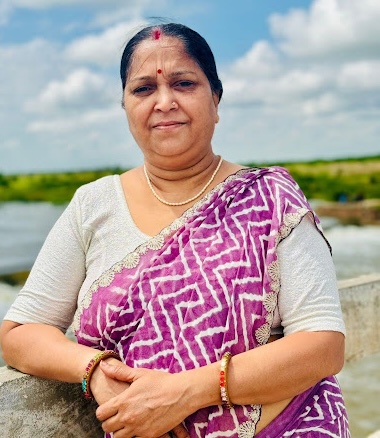
In Jaipar, around 270 kilometres from Gurugram, 55-year-old tax consultant Kishan Kumar Sharma is fighting a case linked to the death of his wife, Radha.
On 3 March 2025, she developed mild jaundice and was admitted to a private hospital. A test suggested Budd-Chiari syndrome, a rare liver disorder. However, despite a negative tuberculosis test, Radha was prescribed the TB drug, Isoniazid, said Sharma.
Isoniazid should not be prescribed to patients with liver disease who have bilirubin levels over 4 mg/dL, according to World Health Organization (WHO) guidelines.
But Sharma says his wife’s liver disorder was overlooked. Radha’s condition deteriorated rapidly, and she died on 18 March.
“I have a simple question,” Sharma said. “Why was my wife given Isoniazid? Was it part of any established protocol or something else?”
The risks highlighted by such cases reflect a broader global problem. According to the WHO, an estimated 138 million patients are harmed every year due to unsafe medical care.
Lack of dedicated investigative body
Nishant Bharihoke, an advocate at the Delhi High Court who specialises in medical negligence cases, told Health Policy Watch the core issue lies in the absence of a dedicated independent investigative framework.
“India does not have a dedicated body specifically tasked with investigating deaths or serious injuries caused by medical negligence,” he said. “When a patient dies, and the family suspects wrongdoing, there is no authority whose sole function is to find out what happened.”
Complaints are typically routed through State Medical Councils, which may form inquiry committees. Their decisions can be appealed to the National Medical Commission, but Bharihoke argues that the system is structurally limited.
“The National Medical Commission’s primary mandate is to regulate medical education. Its disciplinary board has no independent investigators and no power to enter hospitals and examine evidence,” he said.
He also pointed to a legal loophole: since these proceedings are not strictly judicial, false statements made before such bodies do not result in perjury charges. For families like Bajaj’s and Sharma’s, he said, this gap deepens the sense of injustice.
When cases turn criminal

The gap becomes even wider when negligence overlaps with criminal allegations.
One such case is the death of 21-year-old Simran Chhabra. On 21 January 2023, she visited a private hospital in Gurugram with symptoms of cough and cold.
According to a prescription her brother, Sourabh Chhabra, shared with Health Policy Watch, she was administered an intravenous injection of Dynapar. This is usually used to treat pain and inflammation associated with arthritis or after surgery.
“As soon as the injection was fully administered, Simran collapsed on the bed and froth began coming out of her mouth,” Sourabh said. “Everything happened within minutes. I had no time to understand what was going on.”
She was referred to another hospital, where she was declared dead.
According to Bharihoke, the family’s legal representative, the doctor later claimed that multiple emergency interventions were carried out, including five additional injections and cardiopulmonary resuscitation (CPR), using drugs typically administered in cases of severe allergic reactions.
However, the post-mortem report reviewed by Health Policy Watch raises questions. It records only two puncture marks on her body, and there is no mention of a cannula (an intravenous tube) being used.
If multiple injections were administered, the family asks why there is no corresponding physical evidence.
In this case, they argue, the medical account and post-mortem findings do not align.
“Forget conviction or arrest, even registering an FIR in such cases often requires court intervention,” Bharihoke said.
A FIR is a First Information Report (FIR) in Indian medical negligence cases, a formal document prepared by police under Section 154 of the Criminal Procedure Code upon receiving information about alleged criminal negligence.
Absence of a legal framework
Several structural barriers insulate medical health practitioners against negligence cases, according to legal experts.
“In India, police usually cannot even register a case against a doctor unless an independent medical expert first confirms negligence,” Bharihoke told Health Policy Watch. “In most cases, doctors are reluctant to give such opinions, especially against their peers.”
The challenge is compounded by access to evidence. Hospitals retain control over key records, case files, prescriptions, nursing notes, and CCTV footage while families often receive only partial or delayed documentation.
India also lacks a statutory system guaranteeing timely access to medical records for patients and their families. There is no clear legal mandate requiring investigators to immediately secure hospital evidence.
Tanvi Dubey, a Supreme Court lawyer, told Health Policy Watch the legal framework itself raises the bar for accountability.
“Criminal liability in medical negligence cases is limited to gross negligence, not simple errors of judgment,” Dubey said. “This significantly narrows the scope for prosecution.”
Even initiating an investigation can be delayed: “Authorities are allowed to conduct preliminary inquiries before registering a case, which often means waiting for medical opinions and slows the process.”
Dubey also pointed to the continued reliance on what is known in Indian law as the “Bolam principle,” where a doctor’s actions are judged against a body of medical opinion.
“This makes expert testimony central. Unless a complainant can produce strong contrary evidence, it becomes very difficult to establish negligence,” she said.
While multiple legal remedies exist, including consumer courts, civil litigation, and disciplinary proceedings, Dubey noted that each comes with limitations.
“Criminal prosecution is rare, civil cases are slow and evidence-heavy, and disciplinary proceedings do not always ensure compensation or thorough fact-finding,” she said.
Compared with Western peers, India faces two major policy gaps in patients’ treatment: the absence of a national electronic medical record (EMR) system, and the lack of a digital system connecting labs directly to the consulting doctor.
Currently, India doesn’t have a mandatory EMR policy applicable to healthcare organisations. Even today, prescriptions, clinical notes, and drug administration records are still handwritten in the majority of hospitals and almost all smaller clinics. This makes them more vulnerable to tampering, loss and destruction.
The absence of a nationwide electronic medical record system adds another layer of opacity. In many facilities, records remain handwritten and vulnerable to alteration; a gap Bharihoke alleges was evident in Simran’s case.
Urgent reform is necessary
Only families with the financial means and emotional capacity to pursue long legal battles are able to take up medical negligence cases.
For many others, the burden becomes too heavy to carry. While the rules may appear neutral on paper, experts say their impact is deeply unequal.
Legal and policy experts argue that the most urgent reform is structural, particularly the creation of an independent statutory body tasked solely with investigating patient safety incidents, particularly in cases involving death, permanent disability, or serious injury.
Such a body should have the authority to enter hospital premises, access medical records, secure CCTV footage, and record statements. Its findings should be made public, while the evidence it collects remains protected from use in criminal or disciplinary proceedings.
In England, the Health Services Safety Investigations Body (HSSIB), established in 2023, follows this approach by conducting independent investigations into patient safety incidents.
Globally, different systems offer alternative approaches to accountability. In the United States, oversight is spread across multiple layers: state medical boards regulate conduct, a national database tracks malpractice records, hospitals report serious incidents, and patients can pursue civil litigation.
China follows a three-tier system, allowing patients to first negotiate with hospitals, then seek mediation, and finally pursue civil lawsuits.
In parts of Europe, including France and the Nordic countries, no-fault compensation systems allow patients to receive compensation without proving negligence, making the process more accessible and less adversarial.
Aviation and rail safety investigations have long operated on similar principles, focusing on systemic failures rather than individual blame.
For India, experts say the lesson is clear. Accountability frameworks do not have to rely solely on litigation. A system built on independent investigation, timely access to evidence, and patient-centric redress could help provide answers to families like the Bajajs and Sharmas.
Image Credits: César Badilla Miranda/ Unsplash, Felix Sassmannshausen.
Combat the infodemic in health information and support health policy reporting from the global South. Our growing network of journalists in Africa, Asia, Geneva and New York connect the dots between regional realities and the big global debates, with evidence-based, open access news and analysis. To make a personal or organisational contribution click here.