
April 29, 2026
PETALING JAYA – The government should lead the way by adopting electric vehicles in its fleet to save on fuel costs, say experts.
Water and Energy Consumer Association of Malaysia president Saravanan Thambirajah said Putrajaya should take a leading role in accelerating the transition to electric vehicles (EVs), especially in light of ongoing concerns over fuel price volatility, climate change and long-term energy security.
ALSO READ: Johari: Govt EV fleet welcome but grid essential
“As the largest fleet owner in the country, the government is in a strong position to set the direction of the market.
“Transitioning official vehicles, government-linked companies, and municipal fleets to EVs would showcase the government’s commitment and stimulate demand, promote infrastructure development, and build consumer confidence in EV technology,” he said.
However, Saravanan said the transition must be done with key considerations given to ensuring adequate nationwide charging infrastructure, maintaining affordability, and avoiding the transfer of costs to consumers through higher taxes or tariffs.
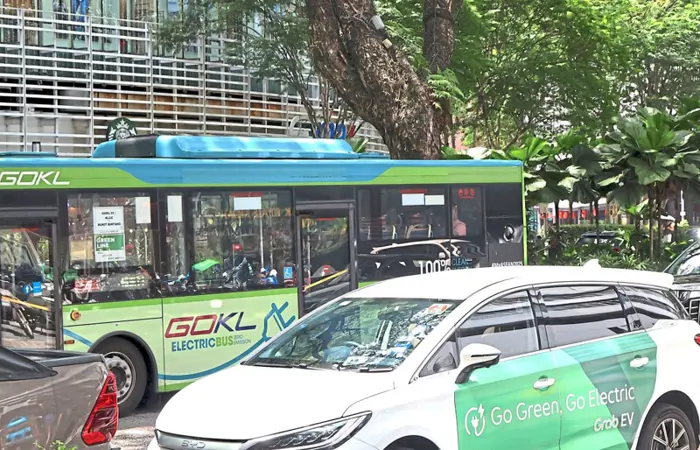
As for public transportation, he said moving towards electrification is both necessary and urgent.
ALSO READ: EVs cheaper to run, but can drivers own one?
“Electrified buses, trains and other mass transit systems can significantly reduce emissions, improve urban air quality and lower long-term operating costs.
“This is particularly important in urban centres, where pollution and congestion directly affect consumers’ quality of life,” he said.
Based on industry estimates, subsidised RON95 at RM1.99 per litre translates to about 14 sen per kilometre for petrol vehicles, compared with roughly 10 sen per kilometre for electric vehicles charged at home. As for public fast charging, estimates put it at ranging between 18 and 26 sen per kilometre.
Association of Water and Energy Research Malaysia president S. Piarapakaran said adopting EVs for mass transportation is a more sensible approach.
However, he also cautioned that EVs could potentially end up as future e-waste.
“As demand for electric vehicles increases, there is a risk that the durability and quality of the final products may be compromised, which is a common issue with any type of technology,” he said.
Piarapakaran, who is also the Centre for Water and Energy Sustainability chief executive officer, added that improving the public transport system will reduce energy consumption.
“Improving first and last mile connectivity, along with the development of new areas and the retrofitting of existing ones into transit oriented development, will significantly reduce individual vehicle traffic.
“People can actually stay far away and travel seamlessly to their workplace with a minimum energy footprint.
“Government planning must be future-proof and should not become entangled with the costs associated with technology transitions that may prove difficult to manage in the future,” he said.
He was of the view that reliance on EVs as an energy transition target can be off-tangent.
“It is an intermediate solution, and perhaps a decade from now, there may be a newer disruptive solution or technology that could replace EVs.
“Setting up EV infrastructure is also a cost that should be borne by the EV industry, and we should not try to socialise their capital expenditure as part of national policy,” he said.
According to open data from the Road Transport Department at data.gov.my, there were 5,633 electric vehicles registered last month. This marked a 46.7% year-on-year increase when compared to March 2025.
The highest number of EVs was registered in December last year (9,652).
The figures comprised various EV types, ranging from buses to cars, trucks, motorcycles, vans and others.
Data from the Energy Commission, meanwhile, states that there are currently 5,619 charging bays nationwide, comprising 1,898 direct current (DC) fast chargers and 3,721 alternating current (AC) chargers.