
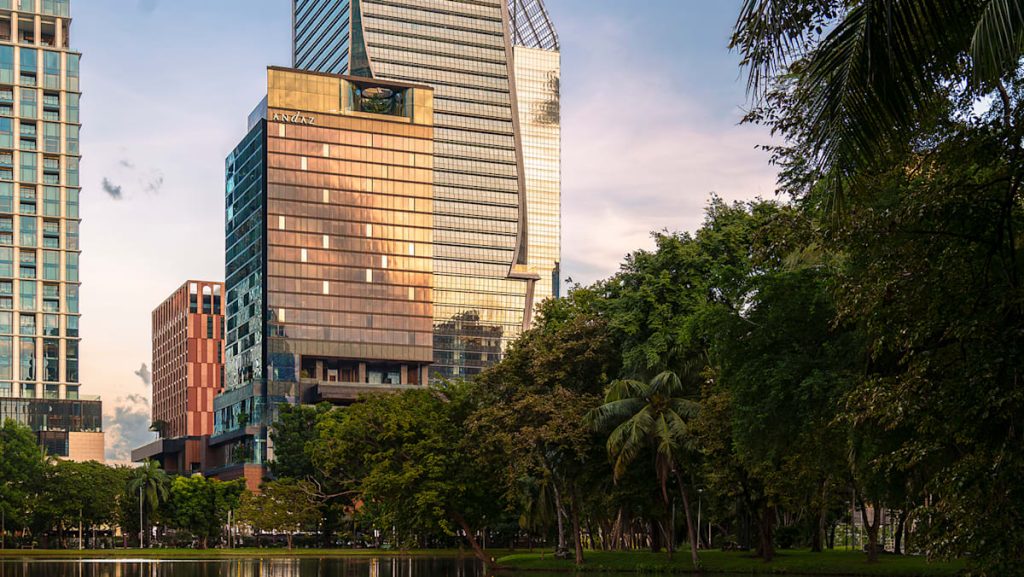
Much of that newfound confidence stems from the scale of what is happening next door. One Bangkok has been a topic of conversation for years – no surprise given the site’s behemoth 16.7 ha footprint. It has now moved from blueprint to reality. It is an audacious attempt to create a fully functioning district in one go and, judging by the crowds, it is living up to the hype.
According to Marciano Birjmohun, managing director of real estate services firm Marciano & Co, the Lumpini area was already moving in this direction.
“Strong transport connectivity, proximity to embassies, Grade-A office stock, and the simple reality that people will pay more to face the park in a dense megacity have always been present,” he said. “What we are witnessing now is a critical inflection point in both confidence and scale.”
Perhaps more importantly, the area is finally beginning to feel coherent. What was once a disparate mix of ageing plots is being drawn into a district with a clear structural hierarchy and a stronger sense of identity.
“This is where the area shifts from being merely prime to being hard to replicate,” Birjmohun added.
That is not to say the neighbourhood has been homogenised. A few streets away, Langsuan and Tonson offer a different expression of luxury – lower-density, more residential, and more tightly controlled. Developments such as Sindhorn Village have created something mellower and more liveable.
“What you’re seeing is a two-speed luxury market,” Birjmohun explained. “Mega-projects like One Bangkok and Dusit Central Park set the regional benchmarks, while smaller lifestyle enclaves benefit from that momentum without feeling the need to match the same colossal scale.”