
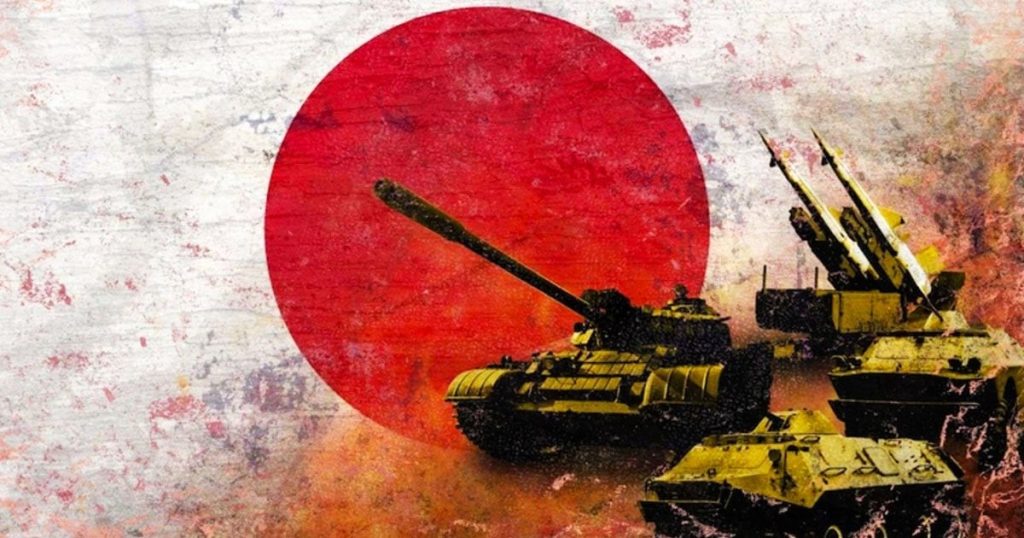

Even as the world’s attention is on West Asia, significant developments have been unfolding in the East. On April 21, Japan endorsed scrapping a ban on the export of lethal weapons, the last major hurdle in its move away from its post-war pacifist policy. As part of this shift, the country is now seeking to build up its arms industry and deepen cooperation with its defence partners.
For now, exports will be limited to 17 countries, including India, that have signed defence equipment and technology transfer agreements with Japan. Such exports will require approval from the National Security Council and will be monitored by the government to ensure proper end-use. In principle, Japan will not export lethal weapons to countries at war. Even so, Japan’s shift has generated interest in countries such as Poland and the Philippines.
Facing serious security concerns related to China and North Korea, and influenced in part by uncertainties in US alliance commitments under Trump, Japanese strategic thinking had already begun to shift. The war in Ukraine added further urgency. Now, with the United States fully preoccupied in West Asia, the Japanese assessment is that the US pivot to the Indo-Pacific is unlikely to materialise anytime soon.
Despite isolating itself from the global arms market for decades, Japan has developed significant capabilities through its domestic industry and licensed production. At present, the United States dominates the Japanese market, accounting for 95 percent of its defence imports. Yet well-known companies such as Mitsubishi, Kawasaki, and Fujitsu have meaningful defence divisions, and the country maintains an extensive defence-industrial base. It is capable of manufacturing submarines, fighter jets, and warships.
Japan’s post-2022 security policy moves reflect a strategic pivot: from a strictly defensive “self-defence” policy to a more assertive, deterrence-oriented posture equipped with stand-off strike capabilities, integrated air and missile defence, multi-domain operations, and deeper alliance cooperation.
In terms of technology, Japan is second to none. However, it faces gaps in certain areas of military technology, which it is seeking to address through the new Defense Innovation Science and Technology Institute established in 2025 by its Ministry of Defense. Its Taigei-class submarines, equipped with lithium-ion batteries, are considered among the most advanced conventional submarines in the world. The Hyper Velocity Gliding Projectile (HVGP), under development since 2018, was formally deployed for the first time to the Japan Ground Self-Defence Force’s Camp Fuji in Shizuoka Prefecture. A more advanced variant is scheduled for the 2030s. In 2025, Japan conducted the first successful test firing of an electromagnetic railgun at a sea-based target and is likely to become the first country in the world to deploy such systems.
Things on the export front are already moving faster. In its biggest deal ever, Japan formalised an agreement to deliver three frigates to Australia, to be built in Japan by Mitsubishi Heavy Industries, with Australia constructing the remaining eight domestically. The initial three-ship contract is valued at approximately A$10 billion (US$6.5-7 billion), part of a total programme estimated at A$15-20 billion for all eleven Mogami-class frigates, with the first vessel due for delivery by December 2029.
Japan’s post-2022 security policy moves reflect a strategic pivot: from a strictly defensive “self-defence” policy to a more assertive, deterrence-oriented posture equipped with stand-off strike capabilities, integrated air and missile defence, multi-domain operations, and deeper alliance cooperation. While still framed under the rubric of self-defence, the underlying shift seeks to adapt Japan to a rapidly deteriorating regional security environment and position it as a more resilient actor in Indo-Pacific stability.
Japan’s pacifist restrictions were rooted in Article 9 of its 1947 Constitution, which renounced war and the maintenance of “war potential.” Over time, however, Japan began to loosen its pacifist stance, beginning in 1954 with the establishment of the Self-Defence Forces (SDF), on the argument that Article 9 permitted “individual self-defense.”
By 1972, this had evolved into a strict “exclusive defence” policy that banned collective self-defence, limited military spending to below 1 percent of GDP, prohibited the export of lethal arms, and barred the possession of “offensive” weapons such as long-range bombers or aircraft carriers. Arms exports were governed by the “three principles” adopted in 1967, which banned exports to communist countries, countries under UN Security Council embargoes, and those involved in or likely to be involved in international conflicts. In 1976, Japan clarified that, as a peace-loving country, it would refrain from promoting arms exports regardless of destination.
The long road to change began in 1987, when Prime Minister Yasuhiro Nakasone effectively removed the 1 percent GDP cap, and in 1992, the SDF was permitted to participate in overseas peacekeeping operations.
The key shift, however, began with the prime ministership of Shinzo Abe (2006-7 and 2012-2020). In 2014, his Cabinet passed a resolution permitting collective self-defence, allowing the Self-Defence Forces (SDF) to be used to protect allies such as the United States in a crisis. Thereafter, the government allowed limited arms transfers for humanitarian relief and international cooperation. In 2016, the Philippines leased five used trainer aircraft for maritime patrols over the disputed South China Sea. Later, new air surveillance radars were also sold to Manila.
In 2022, the Cabinet of Prime Minister Fumio Kishida approved new security documents — a National Security Strategy, a National Defense Strategy, and a companion Defense Buildup Program (2023–2027). The new National Security Strategy stated that Japan was “facing the most severe and complex security environment since the end of World War II.” Tokyo stopped short of formally designating Beijing as a “threat,” but described the rise of China as “the greatest strategic challenge that Japan has ever faced.”
In a further policy shift, Japan decided to acquire counter-strike capabilities against adversaries and announced plans to raise defence spending to 2 percent of GDP within five years. In 2023, a new rule was adopted enabling the export of licence-produced weapons manufactured in Japan to the original licence holders.
Beyond the United States, Tokyo is deepening trilateral and multilateral cooperation with partners such as Australia, the United Kingdom, and European states on capability development, intelligence sharing, and joint exercises.
Policy changes were accompanied by specific capability programmes. The first was the acquisition of US Tomahawk cruise missiles and the decision to upgrade Japan’s own Type 12 missiles, aimed at striking enemy staging areas and missile launch sites. The second was the expansion of its integrated missile defence architecture and sensor networks to counter ballistic and cruise missile attacks. This includes Aegis-equipped ships, land-based interceptors, space-based and persistent ISR capabilities, and investment in early-warning satellites. Third, Japan began investing in unmanned maritime and aerial systems. Fourth, it significantly upgraded its offensive and defensive cyber capabilities to protect critical national infrastructure.
Japan is not pursuing these steps alone. The United States remains Tokyo’s central security partner and is cooperating with Japan on areas such as integrated air and missile defence development, high-power microwave systems, and hypersonic glide-phase interceptors. Beyond the United States, Tokyo is deepening trilateral and multilateral cooperation with partners such as Australia, the United Kingdom, and European states on capability development, intelligence sharing, and joint exercises. In 2022, Japan joined the United Kingdom and Italy in an effort to build a new sixth-generation fighter aircraft by the mid-2030s. Japan is also being considered as a partner in advanced military technology projects with the United States, the United Kingdom, and Australia under AUKUS, particularly in the area of autonomous maritime systems.
India and Japan share a “Special Strategic and Global Partnership,” manifested in a range of agreements and institutionalised dialogues. Yet efforts to deepen defence technology cooperation remain below potential — as much a result of Japanese restrictions until recently as of Indian bureaucratic lassitude.
The two countries also have an agreement to jointly develop an advanced underwater surveillance system and other maritime technologies — areas of direct relevance given their shared concerns about Chinese naval expansion in the Indian Ocean and the Western Pacific. In February, New Delhi hosted the 11th India-Japan Naval Staff Talks. According to one analyst, the talks “demonstrate that the India-Japan relationship has transitioned from a consultative phase to a phase that is deeply integrated and operational.” The naval talks followed the 18th round of the India-Japan Foreign Ministers’ Strategic Dialogue, which focused on security and defence, investment, and innovation.
Japan’s transformation is neither sudden nor complete. It has been a slow, at times reluctant, evolution of its post-war identity — nudged along by an aggressive, nuclear-armed North Korea, an increasingly assertive China, and an unreliable American patron in a neighbourhood that has steadily grown more dangerous.
Japan’s transformation is neither sudden nor complete. It has been a slow, at times reluctant, evolution of its post-war identity — nudged along by an aggressive, nuclear-armed North Korea, an increasingly assertive China, and an unreliable American patron in a neighbourhood that has steadily grown more dangerous. The April 21 decision represents less a rupture than the removal of the last symbolic fig leaf.
For the Indo-Pacific, a rearmed and strategically assertive Japan is a major asset. It strengthens the web of security partnerships that the United States helped build, but may no longer be relied upon to anchor alone. For India, it opens avenues in defence technology and industrial cooperation that go well beyond what the bilateral relationship has so far achieved. Japan spent seven decades seeking to limit its military profile. That post-war experiment, born of genuine guilt and enforced by American design, is now almost certainly over.
Manoj Joshi is a Distinguished Fellow at the Observer Research Foundation.
The views expressed above belong to the author(s). ORF research and analyses now available on Telegram! Click here to access our curated content — blogs, longforms and interviews.