
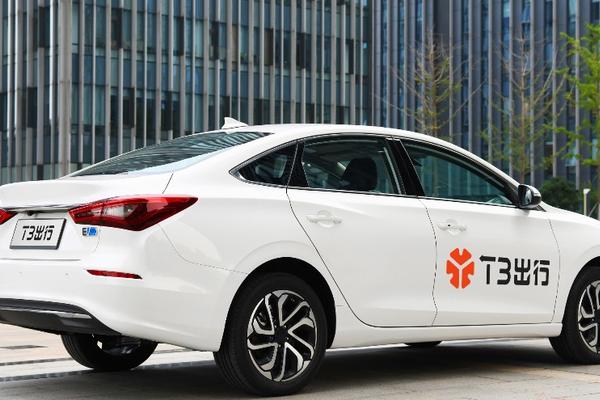
On April 22nd, T3 Chuxing officially submitted its prospectus to the Hong Kong Stock Exchange.
Before this, the outside world’s impression of this ride – hailing platform with a “national team” background mostly remained on compliance and safety. Since the ride – hailing industry has been deeply mired in the loss state of bilateral subsidies for passengers and drivers in the past few years, when T3 submitted its prospectus, the market originally expected to see a financial statement that continued the industry’s inertia.
However, T3 presented an unexpected report card:
The prospectus shows that in 2025, T3 Chuxing achieved a positive full – scale net profit. That is to say, even without excluding non – cash items such as equity incentives and fair value changes, the company has achieved real – sense profitability.
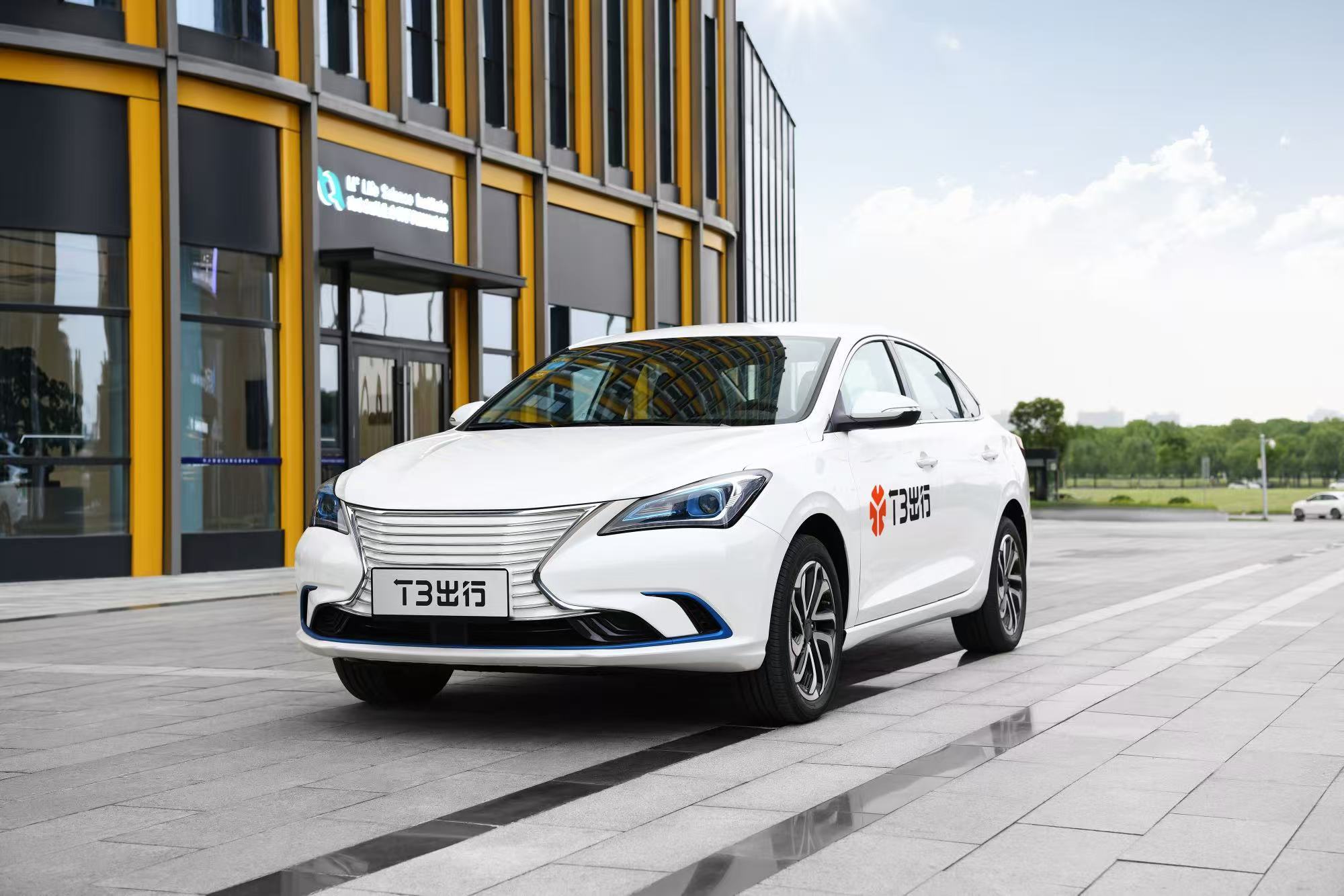
If we extend the timeline, this change becomes clearer: In 2024 and 2025, the company narrowed its losses by more than 1.2 billion yuan and 700 million yuan respectively, and the loss curve converged significantly for two consecutive years. This rhythm usually means that the company has curbed the core variables leading to losses, rather than simply whitewashing the performance.
For an industry that has long relied on subsidies to operate, this is more crucial than single – year profitability.
01
Crossing the critical point of “burning money for scale”
Financially, the capital market’s scrutiny of IPO companies has always been straightforward: Can the scale continue to expand, and can the business itself make money?
In the ride – hailing track, the first question is actually not difficult to answer.
Data from CIC shows that from 2020 to 2025, the compound growth rate of the Chinese ride – hailing market reached 15%; In the next five years, the growth rate is still expected to remain at around 13.3%, and the overall scale will approach 900 billion yuan. In other words, the industry’s overall market is still expanding, and the growth rate is not slow.
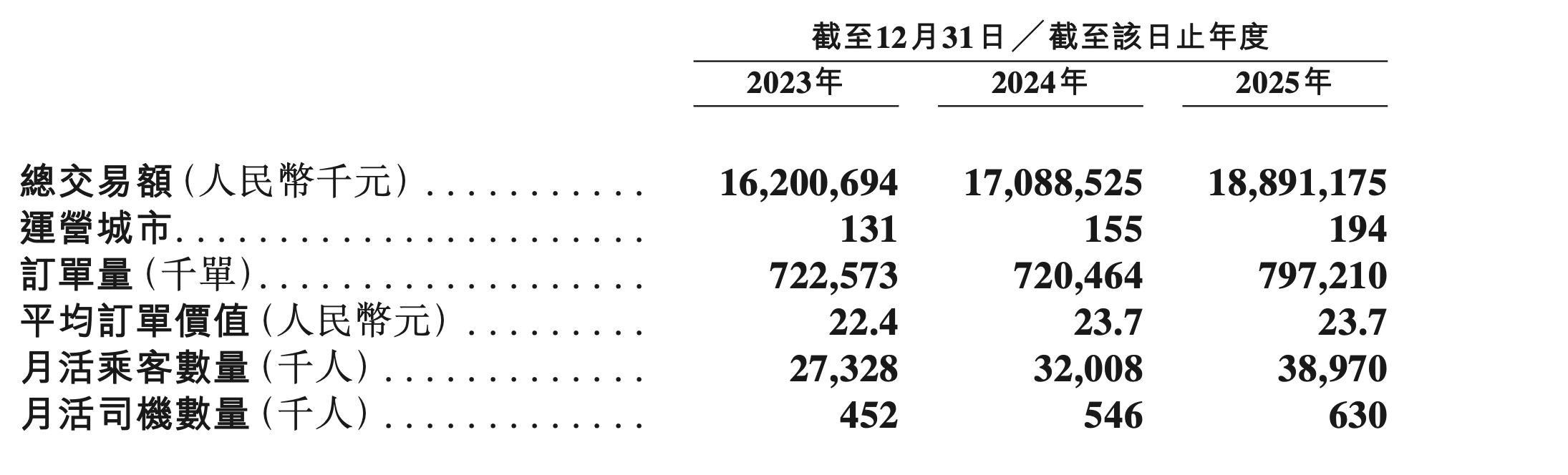
In this context, it is not particularly difficult to simply increase the revenue growth rate. Calculated by the number of orders, T3 Chuxing has firmly ranked third in the industry, and the gap with the second – ranked company is also very small. It has not only reaped the dividends of the market growth but also established a foothold in the top echelon.
However, the problem lies in the other half. The growth of the industry does not mean that the company can make money.
The ride – hailing industry is a typical industry with strong bilateral network effects. Its essence is the two – way matching between drivers and passengers. The platform must solve two interdependent problems at the same time: Without enough drivers, passengers will be lost due to long waiting times; without enough passengers, drivers will leave due to low income. This forms an almost unsolvable “chicken – and – egg” deadlock.
Among all possible means to break the deadlock, subsidies are the most immediate means.
In the early stage, almost all platforms took the same path. On the one hand, they quickly increased the user scale with low prices, and on the other hand, they stabilized the drivers’ income with subsidies to build up the transportation capacity density first. Only when it is convenient enough for passengers to take a taxi and stable enough for drivers to receive orders can this system start to operate on its own.
This “bleeding on both sides” business model is the core crux of the entire industry being deeply mired in the strange circle of “the larger the scale, the greater the loss” for many years.
The profitable T3 undoubtedly gives the capital market a possibility to break the loss cycle and cross the “burn – money critical point”. However, whether T3 has really achieved this depends on whether there are substantial changes in other financial indicators.
02
Three lines behind the change in gross profit margin
The most direct indicator to measure the substantial financial changes of T3 is the gross profit margin.
The gross profit margin is related to both the passengers’ fares and the drivers’ share. From 2023 to 2025, T3 Chuxing’s gross profit margin increased from 0.4% to 10.0% and further to 13.0%. Analyzed in detail, this change is not due to a single factor but the result of the superposition of three paths.
First, it is the increase in the order volume scale. With the order volume scale ranking among the top three in the industry, T3 has enough natural orders to “feed” the drivers, instead of maintaining the drivers’ income and retention through subsidies. This has successfully allowed T3 to regain the profits that were previously given away.
Second, it is the adjustment of the asset structure. In the early days of its establishment, in order to meet compliance requirements and service stability, T3 Chuxing adopted a relatively heavy B2C model, with a relatively high proportion of self – operated vehicles. Although this model ensured service consistency, it brought significant depreciation and amortization pressure. As the platform gradually shifted to a light – asset operation, the scale of depreciation and amortization decreased, and the profit margin was released.
Third, it is the improvement of dispatching efficiency. This is the least intuitive but most sustainable part. In the prospectus, the first vertical large – model in the ride – hailing industry, “Lingxing Qianmo”, which has obtained dual filings from the National Cyberspace Administration, is repeatedly mentioned. This large – model includes three capabilities: intelligent dispatching, safety, and driver – passenger services.
In the ride – hailing industry, the empty – driving rate is another black hole that devours profits. The intelligent dispatching ability of the model can accurately predict the supply and demand in the city and transport the transportation capacity to high – potential areas in advance. According to the prospectus, After the model was launched, the drivers’ empty – driving time was sharply reduced by 17.5%; even in the context of a significant increase in the order volume in 2025, the empty – driving rate still decreased by about 5 percentage points year – on – year.
With the reduction of the empty – driving rate, drivers can earn more from real orders; with the drivers’ income guaranteed, the platform can further reduce subsidy inclination. In essence, this is also cost – reduction and efficiency – improvement brought about by technology.
At the same time, AI is quietly reshaping the cost line of the middle and back – office. Currently, 37 AI digital employees of T3 Chuxing independently handled about 85% of driver service cases and 55% of lost – and – found cases in 2025.
Overall, The three forces of economies of scale, the light – asset model, and AI support together constitute the real reason for T3’s improved profitability. This has a long – term and systematic impact on the company, rather than a phased performance driven by short – term factors.
03
The joint efforts of three major automobile central enterprises
Beyond the financial aspect, whether a company has uniqueness is another major consideration for the capital market.
T3 Chuxing has obvious “national team” genes. The prospectus shows that FAW, Dongfeng, and Changan, the three major automobile central enterprises, are still the largest shareholders of T3 Chuxing. Each of the three automobile enterprises holds a 16.39% stake in the holding platform “Lingxing Partnership”, and Lingxing Partnership holds a 75.54% stake in T3 Chuxing. In addition, Internet companies such as Tencent and Alibaba are also among the shareholders.
This equity structure of “automobile central enterprises + Internet giants” is not a scattered financial investment but has strategic significance.
In recent years, with the rapid evolution of the intelligence of domestic new – energy vehicles, the strategic orientation of relevant state – owned enterprises has also been adjusted, gradually shifting from decentralized development to reducing internal competition and strengthening resource collaboration.
Previously, the market had repeatedly speculated about the merger of the three major automobile central enterprises. For example, in early 2025, there were rumors of a merger and reorganization between Changan and Dongfeng. Although the direct merger at the parent – company level was postponed due to various objective factors, the trend of business collaboration among enterprises has been established. At this time, finding an “experimental field” focusing on specific businesses externally has become a relatively practical path.
Taking this opportunity, T3 Chuxing has become a business fulcrum for the collaborative cooperation of the three major automobile central enterprises. At this level, T3 is not only a ride – hailing platform but also a collaborative platform for the three automobile enterprises to integrate resources and jointly explore cutting – edge technologies such as the new – energy ecosystem, autonomous driving, and intelligent cockpits.
Relying on this industrial ecological position, T3 Chuxing can obtain direct support from the three automobile enterprises in vehicle leasing and supply, autonomous driving testing, ride – hailing development, Robotaxi customization, and cockpit technology. This software – hardware collaboration based on the vehicle – manufacturing supply chain constitutes its differentiated competitive barrier different from pure Internet ride – hailing platforms. At the same time, this kind of collaboration with strategic will also counteracts the market’s doubts about the dispersed equity structure of T3 Chuxing to a certain extent.
04
Robotaxi: The beginning of imagination
Whether it is to improve the gross profit margin through refined operation or to integrate the industrial resources of automobile enterprises, although it can stabilize the current business foundation, it is still not enough to support higher valuation expectations.
As an experimental field for the three major automobile central enterprises, the ultimate future that T3 Chuxing is really betting on is Robotaxi.
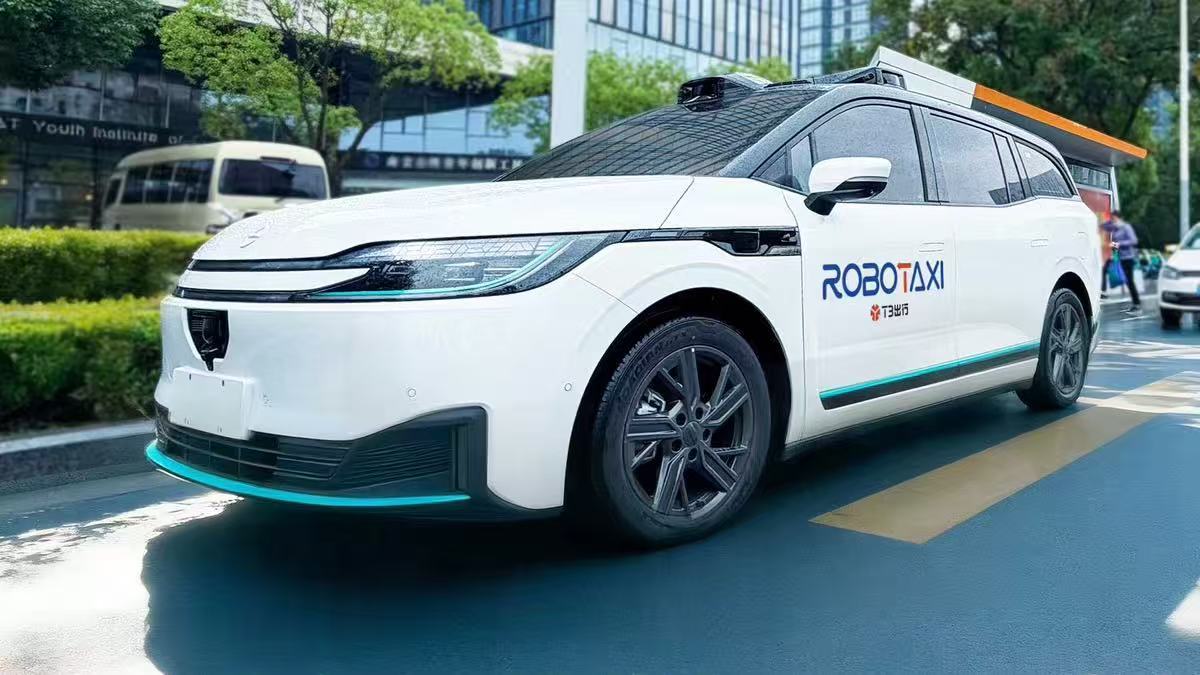
Although 2026 is regarded as a key node for the accelerated commercialization of global Robotaxi, it is undeniable that the current Robotaxi industry still faces the embarrassing situation of few vehicles, short driving distances, and restricted road sections. Facing the reality of not making money in the early stage, T3 Chuxing proposed a practical solution – the domestically – initiated “hybrid transportation capacity dispatching”.
Simply put, it is to put human drivers and Robotaxis in the same pool: send drivers for complex road conditions and send driverless vehicles during peak hours and at night. This model provides a smoother implementation path for the commercialization of the immature Robotaxi.
As of December 31, 2025, T3 Chuxing’s road – test mileage without safety drivers in Nanjing and Suzhou has exceeded 41,000 kilometers, ranking second among the national smart ride – hailing platforms.
However, Robotaxi is still not an easy business. Vehicle manufacturing, autonomous driving technology development, and operation system construction all require intensive capital investment and long – term polishing. It not only requires players to have patience but also capital.
At this time, the background of T3 as a collaborative platform for the three automobile enterprises shows its industrial value.
Upstream of the industry, T3 can use a large amount of real road – test and operation data to feed back algorithm companies and even directly cooperate with vehicle manufacturers to define the physical form of future Robotaxi vehicles and intelligent cockpits; downstream of the industry, T3 has set up physical autonomous driving operation stations.
The shareholders do not lack resources, and T3 does not lack operation capabilities. The company is gradually building a three – dimensional service network along the path of “vehicle – end intelligent hardware – cloud – based large – model dispatching – offline maintenance stations”. It has the ability and resources to become the builder of the future Robotaxi ecosystem, which is far more imaginative than whether the company has a Robotaxi business.
05
Summary
The narrowing of losses, the rising of gross profit, and the turning positive of net profit are only the obvious results of the reconstruction of T3 Chuxing’s underlying business logic.
Overall, The accumulation of economies of scale, the transformation to the light – asset model, the cost – reduction of AI dispatching, and the industrial collaboration of the three automobile enterprises together constitute the basic foundation for T3’s IPO in Hong Kong. At the same time, the practical Robotaxi hybrid dispatching plan opens up the valuation space for its future.
The significance of this prospectus is that T3 has broken the stereotype of the ride – hailing industry that “the larger the scale, the deeper the loss” and demonstrated a new path different from pure traffic – driven models to the market: saying goodbye to burning – money subsidies and relying on technological efficiency improvement and in – depth collaboration with automobile industry shareholders to establish a healthy and sustainable development path in the continuously expanding ride – hailing market.