
Close Menu
Simply Invest Asia
  • Home
  • About us
  • Explore industries/sectors
    • Automobile
    • Aviation
    • Banking
    • Biotechnology
    • Chemical & Fertilizer
    • Entertainment and Media
    • Food Processing
    • Healthcare
    • Iron and Steel
    • Leather
    • Mining
    • Oil and Gas
    • Pharmaceutical
  • Explore by countries
    • China
    • Dubai / UAE
    • Hong Kong
    • India
    • Indonesia
    • Japan
    • Malaysia
  • Explore cities
    • Bangkok
    • Beijing
    • Chongqing
    • Delhi
    • Dubai
    • Guangzhou
    • Jakarta
    • Kuala Lumpur
  • Why Asia
Facebook X (Twitter) Instagram Threads
Trending:
  • Sheikh Mohammed bin Rashid visits date factory
  • Natalie Kan Breaks Hong Kong National Record in 50 Fly at 69th Festival of Sport
  • Gulf countries need a long-term strategy to counter global bias against region, Dubai conference hears
  • IG Securities Flags Improper Handling of 190,000 Customer Records in Japan
  • “Homage to the Virtuosos” exhibition opens in Beijing-Xinhua
  • Biruntha Mooruthi Appointed as Group Chief Executive Officer at Talent Corporation Malaysia Berhad (TalentCorp)
  • Geely Subsidiary Plans 100,000 Robotaxis by 2030
  • Sony’s new covers wrap your WF-1000XM6 earbuds in vegan leather.
  • GB News goes live in India via iKOMG-powered NeoTV+ distribution deal
  • Watch: Mohammed bin Rashid visits world’s largest dates factory – Gulf News
  • In Depth: PwC’s Evergrande Crisis Deepens With Record Hong Kong Settlement and Criminal Probes
  • BMW crashes into KFC restaurant, injuring 12 people – The Independent
  • 2 killed in train crash in Indonesia’s West Java
  • EU faces ‘China shock’ as EV imports drive Beijing’s record surplus with bloc | European Union
  • Israel Deploys Iron Dome to UAE in First Overseas Use – 조선일보
  • Large-scale, mechanically robust bioinspired confined MXene nanocomposites
  • The 7th “Design Licensing and Business (DLAB) Support Scheme” Launching Ceremony of DLAB Hong Kong Pavilion in HK Int’l Licensing Show 2026
  • DAAD shifts Indian focus beyond student mobility
Monday, April 27
Facebook X (Twitter) Instagram
Simply Invest Asia
  • Home
  • About us
  • Explore industries/sectors
    • Automobile
    • Aviation
    • Banking
    • Biotechnology
    • Chemical & Fertilizer
    • Entertainment and Media
    • Food Processing
    • Healthcare
    • Iron and Steel
    • Leather
    • Mining
    • Oil and Gas
    • Pharmaceutical
  • Explore by countries
    • China
    • Dubai / UAE
    • Hong Kong
    • India
    • Indonesia
    • Japan
    • Malaysia
  • Explore cities
    • Bangkok
    • Beijing
    • Chongqing
    • Delhi
    • Dubai
    • Guangzhou
    • Jakarta
    • Kuala Lumpur
  • Why Asia
Simply Invest Asia
Home»Explore by countries»India»DAAD shifts Indian focus beyond student mobility
India

DAAD shifts Indian focus beyond student mobility

By IslaApril 27, 20265 Mins Read
Share
Facebook Twitter Pinterest Threads Bluesky Copy Link


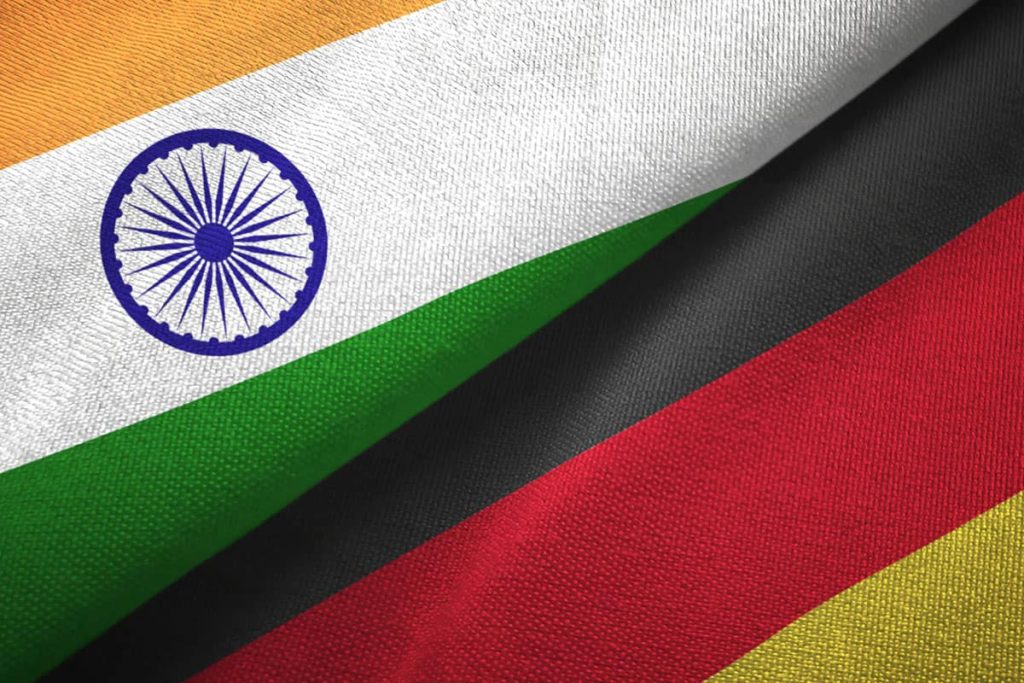
More than 60,000 Indian students are currently enrolled in German universities, making them the largest international cohort in the country, with the growth widely seen as driven by affordability and research quality.

“India has emerged as one of the most important and fastest-growing markets for DAAD in recent years,” Arthur Rapp, director of the German Academic Exchange Service (DAAD)’s regional office in New Delhi, told The PIE News.

“This growth is not only reflected in increasing numbers, but also in the changing aspirations and profiles of Indian students, who are now more informed, globally oriented, and focused on quality education and research opportunities.”

But for DAAD, a joint body of German universities and student organisations, the focus has shifted beyond creating pathways for Indian students to study in Germany towards deeper institutional collaboration in India.

This is reflected in initiatives such as the Indo-German Comprehensive Roadmap on Higher Education, launched during Chancellor Friedrich Merz’s visit to India, to strengthen partnerships, exchanges, and joint research between the two countries.

“One of the major shifts is towards long-term cooperation, making Indo-German collaboration more strategic, inclusive, and impact-driven than ever before, alongside more structured partnerships between institutions rather than only supporting individual scholarships,” said Shikha Sinha, senior advisor for international cooperation and internationalisation at DAAD India.

“Programs like SPARC-GIANT bring together Indian and German universities in joint research projects in priority areas such as sustainability, healthcare, industry 4.0, and semiconductors.”

Though established in India in 1960, DAAD has expanded its work in recent years, backing around 80 of more than 500 India-Germany educational collaborations and building capacity through platforms like the International Higher Education Dialogue (iHED). Officials stressed that such initiatives are key to addressing global challenges facing both countries.

“Whether it is environmental issues, food security or the energy transition, these are global challenges that cannot be solved by any one country, requiring collaboration between scientists worldwide, with Germany’s globally renowned research landscape complementing India’s scale, dynamism and innovation,” said Rapp.

“Germany and India bring different strengths and expertise, which makes it all the more important to work together.”

German universities are not driven by profit, and most do not charge tuition fees, so the priority remains on cooperation rather than setting up campuses
Shikha Sinha, DAAD

Alongside this, DAAD has been guiding German institutions through India’s evolving regulations on joint degrees and international branch campuses, though officials say opening campuses is not currently a priority for German universities.

“We published recommendations looking at both the German and Indian systems, outlining where the challenges are and how institutions can approach collaboration step by step,” Sinha said.

“German universities are not driven by profit, and most do not charge tuition fees, so the priority remains on cooperation rather than setting up campuses.”

Rapp echoed this, noting that expanding abroad brings challenge, from aligning curricula to ensuring sufficient resources, with partnerships often the more practical route.

“German universities operate on a different model, with most funding coming from the state, so there isn’t the same financial drive to expand abroad. Expanding into a new country also comes with challenges. You can’t simply take a German curriculum and place it elsewhere; it needs to be adapted,” Rapp said.

“Since German public universities are not driven by profit, the question is where the resources would come from, which is why collaboration is often the more effective route. A joint university could happen, but it would require a high-level decision and funding.”

For DAAD, the next step is to ensure more balanced mobility and greater presence from German institutions in underrepresented regions of India, a challenge given the country’s vast and diverse higher education landscape.

“While Indo-German academic cooperation has grown significantly, there are still a few key challenges to address. One is ensuring balanced mobility – while more Indian students are going to Germany, we would like to see more German students choosing India as a study destination,” Sinha said.

“Another challenge is broadening participation beyond top-tier institutions by engaging more state universities and institutions from underrepresented regions.”

“One challenge is the scale of the landscape in India – there are so many universities and millions of students, and while we do our best to connect people and raise awareness, there is always more that can be done,” Rapp said.

“Even if you increase the budget – double or triple it – it would still not be enough, and on issues like visa policies and broader cooperation, there is clear willingness from both countries to work together and even more closely in the future.”

With an ageing population and rising demand for skilled workers, international students, especially Indians, are central to Germany’s workforce pipeline, with mobility seen as a two-way process shaped by language and long-term integration.

“You can study in English in Germany, but it is important to learn at least some basic German, especially if you are looking at long-term opportunities,” Rapp said.

“We also want people to come back to India and that’s good for Germany because it creates stronger links.”

He added that this broader approach to mobility reflects how global education pathways are evolving.

“When we talk about migration, it’s not a one-way street – people study, gain knowledge and experience, and then return or move across markets, and that’s how the system works.”


Source link

Related Posts

GB News goes live in India via iKOMG-powered NeoTV+ distribution deal

April 27, 2026

India’s fisherwomen fighting to be seen

April 27, 2026

India names Modi party colleague envoy to Bangladesh as ties thaw

April 27, 2026
Add A Comment
Leave A Reply Cancel Reply

Top Posts

Abandoned malls, whispers of nuclear war and young foreigners detained. This is what’s REALLY going on in Dubai… and the chilling warning one taxi driver gave to the Mail’s IAN BIRRELL

April 11, 2026

Chongqing Aims To Build Hub Role

April 15, 2026

US trade chief says tech restrictions to block Chinese autos

April 10, 2026
Don't Miss

Sheikh Mohammed bin Rashid visits date factory

By IslaApril 27, 2026

Sheikh Mohammed bin Rashid, Vice President and Ruler of Dubai, visited Al Barakah Dates Factory…

Natalie Kan Breaks Hong Kong National Record in 50 Fly at 69th Festival of Sport

April 27, 2026

Gulf countries need a long-term strategy to counter global bias against region, Dubai conference hears

April 27, 2026

IG Securities Flags Improper Handling of 190,000 Customer Records in Japan

April 27, 2026
SUBSCRIBE TO OUR NEWSLETTER

Get our latest downloads and information first. Complete the form below to subscribe to our weekly newsletter.


I consent to being contacted via telephone and/or email and I consent to my data being stored in accordance with European GDPR regulations and agree to the terms of use and privacy policy.

Stay In Touch
  • Facebook
  • YouTube
  • TikTok
  • WhatsApp
  • Twitter
  • Instagram
Top Trending

2 killed in train crash in Indonesia’s West Java

By IslaApril 27, 2026

EU faces ‘China shock’ as EV imports drive Beijing’s record surplus with bloc | European Union

By IslaApril 27, 2026

Israel Deploys Iron Dome to UAE in First Overseas Use – 조선일보

By IslaApril 27, 2026
Most Popular

XRP Tops $1.37 As Rakuten Integrates Token For Payment In Japan

April 14, 2026

Chongqing Aims To Build Hub Role

April 15, 2026

China CSSC Rises After Securing USD1.2 Billion Order for 12 Container Ships

April 23, 2026
Our Picks

Media & Entertainment SaaS – 2026 Market & Investments Trends

April 9, 2026

US Drillers Add Oil and Gas Rigs for First Time in Three Weeks, Baker Hughes Says – Energy News, Top Headlines, Commentaries, Features & Events

April 25, 2026

Visit Malaysia campaign extended to 2027

April 9, 2026
SUBSCRIBE TO OUR NEWSLETTER

Get our latest downloads and information first. Complete the form below to subscribe to our weekly newsletter.


I consent to being contacted via telephone and/or email and I consent to my data being stored in accordance with European GDPR regulations and agree to the terms of use and privacy policy.

© 2026 Simply Invest Asia.
  • Get In Touch
  • Cookie Policy
  • Privacy policy
  • Terms & Conditions

Type above and press Enter to search. Press Esc to cancel.

SUBSCRIBE TO OUR NEWSLETTER

Get our latest downloads and information first.

Complete the form below to subscribe to our weekly newsletter.


I consent to being contacted via telephone and/or email and I consent to my data being stored in accordance with European GDPR regulations and agree to the terms of use and privacy policy.